The Archaeological Challenge: Absolute Preservation
The 11th-century Rani Ki Vav stepwell is a uniquely inverted, deeply excavated subterranean monument. The core obstacle in creating multimedia experience across its three intricately carved walls was uncompromising adherence to archaeological conservation mandates. Regulations dictated a strictly 100% non-invasive methodology—prohibiting any drilling, structural anchors, or permanent physical alterations to the historic sandstone
Most critically, the site’s daytime visual sanctity had to be entirely preserved. The challenge lay in integrating a massive, heavy-duty audiovisual footprint that could deliver an ultra-high-resolution spectacle at night, yet completely disappear during daylight hours to ensure the ancient viewshed remained untouched by modern technological clutter.
The Innovative Approach: “Hidden-in-Plain-Sight” Infrastructure To resolve the paradox of installing advanced multimedia technology within a highly restricted heritage zone, the project was approached through a philosophy of invisible integration. Every element was designed to adapt to the monument, ensuring zero physical or visual impact through four key strategic pillars:
- Retractable, In-Ground Projector Mounting
To completely eliminate the need for permanent, above-ground projection towers that would disrupt the historic landscape, the approach utilized custom-designed, weatherproof in-ground pits. During the day, these vaults sit flush with the earth, completely hiding the projectors. At showtime, automated lifts simultaneously position the heavy-duty projectors above ground. The system relies on dynamic auto-calibration to instantly achieve pixel-perfect alignment across the deeply excavated geometry, and securely retracts back into the earth the moment the show concludes - Wireless Acoustic Architecture
Traditional outdoor audio infrastructure requires extensive ground trenching and fixed speaker towers, which would severely restrict the daytime view and risk archaeological damage. To circumvent this, the acoustic approach shifted to a fully wireless, Bluetooth-connected sound system. This strategy completely avoids invasive cabling and visual clutter, allowing the hardware to be discreetly positioned out of sight while still enveloping the audience in high-fidelity sound - Custom Stonemade Camouflaged Architectural Lighting & Cabelling
Providing non-invasive illumination for the exterior landscape and subterranean facades required the technology to blend organically with the environment. The approach involved designing and fabricating custom-made stone housings for all light fixtures. These enclosures were meticulously crafted to match the exact color, texture, and weathering of the existing 11th-century sandstone. By acting as a natural camouflage for both the lighting units and their cabling, the modern fixtures become completely indistinguishable from the historical ruins during the day.
- Organic Control Room Integration
The central nervous system required to drive the massive digital array and DMX network necessitated a physical structure, but a standard facility would permanently violate the site’s natural horizon. The approach here was two-fold: first, the control room was optimized to its absolute minimum functional size. Second, the exterior was heavily camouflaged using native plants and tailored landscaping. This organic integration allows the facility to merge seamlessly into the surrounding archaeological gardens, protecting the heritage site’s viewshed at all times.
Recognition
For this remarkable achievement, Aura Bright Light India has been honoured with the Excellence in Lighting & Multimedia Award for 3D Projection Mapping & Heritage Illumination at Rani Ki Vav. The recognition celebrates the company’s pioneering contribution to heritage conservation through advanced lighting, multimedia engineering, and immersive projection mapping, setting a global benchmark for non-invasive illumination of UNESCO World Heritage monuments
A New Paradigm for Heritage
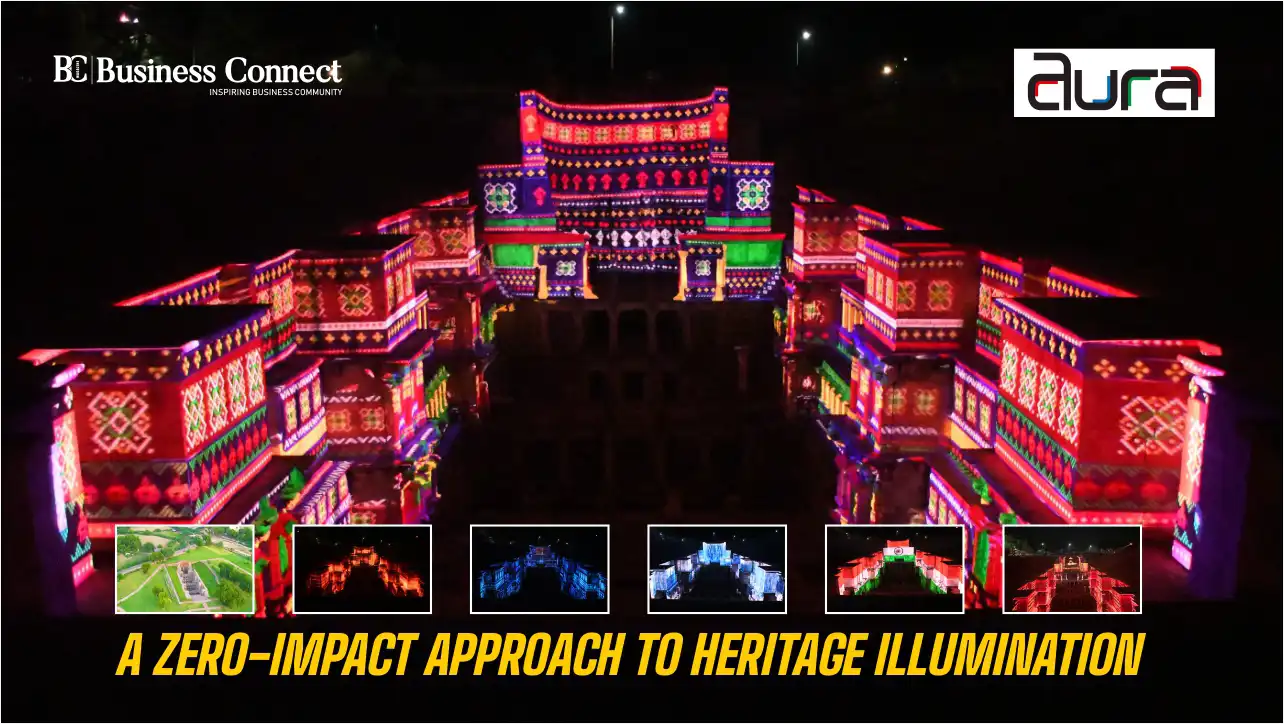
The result speaks to both scale and responsibility. On an engineering level, Aura‘s complete execution successfully delivered a massive 15,000-pixel digital canvas in one of the most challenging environments imaginable. The project is now officially recognised as the world’s first projection mapping on a subterranean UNESCO World Heritage Site and the world’s first use of fully retractable, movable projectors on hydraulic lifts for heritage monuments.
On a conservation level, the project achieved 100% compliance with the stringent regulations of the Archaeological Survey of India. The 11th-century sandstone remains untouched. The daytime view of Rani Ki Vav is exactly as it was 900 years ago. The technology respects the monument.
On a cultural level, Rani Ki Vav has been transformed into a premier nighttime destination. The immersive 270-degree, three-walled subterranean projection offers tourists an unprecedented, multi-sensory way to experience Gujarat’s history. The invisible infrastructure demonstrates that monumental technological scale need not compromise archaeological sanctity. Aura Bright Light has successfully delivered a model that dictates how the world’s most protected monuments should be illuminated.