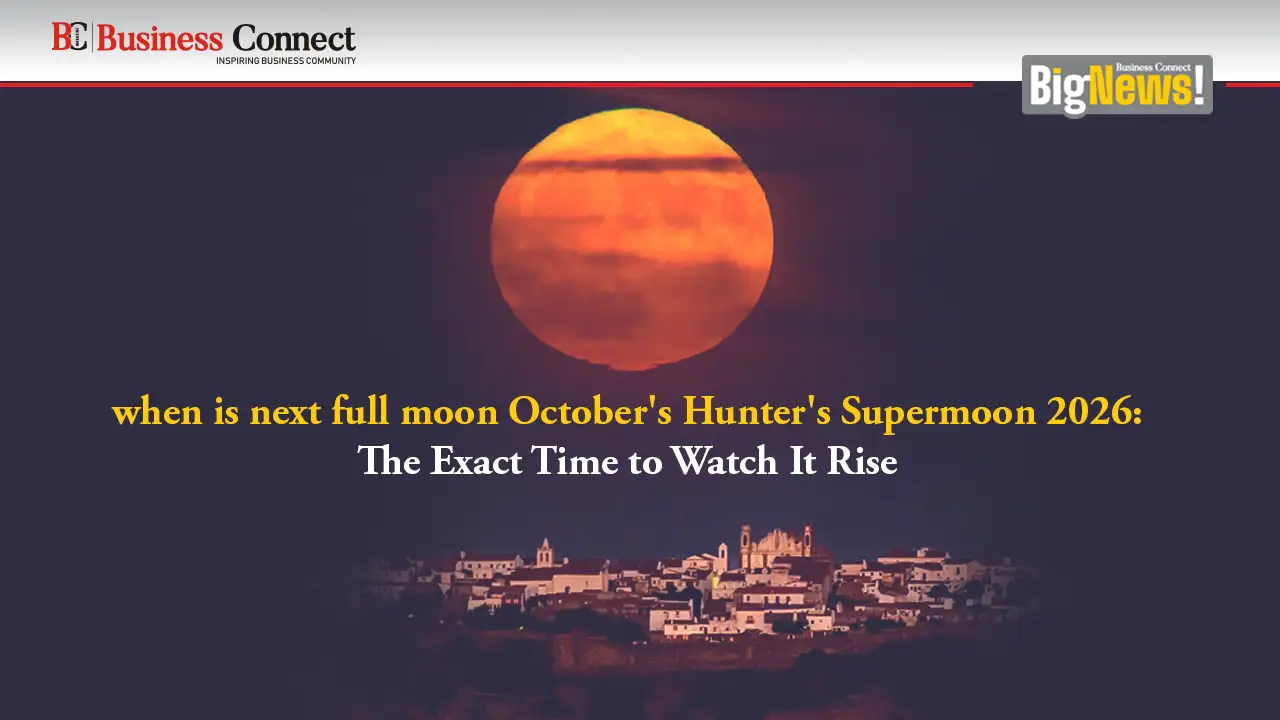
October’s Hunter’s Moon reaches peak illumination on Monday, October 26, 2026, at 12:12 AM EDT (04:12 UTC) — but the best time to actually watch it is the evening before, Sunday, October 25, right around sunset. It’s also a supermoon this year, meaning it will appear roughly 7% larger and about 15% brighter than an average full Moon, because it coincides with the Moon’s closest approach to Earth (perigee).
There’s a reason October’s full Moon draws more attention than most others on the calendar: it’s got a great name, a genuine folklore backstory, and — this year — the extra visual punch of a supermoon. Here’s everything worth knowing before you head outside.
When Exactly Is the Hunter’s Supermoon in 2026?
Peak illumination happens at the same instant everywhere on Earth; only the local clock time changes. Here’s how that moment lines up across U.S. time zones:
| Time Zone | Local Peak Time | Local Date |
|---|---|---|
| Eastern (EDT) | 12:12 AM | Monday, October 26 |
| Central (CDT) | 11:12 PM | Sunday, October 25 |
| Mountain (MDT) | 10:12 PM | Sunday, October 25 |
| Pacific (PDT) | 9:12 PM | Sunday, October 25 |
| UTC | 04:12 | Monday, October 26 |
Because the exact peak falls just after midnight Eastern Time, most of the country will actually experience this Moon as “full” on Sunday evening, October 25 — which is also, conveniently, the best night to watch it rise. A full Moon looks essentially full to the naked eye for a full day on either side of the exact peak, so don’t stress about catching the precise minute.
Why Is It Called the “Hunter’s” Moon?
The Hunter’s Moon is simply the full Moon that follows the Harvest Moon each year — in 2026, that’s the Harvest Moon of September 26. The name dates back to a pre-electricity era, when the bright, early-rising Moon extended the workable hours of the evening. After the Harvest Moon lit up the final push to bring in crops, the Hunter’s Moon that followed lit the hunt: with fields newly cleared and animals fattened for winter, hunters used the extended twilight glow to track game across open, stubbled land before the deep cold set in.
The “Short Rising Interval” Trick
The Hunter’s Moon shares a genuinely useful quirk with its predecessor, the Harvest Moon: because of the shallow angle the Moon’s orbital path makes with the horizon this time of year, it rises only about 25–30 minutes later each successive night — rather than the usual 50 minutes most months. Practically, that means several evenings in a row this week will have moonrise happening close to sunset, giving you multiple good chances to catch it rising large and orange-gold near the horizon, even if clouds spoil the exact peak night.
What Makes It a “Supermoon” This Year?
A supermoon happens when a full Moon coincides with, or nearly coincides with, perigee — the point in the Moon’s elliptical orbit where it’s closest to Earth. The effect: the Moon appears roughly 7% larger in diameter and about 15% brighter than an average full Moon. It’s a real, measurable difference, though most casual observers find it hard to notice without a side-by-side comparison — the “bigger and brighter” effect is more dramatic in photographs (especially near the horizon, where the Moon already looks larger due to the well-known “Moon illusion”) than in a quick glance at the sky.
This October Hunter’s Moon kicks off a run of three consecutive supermoons closing out 2026 — it’s followed by November’s Beaver supermoon on November 24 and December’s Cold supermoon on December 23, making autumn and early winter 2026 an unusually good stretch for supermoon watching.
Where to Look in the Sky
The October full Moon will shine largely within the constellation Aries this year and, like most full Moons, will appear most impressively large and golden-hued when it’s low on the horizon shortly after moonrise — a good reason to head out right around local sunset on October 25 rather than waiting until later in the night when the Moon is higher and looks comparatively smaller and whiter.
Will There Be a Full Moon on Halloween 2026?
Not quite — and it’s a common point of confusion this year given how close the two dates fall. By October 31, the Moon will have moved into its waning gibbous phase, roughly 65% illuminated. That’s arguably not a bad outcome for trick-or-treaters and stargazers alike: still bright enough to cast a genuinely eerie glow over Halloween night, but dim enough that it won’t wash out fainter stars if you’re doing any telescope viewing later that evening.
Best Tips for Watching the Hunter’s Supermoon
- Go out around sunset on Sunday, October 25. Moonrise near sunset gives you the classic huge, golden “Moon illusion” look, and you won’t need to stay up past midnight to see it at its most impressive.
- Find an unobstructed eastern horizon. Since the visual “supersize” effect is strongest low in the sky, a clear view toward the east — away from tall buildings or trees — makes the biggest difference.
- No equipment required. Unlike meteor showers or planetary conjunctions, a full Moon is easily bright enough to enjoy with the naked eye; binoculars can add some crater detail along the terminator line, but aren’t necessary.
- Check your local moonrise time, since it varies by location even though the peak illumination moment is universal — a quick search for “moonrise [your city]” will give you the specific local time to head outside.
What’s the Next Full Moon After This One?
The next full Moon after October’s Hunter’s Supermoon is November’s Full Beaver Moon on November 24, 2026 — the second of the three consecutive supermoons closing out the year. If you’re tracking ahead, the next Hunter’s Moon specifically won’t occur again until October 15, 2027.
Frequently Asked Questions
What time is the Hunter’s Supermoon in October 2026?
Peak illumination is at 12:12 AM EDT (04:12 UTC) on Monday, October 26, 2026 — which works out to Sunday night, October 25, in the Central, Mountain, and Pacific time zones.
What’s the best night to watch October’s supermoon?
Sunday evening, October 25, 2026, right around local sunset, is the best time — the Moon will appear essentially full and will be at its most dramatic low on the eastern horizon.
Why is October’s full Moon called the Hunter’s Moon?
It’s the full Moon that follows the Harvest Moon each year. The name comes from its historical role in extending evening light for hunters preparing meat stores ahead of winter, after crops had already been harvested under the Harvest Moon’s glow.
Is the Hunter’s Moon a supermoon every year?
No. Whether the Hunter’s Moon qualifies as a supermoon depends on how closely its timing lines up with the Moon’s perigee that particular year — 2026’s Hunter’s Moon happens to coincide with perigee, but that isn’t the case every October.
Will the Moon be full on Halloween 2026?
No. By October 31, 2026, the Moon will be in a waning gibbous phase at roughly 65% illumination, several nights past its October 25–26 peak.
When is the next supermoon after October 2026?
The next supermoon is November’s Full Beaver Moon on November 24, 2026, followed by December’s Full Cold Moon on December 23, 2026 — the second and third of three consecutive supermoons closing out the year.
Add Business Connect magazine to your Google News feed