
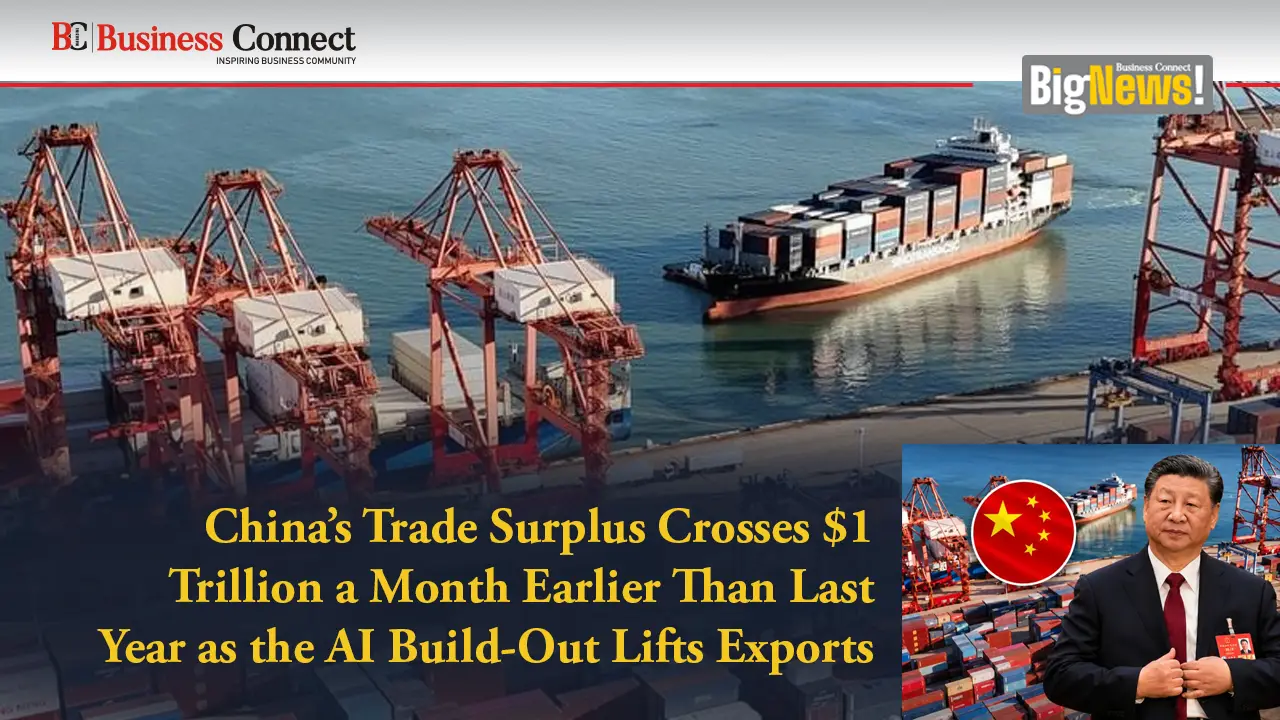
October exports jump 35% from a year ago, putting Beijing on course to beat 2025’s record while trade tensions mount
China has hit a trade milestone faster than ever. Official customs data released on Tuesday, 10 November, show the country’s trade surplus has passed $1 trillion with two months of the year still to go.
The numbers
Between January and October, China logged a $1.04 trillion trade surplus. That is the second consecutive year above $1 trillion, and the milestone arrived a month earlier than in 2025. It puts China on course to surpass last year’s record of $1.2 trillion. For comparison, China recorded a near $1.2 trillion surplus in 2025, with exports of $3.77 trillion and imports of $2.58 trillion.
The monthly picture was strong too. Exports in October surged 35% from a year earlier. One detail pulls the other way: the monthly surplus narrowed last month to $105.3 billion, from $133.5 billion in the previous period. So the year-to-date total is huge, but October’s surplus on its own was smaller than the month before.
What is driving it
The main engine is artificial intelligence. Reuters reports that a global race to build AI infrastructure has buoyed sales of high-tech products and helped offset weak domestic demand. In plain terms, the world is spending heavily on data centres and computing equipment, and China is selling a lot of what goes into them. Trade coverage also points to semiconductors and automobiles as key export categories.
The other half of the story is at home. A trade surplus grows when exports rise, but also when imports are weak. Weak domestic demand means Chinese households and businesses are buying less from abroad, which widens the gap.
Why it matters
Large surpluses draw political attention. The AP notes that pressure is mounting for greater balance in trade with Beijing. Reuters says the dynamic is likely to sharpen trade tensions, since partners that run deficits with China tend to respond with tariffs, investigations or other defences. A bigger surplus gives them more reason to act.
For businesses and governments outside China, there are two sides to this. Cheaper, plentiful Chinese goods help buyers and AI builders. But the same flood of exports puts pressure on local manufacturers in other countries, which is why trade policy debates keep returning to this topic.
What to watch next
- The November and December data, to see whether China beats its 2025 record of about $1.2 trillion.
- How the US and other major economies respond with trade measures as the surplus grows.
- Whether Chinese domestic demand picks up, which would raise imports and narrow the gap.
- How long the global AI infrastructure spending boom lasts, since much of the export surge rides on it.
Note: Trade figures come from China’s customs data as reported by AP and Reuters, and monthly numbers are often revised. Please check the latest official release before publishing.
Add Business Connect magazine to your Google News feed