
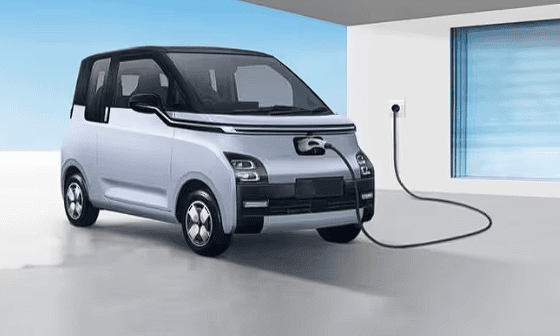
Small Car, Big Tech: How the MG Comet EV Packs Premium Features into a Tiny Footprint
In the Indian car market, bigger has traditionally meant better. More road presence, more cabin space and more equipment have often been the easiest ways for manufacturers to signal value. The MG Comet takes a different approach. Its proposition is built around a smaller footprint, but the technology inside is designed to feel anything but basic.
At just under three metres long and with a 4.2-metre turning radius, the Comet is engineered for an environment where manoeuvrability can matter more than sheer size. Yet its cabin brings together features such as a 10.25-inch touchscreen, a digital instrument display, wireless Android Auto and Apple CarPlay, and i-Smart connected-car technology.
That contrast is what makes this MG car interesting—not simply as a small EV, but as an example of how automotive technology is changing the definition of value.
Key Highlights
- The MG Comet combines a compact urban-friendly footprint with a technology-focused cabin.
- Its 10.25-inch integrated displays, wireless Android Auto and Apple CarPlay, and i-Smart connected features create a connected digital experience.
- The Comet uses a 17.4 kWh battery, delivering a claimed 230 km range with a 42 PS electric motor and 110 Nm of torque.
- Its compact dimensions and 4.2-metre turning circle make it particularly suited to navigating busy city streets and tight parking spaces.
- FC variants support 7.4 kW AC charging, reducing charging time compared with the standard 3.3 kW setup.
- Safety and structural engineering remain important, with features such as ABS, EBD, ESC, hill hold and a high-strength body structure.
- The blog explores a broader shift in automotive thinking: premium value is increasingly defined by technology, convenience, connectivity and experience rather than vehicle size alone.
When Small Becomes a Technology Advantage
The Comet’s dimensions are easy to read as a limitation until they are viewed through the realities of Indian urban driving.
Parking spaces are increasingly constrained, traffic is dense and short-distance journeys dominate the daily routine for many city drivers. A compact electric car can therefore turn physical simplicity into a feature in itself.
The Comet measures 2,974 mm in length and 1,505 mm in width, while accommodating four occupants. Its small turning radius makes tight manoeuvres considerably easier, particularly in crowded urban environments.
This is where the idea of “premium” starts to become more nuanced.
Premium mobility does not necessarily mean a larger vehicle. It can mean less effort. Easier parking. Better visibility. A cabin that feels contemporary. Technology that reduces small everyday frustrations.
The MG Comet approaches premiumisation from that direction.
The Cabin Is Where the Technology Story Becomes Visible
One of the Comet’s strongest arguments is that its compact exterior does not translate into a stripped-down interior.
Higher variants feature a floating twin-display layout with a 10.25-inch infotainment screen and digital instrument cluster. Wireless Android Auto and Apple CarPlay reduce the dependence on cables, while the i-Smart system brings more than 55 connected-car functions and voice-command capabilities into the vehicle.
None of these technologies is individually unusual anymore. The interesting part is their placement in a car of this size and positioning.
This reflects a wider change across automotive brands in India. Technology is no longer reserved for large SUVs or premium sedans. Features that were once associated with substantially more expensive vehicles are progressively moving down the market.
That democratisation matters because consumers increasingly judge a car through its interface as much as its mechanical hardware. The screen, connectivity, digital access and interaction with the vehicle can shape everyday perceptions of quality.
For a younger urban buyer, the technology layer may be as important to the ownership experience as the traditional specification sheet.
Making an EV Feel Like a Digital Product
The shift becomes more pronounced with electric vehicles.
An EV is already a different kind of automotive product because the ownership experience extends beyond the engine and gearbox. Charging, battery information, connected functions and energy management become part of everyday interaction with the vehicle.
The Comet’s technology strategy reflects that change. Its i-Smart platform includes connected functions such as vehicle status, remote functions and location-related features, making the car feel closer to a connected consumer device than a conventional small hatchback.
That distinction is strategically important.
The EV market in India is not simply introducing a new propulsion system. It is changing consumer expectations around what a car should communicate and how it should interact with its owner.
This is one reason automotive technology has become central to brand differentiation. Battery specifications may influence a purchase decision, but the experience of using the vehicle determines whether the technology feels genuinely useful.
Small Footprint, Serious Safety
Technology-led positioning only works if it is supported by confidence in the fundamentals.
The Comet uses a high-strength body structure incorporating 17 hot-stamping panels, alongside safety features including ABS with EBD, electronic stability control, hill-hold control, an electronic parking brake and front and rear disc brakes on relevant variants.
Its battery is rated IP67 and the current model uses a 17.4 kWh battery with a claimed 230 km range. The FC variants add 7.4 kW AC fast-charging capability, reducing the estimated full-charge time to around 3.5 hours compared with approximately seven hours using the 3.3 kW setup.
Again, the significance is less about accumulating features than about making a compact EV feel complete.
The challenge for small electric cars has always been avoiding the perception that compact means compromised. The Comet’s approach is to make the vehicle small where size creates inconvenience, while keeping the technology and usability proposition relatively substantial.
The Bigger Lesson for Automotive Brands
This is where the Comet fits into a broader story about MG Motor India.
The company is navigating an automotive market where heritage alone is no longer enough to sustain relevance. Its Indian operations combine the legacy of the MG name with localisation, EV development and technology-led products, while the SAIC–JSW partnership has added another dimension to the company’s expansion in India.
The strategic challenge for an established automotive name is to make heritage useful rather than merely visible.
That principle can be seen across the wider portfolio. The Cyberster, for example, draws on the emotional memory of the MGB Roadster while interpreting the sports car through an electric powertrain and contemporary technology. The move into curated premium retail through MG SELECT similarly reflects how automotive brands are expanding the experience around the product rather than treating the dealership as simply a transactional space.
The Comet represents the other end of that spectrum.
Its proposition is not about excess. It is about demonstrating that technology can be meaningful even when the vehicle itself is deliberately modest in scale.
The Future of Premium Is Not Necessarily Bigger
For decades, the conventional automotive hierarchy was easy to understand: move up the price ladder and you got more metal, more power, more space and more equipment.
Electric mobility is making that hierarchy less predictable.
Software, connectivity, charging convenience and user experience can now create value without requiring a physically larger vehicle. A compact EV can therefore compete for attention not by pretending to be a large car, but by being exceptionally good at the problems it is designed to solve.
That is arguably the more interesting definition of premium mobility for India’s cities.
The MG Comet does not need to be everything to everyone. Its strongest proposition comes from understanding the environment around it: tight streets, limited parking, short urban journeys and increasingly tech-oriented consumers.
Its compact footprint solves a physical problem. Its technology attempts to solve a digital one.
And that combination points toward a broader direction for automotive innovation in India: the most relevant vehicles may not always be the ones that offer more of everything, but the ones that make the right things easier.
For an automotive brand, that is a useful distinction. Technology becomes meaningful when it improves the relationship between the driver and the vehicle—not when it simply adds another line to a brochure.
The real achievement of a small EV, then, is not packing a long feature list into a tiny body.
It is proving that small can be thoughtfully engineered, digitally connected and genuinely desirable without becoming an imitation of something bigger.
Frequently Asked Questions
1. What makes the MG Comet different from other small electric cars?
The MG Comet combines an ultra-compact urban footprint with a technology-rich cabin, connected features and an EV powertrain, making it particularly suited to city driving.
2. What is the claimed range of the MG Comet?
The MG Comet has a claimed ARAI range of 230 km on a full charge. Real-world range can vary depending on traffic, air-conditioning use, driving style and other conditions.
3. What technology features does the MG Comet offer?
The Comet features 10.25-inch integrated displays, wireless Android Auto and Apple CarPlay, and i-Smart connected-car technology with 55+ connected features.
4. Does the MG Comet support fast charging?
Yes. The FC variants support 7.4 kW AC charging, while standard variants use a 3.3 kW AC charging setup. The FC versions can charge from 0–100% in around 3.5 hours under the specified charging conditions.
Add Business Connect magazine to your Google News feed