
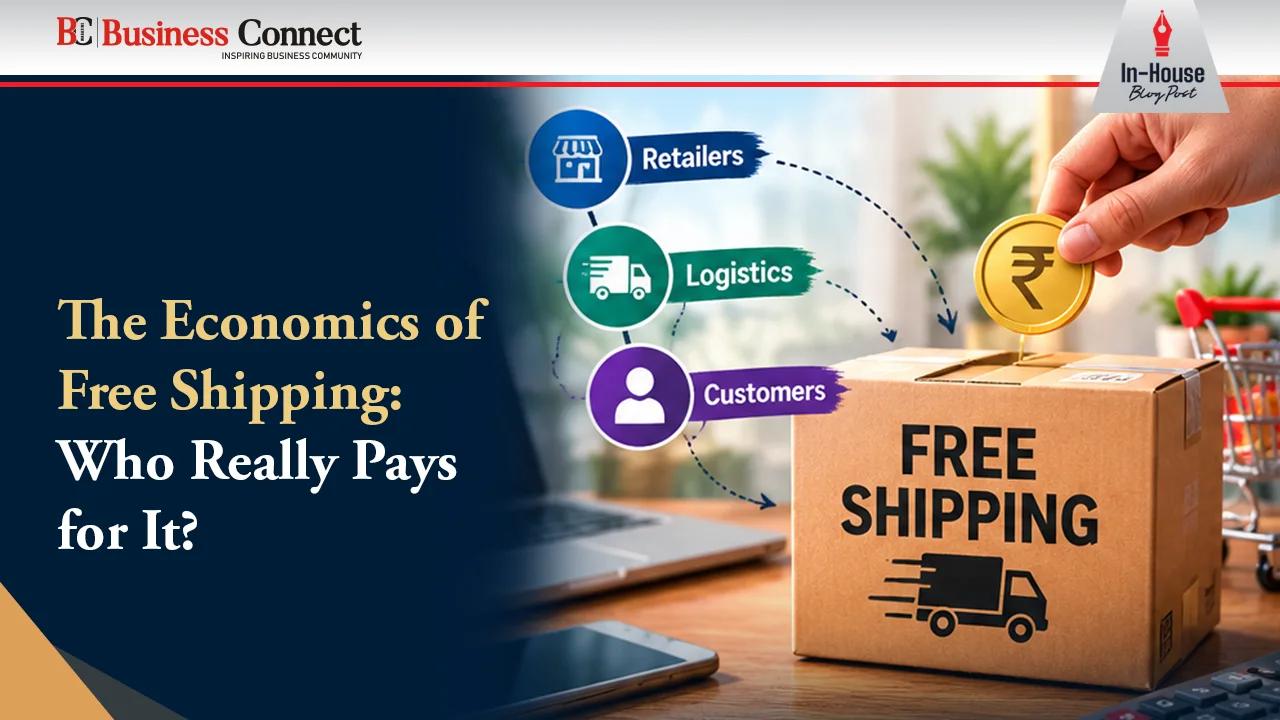
In online purchases, we often see free shipping and believe it is a good deal. But very few know that the cost of shipping is never free. Initially, the sellers pay for free shipping; then the same cost comes back through higher product prices, bigger orders, or a thinner profit margin. Returns and cash on delivery increase the bill more.
The Economics of Free Shipping: Who Really Pays for It?
Key takeaways
- Free shipping is a pricing decision; it sits between the product price and the seller’s margin.
- Returns affect businesses the most. Especially in cash-on-delivery (COD) parcels, in categories like fashion, returns can reach 20-40%.
- Setting a minimum order value for free shipping can take the order size up by 30%.
In this article, we will discuss in detail the economics of free shipping in India to help founders, D2C brands, and small sellers who ship parcels within India better understand the concept.
How does Free Delivery Work?
Buyers perceive things differently from a small price. Suppose a shirt is being sold at ₹500 with free delivery and a ₹450 shirt with ₹50 shipping. The overall amount is the same, but buyers will most probably prefer the first option. Here, sellers get the opportunity to keep shoppers from leaving at checkout.
Who Really Pays for Free Shipping?
It varies; many sellers add the delivery cost to the product price. Some sellers offer free delivery above a minimum order, say ₹1,000. Experts have found that this can lift order size by one-third. A buyer has already ₹780 in the cart, but at checkout, his cart adds ₹60 in shipping, so he adds a ₹300 item just to save the shipping charges.
In some cases, sellers first pay the shipping cost. Take a ₹300 item with a 15% margin. That means he earns ₹45, so ₹60 for delivery makes the sale a loss. Plus, marketplace costs are rising. From August 2026, Amazon charges sellers up to 10% of the order value as a cancellation fee on orders below ₹10,000, and Flipkart charges ₹90 for a missed or cancelled order.
Who pays for the Returns Cost?
Returns cost goes to the seller only. When a COD buyer refuses a parcel or is not home, it goes back to the seller. This is called RTO, or return to origin; here the seller has to pay for delivery twice with no earnings. One logistics guide puts RTO at 20-40% for COD orders in high-return categories like fashion, and estimates put each failed order at ₹180-240. A normal return can cost 1.5 to 2 times the original delivery.
Key Learnings for Businesses: Free shipping without losing money
- Research and understand the real cost per parcel, including packing, delivery, and returns.
- Set free shipping; add your shipping cost divided by your gross margin to your average order value.
- Try to push prepaid orders; you can give discount to users for moving from COD to prepaid.
- Consider avoiding free delivery on low-margin or heavy items or offer free standard delivery and charge for express.
- Mention shipping included in the final calculation; it is more honest.
Frequently Asked Questions
Is free shipping really free?
No. The shipping cost is included in the product price or taken from the seller’s margin. Even large platforms like Amazon get it through prices, memberships, or volume.
Who pays for shipping, the buyer or the seller?
It depends on the situation. If shipping is charged during checkout, the buyer pays. If the brand is offering free delivery, it means the seller pays first and will most likely recover the cost through higher prices or bigger orders.
What is a free shipping threshold?
It is a minimum order value; when customers purchase items for about that amount, the delivery becomes free. Buyers add items to reach it, and the extra margin helps cover the shipping.
Does free shipping increase returns?
In most cases, yes. Because free shipping encourages buyers to purchase several sizes and send extras back, plus COD refusals add RTO losses. Here, companies can reduce this by presenting clear size guides and honest photos.
Add Business Connect magazine to your Google News feed