
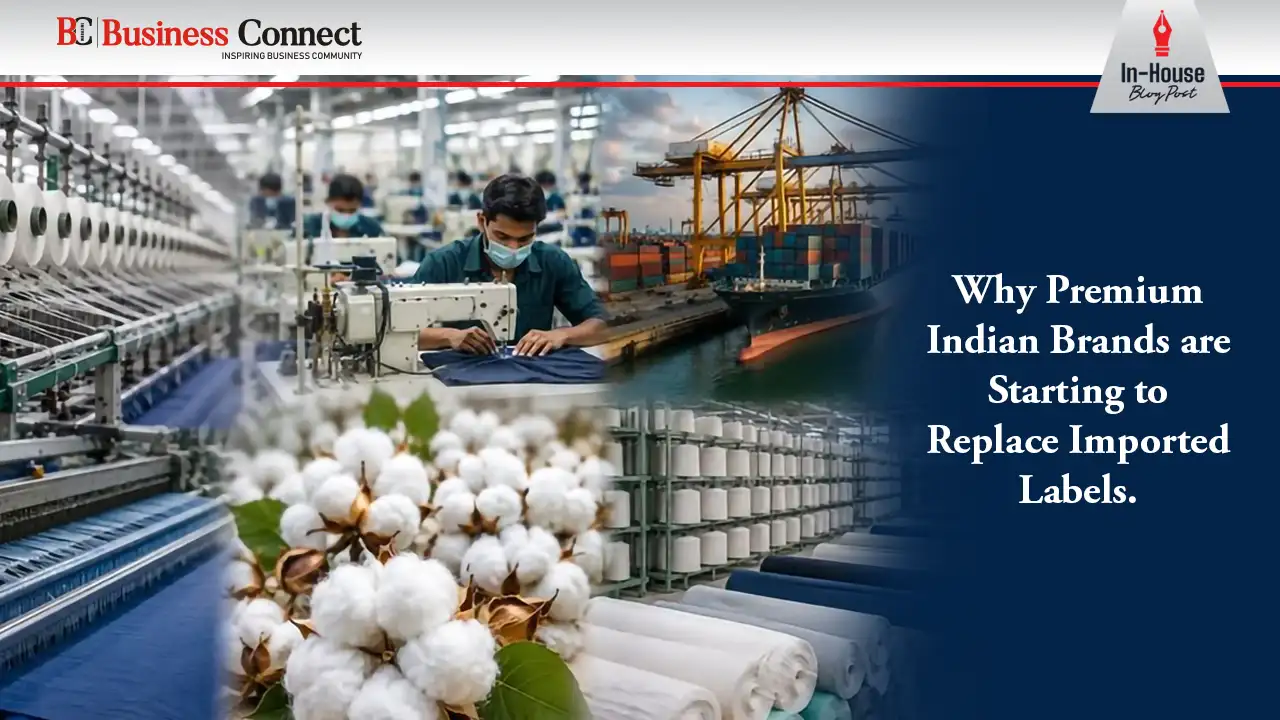
Earlier, having an imported purse, a shirt or a necklace was a matter of prestige. With time, that pride is changing address. These days, the more interesting answer to where you get this is a weaving cluster in Kerala or a nearby store.
Why Premium Indian Brands are Starting to Replace Imported Labels.
As per a Mintel study, 42% of Indian shoppers said they prefer Indian brands for clothing and accessories, while 19% prefer imported ones. People said this in a survey, so it measures what they want to buy, not what they buy.
Another strong reason, as shared by Mintel, is that one-third of respondents found that imported products are not made as per Indian living style.
For aspiring entrepreneurs and founders, the tough part has moved. Now, buyers are increasingly willing to buy from Indian brands. The next concern is around money; store space and time.
Why Indians Trust Indian Jewellers
Sales are quickly increasing in Indian Jewellery brands. Titan, which owns Tanishq, Mia, Zoya and CaratLane, grew its jewellery business 39% in the April to June 2026 quarter. Besides, Tanishq has increasing demand in North America and the Gulf. Experts believe that Indians spend heavily on jewellery partly because they feel comfortable with the experience Indian brands offer.
The Rise of Homegrown Labels
Indian homegrown clothing brands are moving at a rapid pace. ABFRL reported that Sabyasachi crossed above ₹100 crore in the April to June quarter, despite a weaker wedding market. The same kind of growth can be seen in other Indian brands. A few years back, premium used to mean ‘made abroad’. Now it means it is made better and made for me.
How Ayurveda Became Luxury
The same kind can be seen on the dressing table. Forest Essentials turned Ayurveda into a luxury skincare brand with nearly 200 stores, mostly in India and some in the UK and the Gulf. Estée Lauder agreed in March 2026 to buy the rest of it, and Puig holds a majority of Kama Ayurveda.
Four Lessons for Building a Premium Indian Brand
Indian homegrown brands are winning when they start with the occasion or a real moment, like a wedding, a festival or a workday, not “luxury” in general.
Tula, the Chennai cotton enterprise, began with Rs 15 lakh raised through crowdfunding, according to co-founder Jai Shankar, and put the money into people along the cotton chain instead of machines. A specific root is hard to copy.
Then give buyers proof. Retiyo says its fabric carries the Khadi Mark certificate, which sets it apart from products only marketed as khadi. If the craft is slow, decide early where to stay slow and where to add capacity, perhaps with a ready-to-wear line beside the made-to-order work.
Most importantly, get the fund for the long haul. KPMG says luxury brands take the better part of a decade to mature, while many private equity funds work on five-year cycles. That gap helps explain why Reliance Brands, ABFRL and RPSG have absorbed so many designer labels. Joining a large group can be a smart move, but founders should choose it with open eyes.
Go back to that question, “Where did you get this?” For a growing number of buyers, an Indian homegrown brand carries as much weight as a foreign one. The brands stay close to the people who make and wear their clothes and have the money to wait for the rest of the market to catch up and replace imported labels.
Frequently asked questions
What are some homegrown clothing brands in India?
Sabyasachi, Anita Dongre, Abu Jani Sandeep Khosla and Tarun Tahiliani are among the established couture labels. Vedant Fashions owns the ethnic wear brands Manyavar and Mohey and launched Twamev in the premium segment. Bombay Shirt Company and Andamen sell menswear, and Retiyo, Weavers Stores and Tula work with khadi and handloom cloth.
Which Indian brand is globally recognised?
Tanishq is a popular name, since Titan reports strong demand in North America and double-digit growth in the Gulf. Forest Essentials has stores in the UK and several Gulf countries. In clothing, YourStory counts Sabyasachi among Indian luxury brands that have grown globally.
Are Indian brands really replacing imports?
In jewellery and occasion wear, premium Indian homegrown brands are closely replacing the imported labels. In luxury fashion, foreign brands still hold the lead, and most luxury spending by Indians is expected to happen abroad.
Add Business Connect magazine to your Google News feed