
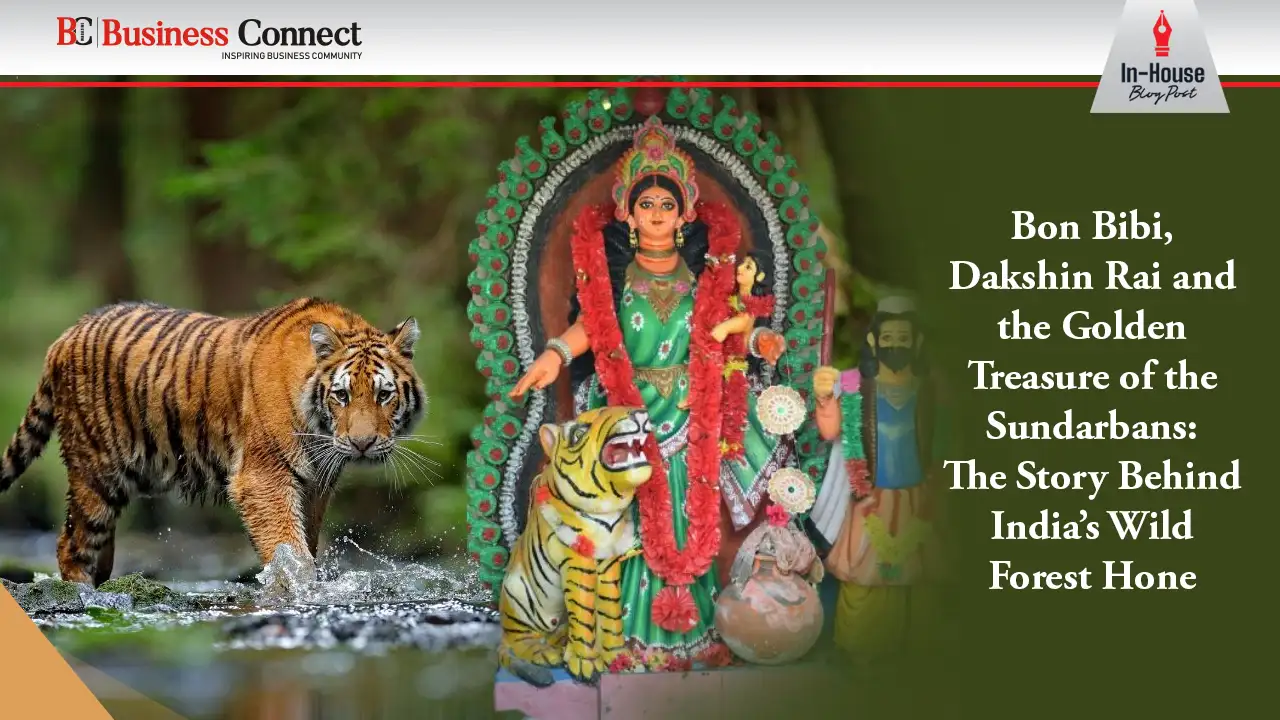
Bon Bibi, Dakshin Rai and the Golden Treasure of the Sundarbans: The Story Behind India’s Wild Forest Honey
The Forest Where Faith, Tigers and Honey Meet
In the vast mangrove forests of the Sundarbans, where rivers wind through tangled roots and the Royal Bengal Tiger roams in the shadows, honey is much more than a natural sweetener. It is a part of local folklore, cultural identity and the livelihoods of communities that have lived alongside the forest for generations.
Here, the story of honey begins with two legendary figures: Bon Bibi, the revered guardian of the forest, and Dakshin Rai, the powerful tiger-associated figure of Sundarbans folklore.
For the traditional honey collectors, locally known as mouals or mouwalis, these stories are not simply tales from the past. They reflect the dangers of entering the forest, the importance of humility, and the belief that nature must be approached with respect.
Today, this extraordinary landscape continues to inspire a deeper appreciation for Sundarbans wild forest honey and the people whose knowledge and courage connect it to our tables.
Bon Bibi: The Guardian of the Sundarbans
Bon Bibi, often called the Lady of the Forest, occupies a special place in the cultural life of the Sundarbans. Revered by Hindu and Muslim communities alike, she represents protection, compassion and the shared traditions of people whose lives depend on the mangrove ecosystem.
Before entering the forest, traditional honey collectors often offer prayers to Bon Bibi, seeking blessings for a safe journey and a successful return. These rituals reflect the uncertainty of their work, where every expedition involves navigating tidal waterways, muddy terrain, dense vegetation and the possibility of encountering wild animals.
The legend of Bon Bibi also carries a moral message: the forest is not a place to conquer through greed. It is a living ecosystem that provides for those who approach it with humility and restraint.
For the people of the Sundarbans, this relationship between faith and nature remains an important part of their cultural heritage.
Dakshin Rai: The Powerful Tiger King of Local Folklore
In Sundarbans folklore, Dakshin Rai is frequently associated with the Royal Bengal Tiger and the formidable power of the forest. His character appears in traditional narratives that explore the relationship between human ambition and the dangers of the natural world.
One of the best-known stories involves Dukhe, a poor boy who accompanies a honey-gathering expedition led by Dhona. According to a popular version of the legend, Dhona becomes tempted by the promise of abundant honey and agrees to abandon Dukhe in the forest as an offering to Dakshin Rai.
Left alone in danger, Dukhe calls upon Bon Bibi for help. She comes to his rescue, confronting the threat and ensuring the boy’s safe return.
The story is remembered in different versions across the region, but its central message remains powerful: greed can lead to suffering, while compassion and protection can restore balance.
Dakshin Rai’s place in this folklore is not merely about fear of tigers. The stories remind listeners that the forest possesses its own power, and human beings must recognise their limits when entering it.
The Honey Hunters Who Enter the Mangroves
Behind the legends are real people whose livelihoods have long been connected to the Sundarbans.
Traditional honey collectors venture into forest areas during the honey-collection season, navigating narrow creeks and tidal rivers in search of naturally occurring bee colonies. Their knowledge of the landscape, seasonal patterns and local traditions is passed down through generations.
The work is physically demanding and potentially dangerous. The presence of tigers, changing tides, remote locations and difficult terrain makes forest honey collection a livelihood that requires preparation, teamwork and considerable experience.
For many families living near the mangroves, honey collection has historically provided an important source of seasonal income. The harvest also connects local communities to a broader tradition of working with forest resources.
The stories of Bon Bibi and Dakshin Rai remain closely intertwined with this occupation because they express the hopes and anxieties of people who enter the forest to support their families.
Their contribution deserves recognition not only for the honey they collect, but also for the knowledge and cultural heritage they preserve.
What Makes Sundarbans Wild Forest Honey Special?
The Sundarbans is a distinctive landscape shaped by mangroves, tidal waterways, saline conditions and seasonal flowering. These environmental characteristics create a unique setting for honey production.
Honey collected from naturally occurring bee colonies can reflect the floral resources available during a particular season. Its colour, aroma, texture and flavour may vary according to the plants visited by bees, the bee species involved and the conditions under which the honey is harvested and stored.
Unlike honey produced exclusively in managed apiaries, honey gathered from wild colonies may come from large natural hives established in forest environments. However, the precise origin and harvesting method depend on the particular batch.
The appeal of Sundarbans honey therefore extends beyond its sweetness. It offers a connection to a distinctive ecological landscape and to the traditional knowledge of the communities associated with it.
For consumers interested in understanding where their food comes from, information about sourcing, handling, testing and traceability can help build confidence in the product.
Responsible sourcing also means recognising that a forest’s natural resources are not limitless. Harvesting practices should respect wildlife, protect the surrounding ecosystem and follow applicable forest regulations.
Beyond the Legend: Protecting People and the Forest
The story of Bon Bibi teaches that human beings should not treat the forest merely as a source of wealth. This lesson is especially relevant today, when communities across the Sundarbans face livelihood challenges alongside environmental pressures.
Traditional honey collectors work in a landscape where wildlife conservation and local livelihoods must be considered together. Protecting the forest does not mean overlooking the people who depend on it. Equally, supporting livelihoods should not come at the cost of damaging the ecosystem.
More responsible approaches can include improving market access for local producers, supporting community-based initiatives, strengthening harvesting practices and helping consumers understand the origin of the products they purchase.
Such efforts can create greater recognition for traditional knowledge while encouraging a more thoughtful relationship between commerce, communities and conservation.
Royal Bee Brothers: Bringing the Story of the Sundarbans to Consumers
At Royal Bee Brothers, the story of Indian forest honey is closely connected to the people and landscapes behind the product.
The company works with local communities and traditional honey collectors, with an emphasis on responsible sourcing and the preservation of forest-linked livelihoods. Its Sundarbans initiatives have included engagement with traditional collectors, local cooperative structures and efforts to improve the safety and practices associated with honey production.
Royal Bee Brothers has also documented work in the Sundarbans involving local communities, the forest department and WWF-India, including initiatives connected to managed beekeeping in designated forest areas. Such approaches illustrate how community livelihoods and conservation objectives can be considered together, subject to the applicable permissions and management guidelines.
Learn more about the company’s work through its Sundarbans honey and community initiative.
By connecting consumers with the origins of forest honey, Royal Bee Brothers seeks to make the story behind each product an important part of the experience. The focus extends beyond taste to include sourcing, traditional knowledge and the communities whose work sustains this heritage.
From the Sundarbans to Your Table
The legend of Bon Bibi and Dakshin Rai has survived because it expresses something fundamental about life in the Sundarbans: nature provides, but it also demands respect.
Every honey season brings together the landscape, the bees, the experience of traditional collectors and the cultural memories of generations. Behind a jar of Sundarbans honey lies a story of rivers and mangroves, courage and caution, livelihoods and local traditions.
As consumers become more interested in authentic, traceable and responsibly sourced foods, these stories deserve to be heard. They remind us that the value of a natural product is not determined by taste alone, but also by the people, places and practices connected to it.
Through its focus on Indian forest honey and community-linked sourcing, Royal Bee Brothers invites consumers to discover this heritage and appreciate the remarkable relationship between the Sundarbans and the people who call it home.
Because the true sweetness of forest honey lies not only in the nectar collected by bees, but also in the human stories and living traditions that surround it.
Add Business Connect magazine to your Google News feed