
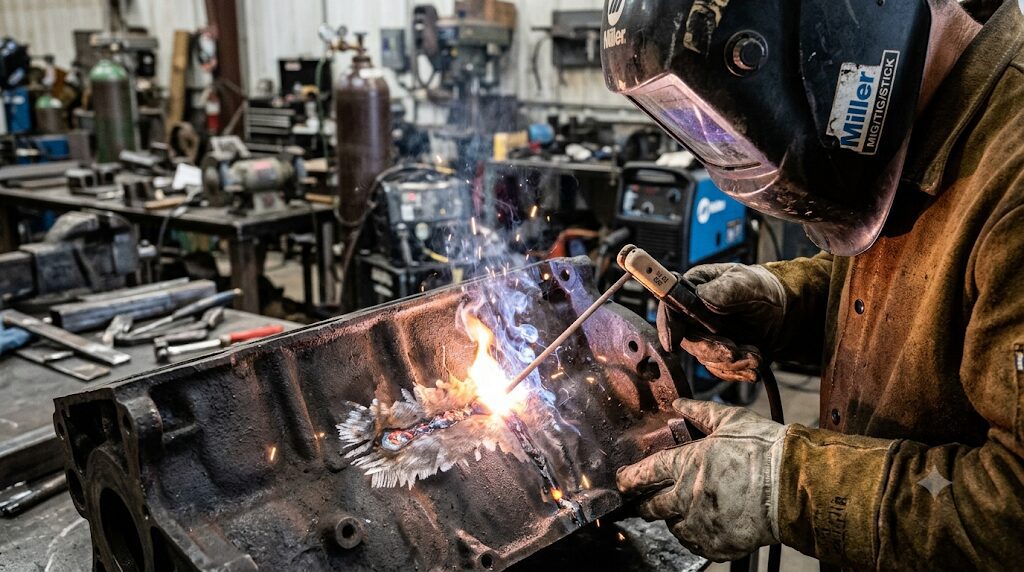
Cast iron is used in pump casings, gearbox housings, engine blocks and machine bases. Its ability to absorb vibrations and handle heavy loads makes it useful across industries. However, welding cast iron can be challenging. Poor heat control can cause cracks in the repaired area during or soon after cooling.
A successful repair depends on choosing the right cast iron welding rod and controlling heat throughout the welding process. Understanding how cast iron behaves differently from steel helps welders make the right choices.
Why is Cast Iron Difficult to Weld?
Cast iron’s high carbon content and limited ductility, particularly in grey iron, make it more prone to cracking during welding.
High Carbon Content
Cast iron usually contains 2 to 4 per cent carbon, compared with less than 0.3 per cent in mild steel. In grey cast iron, much of this carbon forms graphite flakes. These make the material easier to machine and help absorb vibrations, but also make it brittle.
Low Ability to Stretch
Steel can stretch slightly as a weld heats and cools. Grey cast iron has very little ability to do this. As the weld shrinks during cooling, stress builds up in the weld and surrounding metal, and if it becomes too high, cracks can form. Uneven heating adds to this stress.
Hardening Near the Weld
Welding heat changes the metal near the weld. Some graphite dissolves into the metal, increasing its carbon content. Rapid cooling can form hard, brittle structures such as martensite and iron carbides. These areas are difficult to machine and more likely to crack.
Oil, Grease and Other Contaminants
Cast iron can absorb oil, grease and moisture during use. When heated, these contaminants release gases that can create small holes, known as porosity, in the weld. Paint, rust and surface impurities can also affect weld quality.
Grey, ductile and malleable cast iron can be welded with proper preparation. White cast iron is generally considered unsuitable for welding. Identifying the iron type helps determine the filler and heating method.
Choosing the Right Filler Material for Cast Iron Welding
Filler material helps manage the stress created as the weld cools and shrinks. Nickel-based fillers are commonly used because they remain relatively soft and flexible. This allows the weld to absorb some stress instead of transferring it to the casting.
| Filler Type | AWS Classification | Main Characteristics | Typical Applications |
| Pure Nickel | ENi-CI | Soft and easy to machine | Thin sections, single-pass repairs and casting defects |
| Nickel-Iron | ENiFe-CI | Higher strength and crack resistance | Thick sections, ductile iron and cast iron-to-steel joints |
| Nickel-Copper | ENiCu-B | Easy to machine, moderate strength | Repairs where dilution can be kept low and machinability is needed |
| Steel-Based | ESt | Hard, difficult-to-machine deposit | Non-critical repairs where machining is not needed |
Higher nickel content generally improves machinability, while added iron improves strength and can reduce filler cost.
Industrial fabricators often rely on specialised consumable manufacturers such as Superon Technik for nickel and nickel-iron electrodes suited to cast iron repairs. Choosing the right cast iron welding rod helps maintain consistent weld quality and supports reliable repairs across different casting conditions.
Heat Control: Preheating and Cold Welding Methods
Heat control is as important as filler selection. Managing the temperature difference between the weld and casting helps reduce cracking.
Preheating (Hot Welding Method)
Preheating involves slowly heating the entire casting before welding. This helps maintain an even temperature and reduces sudden cooling. Preheat temperatures for grey cast iron vary with the component’s size, shape and filler, with moderate ranges of around 200°C to 315°C often used for nickel electrodes.
After welding, allow the casting to cool slowly under an insulating blanket or in dry sand. Check temperatures at different points to confirm even heating.
Cold Welding (Low Heat Input Method)
When preheating is not practical, keep heat input low and prevent it from building up in one area.
- Use low current: Choose a small-diameter electrode and the lowest current that still achieves proper fusion.
- Keep beads short: Weld sections of about 25 mm at a time, then pause.
- Peen while hot: Lightly tap each bead with a hammer to help reduce shrinkage stress.
- Allow cooling between passes: Let the area cool until warm to the touch before adding the next bead.
- Stagger the welds: Spread beads along the joint rather than welding continuously in one spot.
Do not cool the casting with water or compressed air after welding. Rapid cooling can increase the risk of cracking.
Matching Filler and Heat Control to the Repair
The choice of filler and welding method also depends on the casting being repaired. For thick components that carry heavy loads, preheating with nickel-iron electrodes is generally preferred. For thinner sections or components that need machining after welding, pure nickel rods can be used with the cold welding method.
Castings with oil or burnt surfaces may need a sealing layer before the final nickel deposit. Using smaller electrodes also helps keep the current and weld pool under control.
Before starting, check that the welding rod material is suitable for the type of cast iron. Clean the damaged area properly by drilling holes at the ends of the crack, grinding away the damaged metal and removing any absorbed oil.
Conclusion
Welding cast iron requires extra care because the material can crack easily when heated and cooled. The right filler material helps reduce stress in the weld, while proper heat control prevents sudden temperature changes. Taking care during surface preparation and choosing the right welding method can make cast iron repairs more dependable.
Add Business Connect magazine to your Google News feed