
Written By Puja Bhardwaj
Artificial intelligence has become a crucial part of human life and work. The AI-powered products and infrastructure have simplified multiple routine and monotonous tasks. But at the same time, the spectre of AI eliminating jobs has become a persistent anxiety. From boardrooms of business to classrooms, the same point is buzzing: can machines replace humans? There is little proof so far, but AI has significantly disrupted employment patterns. There is no sudden collapse of jobs, but the early stages of a complex transformation in the employment market. Let’s understand it in detail:
The Emerging Mismatch: New vs. Old
While AI has grabbed positive attention in headlines, analysts warn that a major transition in labour composition will be major for the economy.
The routine tasks within the tech and finance realm are at risk due to AI, whereas new positions are opening in highly specialised roles, focused on building, managing, and auditing AI systems.
According to Wolfe Research, more than 5 million jobs have been at risk over the last two decades. The report further highlights that the labour shift will mainly focus on the total number of jobs. Another focal point is whether the workforce can retrain quickly to fill these newer, more technical roles or not.
The “mismatch” is clearly visible in the latest labour data, where cyclical sectors like construction and manufacturing are increasingly hiring, while hiring in traditional tech hubs has reduced a lot.
Reports by the International Monetary Fund
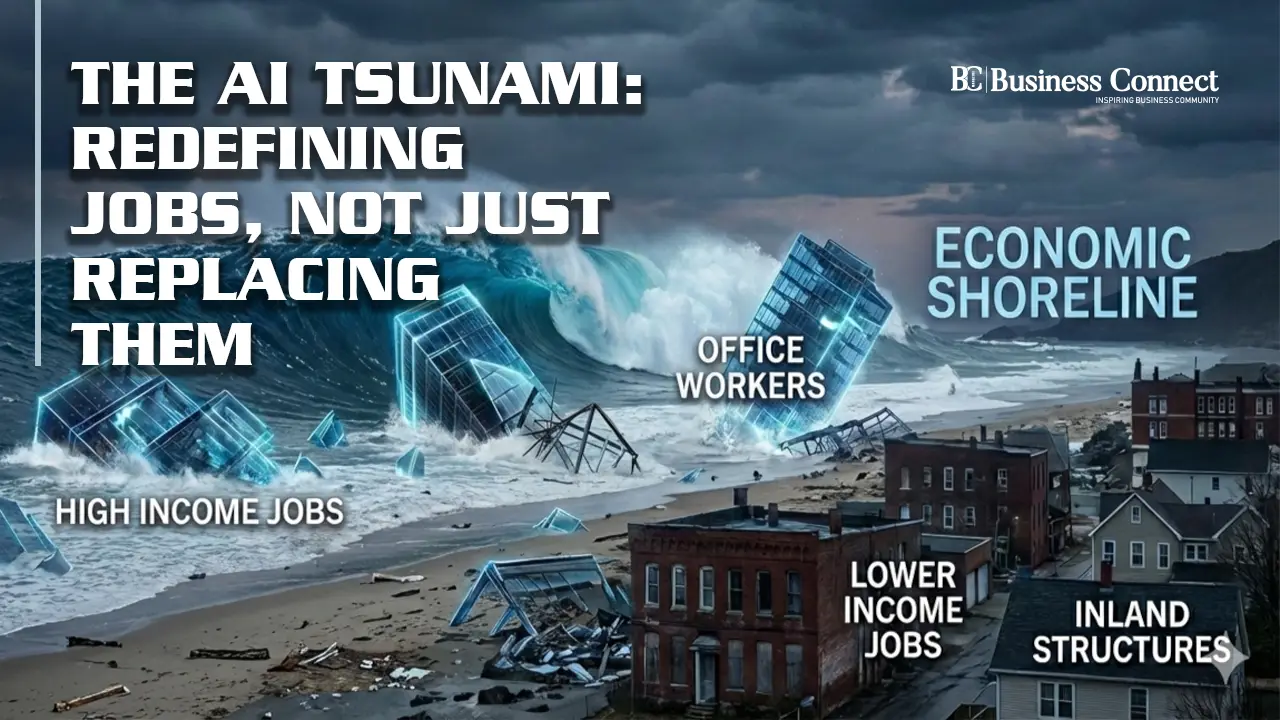
Sharing her concern about AI’s effect on the job market, the head of the IMF, Kristalina Georgieva, states that AI will be a “tsunami hitting the labour market” and younger generations will be most affected. As per the IMF’s own research, there would be huge changes in the demand for skills, as technology is becoming a crucial part of businesses.
In the coming years, AI will affect 60% of jobs, either enhanced, eliminated or transformed – 40% of them globally.
She further asserts that in developing economies, AI has already taken one in 10 jobs and boosted these employees’ salaries, with knock-on benefits for the local economy.
Georgieva has also warned that AI might replace multiple traditional roles that are generally taken up by younger employees. These eliminated tasks are mostly what entry-level jobs do at present.”
Key Skills to Embrace AI
Here are some skills you should excel in to stay ahead in the AI era.
- Lifelong learning: Focus on always learning and adapting to new technologies. It can include taking courses, attending workshops and conferences, and staying updated with the latest trends.
- Soft Skills: AI can do routine tasks, but it cannot replicate human emotional intelligence and creativity. Hence, soft skills like communication, problem-solving, and collaboration will be crucial.
- Agility: In the AI era, you should be agile and capable of quick adaptation in changing circumstances. It includes being willing to learn new skills, take on new tasks, and embark on new career paths.
- Specialise: As AI has become a crucial part of life, the demand for professionals with specialised AI skills and knowledge will increase. Consider enhancing expertise in this particular area to boost your stay ahead in the job market.
The Future of AI
The future job market will not run just on technology. Government policy, education, innovation, and the collective efforts for change will play a crucial role. While AI will be an unstoppable force, revolutionising human life and work, it will inevitably displace human labour. AI is just a tool; its impact depends on how it is used. Hence, the actual concern is not whether AI will take our jobs, but whether we are ready to redefine what jobs mean in the AI era.
Frequently Asked Questions
How many jobs will be lost to AI by 2026?
According to the World Economic Forum, “AI will replace some 85 million jobs by 2026.”
What will be the impact of AI on retail jobs?
As reported by Freethink, it says that 65% of retail jobs will be automated by 2026 due to technological advancements, rising costs and wages, tight labour markets, and reduced consumer spending.