
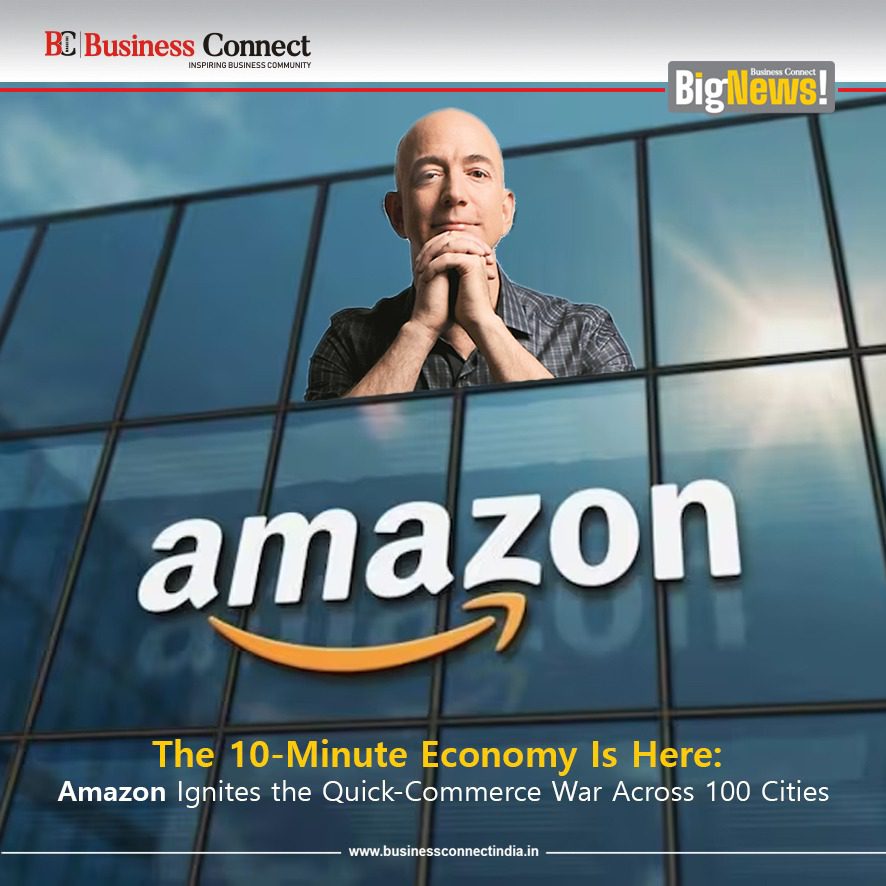
If you thought quick-commerce had already reached its peak, think again—because the real race has just begun.
Amazon India has stepped on the accelerator, announcing an aggressive expansion of its ultra-fast delivery service, Amazon Now, to 100 cities. And this isn’t just another rollout—it’s a statement. A loud one.
Backed by a massive ₹2,800 crore investment, Amazon is building a network that’s designed for one thing: speed at scale. Over 1,000 micro-fulfilment centres (MFCs) are in the works, bringing everyday essentials closer to customers than ever before.
🚀 From Metros to Micro-Markets
This expansion isn’t limited to the usual metro strongholds. Yes, Delhi-NCR, Mumbai, and Bengaluru remain key battlegrounds—but Amazon is going deeper.
Cities like Jaipur, Lucknow, Kochi, and Chandigarh are now part of the strategy. Why? Because the next wave of digital consumption is happening beyond metros—and Amazon knows it.
The vision is clear:
Turn “I need it” into “It’s already here” — no matter where you live.
🛒 It’s Not Just Groceries Anymore
Quick-commerce started with milk, bread, and last-minute cravings. But Amazon is rewriting that playbook.
With Amazon Now, your 10-minute delivery could include:
Fresh fruits and vegetables straight from farms
Personal care and beauty essentials
Fashion basics
Small home appliances
Baby and pet care products
This isn’t convenience—it’s a complete lifestyle layer delivered instantly.
And here’s the bigger impact: over 16,000 farmers are expected to benefit by selling directly through this ecosystem. That’s not just logistics—that’s supply chain transformation at scale.
🧠 Tech, People & the Real Backbone
Behind the scenes, Amazon is doubling down on more than just warehouses.
AI-powered route optimization for faster, smarter deliveries
Better working conditions and financial support for delivery partners
Enhanced safety and efficiency across fulfilment networks
Because in the quick-commerce race, execution beats intention every single time.
🥊 The Real Battle Begins
With Blinkit, Zepto, and Swiggy Instamart already in the arena, Amazon’s move turns up the heat significantly.
This is no longer about “who delivers faster.”
It’s about who owns your daily habits.
And in this battle, one thing is certain—the consumer wins.
The expectation bar has officially moved from same-day to same-minute. And as this war intensifies, India is becoming the global hotspot for the future of instant commerce.
FAQs
Q1. What is Amazon Now?
Amazon Now is Amazon India’s ultra-fast delivery service focused on delivering essential products within minutes through a dense network of fulfilment centres.
Q2. How many cities is Amazon Now expanding to?
Amazon is expanding Amazon Now to 100 cities across India, including both metro and non-metro regions.
Q3. How much is Amazon investing in this expansion?
Amazon is investing approximately ₹2,800 crore to scale its quick-commerce and micro-fulfilment network.
Q4. What are micro-fulfilment centres (MFCs)?
MFCs are small, strategically located warehouses designed to store fast-moving products closer to customers for quicker deliveries.
Q5. How many micro-fulfilment centres will Amazon build?
Amazon plans to build over 1,000 micro-fulfilment centres as part of this expansion.
Q6. Which cities are included in Amazon’s expansion plan?
Along with metros like Delhi-NCR, Mumbai, and Bengaluru, cities such as Jaipur, Lucknow, Kochi, and Chandigarh are also included.
Q7. What products will Amazon Now deliver?
Amazon Now will deliver groceries, fresh produce, personal care items, fashion basics, baby products, pet care items, and small appliances.
Q8. How is Amazon using technology in this expansion?
Amazon is using AI-driven logistics, route optimization, and enhanced delivery systems to improve speed and efficiency.
Q9. How does this affect competitors like Blinkit and Zepto?
This expansion intensifies competition in India’s quick-commerce space, directly challenging players like Blinkit, Zepto, and Swiggy Instamart.
Q10. Why is this expansion important for India?
It signals a shift toward ultra-fast commerce at scale, reshaping consumer expectations from same-day delivery to near-instant delivery.