
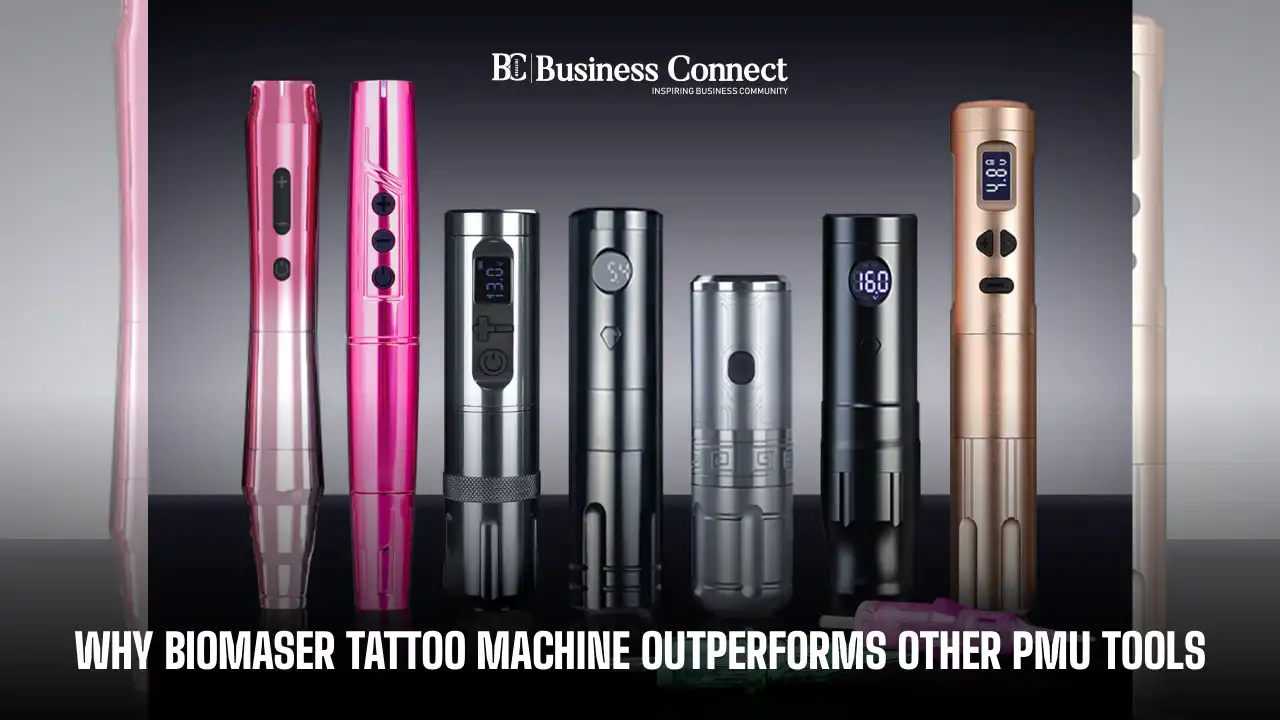
Every permanent makeup artist knows the frustration of working with tools that fail mid-session—inconsistent pigment deposit, unpredictable motor speeds, and hand fatigue that turns a two-hour appointment into an endurance test. These aren’t minor inconveniences; they directly impact client results, artist reputation, and long-term career sustainability.
The Biomaser tattoo machine has emerged as a definitive answer to these persistent challenges, engineered specifically to address the precision demands and physical toll of PMU work. Built around a Swiss motor that delivers unwavering reliability and a short stroke mechanism designed for controlled, accurate pigment placement, this machine represents a fundamental shift in how artists approach their craft. Rather than compensating for equipment limitations, professionals can finally focus entirely on technique and artistry.
In the following analysis, we’ll break down exactly why the Biomaser outperforms competing PMU tools across every metric that matters—from technological innovation and ergonomic design to real-world durability and cost-effectiveness.
Understanding the Biomaser Tattoo Machine: A Technological Marvel
The Biomaser tattoo machine represents a deliberate departure from the compromises that have defined PMU equipment for years. Where most machines adapt body tattoo technology for cosmetic applications—often poorly—the Biomaser was purpose-built for the unique demands of permanent makeup.
Its architecture centers on two critical innovations: a Swiss-manufactured motor that maintains consistent rotational speed regardless of skin resistance, and a short stroke mechanism calibrated specifically for the shallow, controlled penetration that PMU work requires. These aren’t marketing additions bolted onto existing hardware; they form the machine’s foundational engineering.
The housing itself is machined from aerospace-grade aluminum, keeping overall weight minimal while providing the structural rigidity needed to eliminate unwanted vibration transfer. Together, these components create a system where every needle movement is intentional, predictable, and repeatable—session after session.
The Swiss Motor Advantage: Precision and Durability
Swiss motors have earned their reputation in precision industries for good reason. The motor inside the Biomaser operates with tolerances measured in microns, meaning rotational speed remains stable whether the needle encounters thin eyelid skin or denser lip tissue.
This consistency eliminates the speed fluctuations that plague standard DC motors, which often slow under load and cause uneven pigment deposit. From a durability standpoint, the Swiss motor’s construction uses hardened bearings and corrosion-resistant materials that withstand thousands of operating hours without degradation.
Artists report running their machines through multiple full appointment days without detecting any performance drift. The practical result is fewer service interruptions, no mid-procedure surprises, and dramatically reduced long-term maintenance requirements compared to machines relying on generic motor components.
Short Stroke Mechanism: Mastering Pigment Deposit
The short stroke configuration—typically operating between 1.8mm and 2.5mm of needle travel—is what transforms raw motor power into PMU-appropriate precision. A shorter stroke means the needle spends less time fully extended, reducing trauma to surrounding tissue while still achieving adequate penetration depth for pigment implantation.
This controlled movement prevents the over-saturation and blowouts that commonly occur with longer stroke machines adapted from body tattooing. For techniques like hairstrokes in microblading or soft pixel shading on lips, the short stroke allows artists to build color gradually and deliberately. Each pass deposits a predictable amount of pigment, making it far easier to achieve symmetry and uniform saturation without overworking the skin—a critical factor in healing outcomes and color retention.
Superior Precision and Reliability in PMU Applications
Precision in permanent makeup isn’t a luxury—it’s the baseline expectation every client walks in with. A single inconsistent pass can mean the difference between natural-looking brows and an obvious cosmetic procedure. The Biomaser tattoo machine addresses this reality through engineering that removes variability from the equation.
Its motor-stroke combination delivers identical needle behavior whether you’re on your first client of the day or your fifth, eliminating the gradual performance degradation that forces artists to constantly adjust their technique with lesser equipment. Where competing machines require artists to mentally compensate for speed drops or inconsistent needle depth, the Biomaser maintains parameters so stable that technique becomes the only variable.
This predictability translates directly into client satisfaction—results are reproducible, touch-up rates decrease, and artists build reputations on consistency rather than hoping each session goes well.
Ensuring Consistent Pigment Deposit for Flawless Results
Even pigment distribution depends on three factors working in harmony: needle speed, penetration depth, and the artist’s hand speed across the skin. The Biomaser controls the first two with mechanical precision, freeing the artist to focus entirely on the third.
The stable RPM output means pigment enters the skin at uniform intervals regardless of tissue density changes within the same procedure area. Artists working on ombre brows, for example, can trust that their gradient builds smoothly from tail to front without unexpected saturation pockets.
This consistency dramatically reduces the need for corrective touch-ups at follow-up appointments—many artists report their retention rates improving by noticeable margins after switching to the Biomaser. The machine’s settings remain calibrated between sessions, so artists who find their ideal voltage and speed configuration can replicate results across dozens of clients without recalibrating.
Reducing Errors: How Biomaser Enhances Artist Confidence
Confidence in PMU work comes from knowing your equipment won’t betray you at critical moments. Artists who previously worked with machines prone to sudden speed surges or inconsistent needle grouping behavior describe a tangible shift in their mental approach after adopting the Biomaser.
One common scenario illustrates this well: during eyeliner procedures, where margin for error is essentially zero, artists need absolute trust that needle depth won’t suddenly increase. The short stroke mechanism physically limits maximum penetration, creating a mechanical safety net that prevents blowouts even if hand pressure momentarily increases.
This built-in safeguard allows artists to work with fluid, confident strokes rather than the tentative, overly cautious movements that paradoxically create less precise results. The psychological benefit compounds over time—artists take on more complex procedures, expand their service offerings, and approach challenging skin types with problem-solving creativity rather than anxiety about equipment failure.
Ergonomics and Artist Comfort: Reducing Fatigue During Long Sessions
A machine’s technical specifications mean nothing if an artist’s hand cramps forty minutes into a procedure. Physical fatigue doesn’t just cause discomfort—it introduces micro-tremors, reduces stroke accuracy, and forces artists to rush through final details when precision matters most.
The Biomaser tattoo machine was engineered with this reality at its center, treating ergonomics not as an afterthought but as a performance multiplier. Its body diameter, weight distribution, and vibration dampening work together to keep the artist’s hand relaxed and stable through back-to-back appointments.
Artists who regularly perform four or five procedures daily report significantly less wrist strain and shoulder tension compared to heavier, poorly balanced alternatives. This isn’t merely about comfort—it’s about maintaining first-client precision on your last client of the day.
Design Features for Ergonomic Handling
The Biomaser’s aluminum alloy body keeps total weight low enough that extended holding periods don’t fatigue the small muscles of the hand and forearm. Its grip diameter mimics a standard pen, allowing artists to use the same natural hand position they’ve trained with for years rather than adapting to an awkward form factor.
Internal vibration isolation separates motor oscillation from the outer housing, so the buzzing sensation that typically numbs fingers over time is dramatically reduced. The machine’s center of gravity sits close to the grip point rather than being front-heavy near the needle cartridge, which means artists don’t unconsciously grip harder to maintain control.
Additionally, the smooth exterior finish prevents the sticky friction that causes calluses and pressure points during prolonged use, letting the machine glide naturally between hand positions as technique demands.
Impact on Artist Performance and Client Satisfaction
When fatigue is removed from the equation, the quality difference becomes visible in finished work. Steadier hands produce cleaner hairstrokes, more uniform shading gradients, and sharper liner edges—especially during the final thirty minutes of complex procedures where lesser machines would have already degraded an artist’s manual control.
Clients benefit directly through shorter appointment times, since artists aren’t pausing to rest or shake out cramping fingers. Over months, this translates into measurable business advantages: artists can comfortably book more appointments per day without sacrificing quality, client reviews consistently mention precision and attention to detail, and the physical sustainability of the career extends years beyond what poorly designed equipment allows.
Reduced fatigue also means fewer repetitive strain injuries, protecting artists from the wrist and shoulder conditions that prematurely end careers in this industry.
Head-to-Head Comparison: Biomaser vs. Other PMU Machines
When artists evaluate PMU machines side by side, the differences between the Biomaser and its competitors become impossible to ignore. Most mid-range machines rely on standard DC motors sourced from generic manufacturers—motors that deliver adequate performance initially but degrade noticeably within six to twelve months of regular use.
The Biomaser’s Swiss motor, by contrast, maintains its factory-spec performance characteristics well beyond typical replacement cycles, meaning artists aren’t shopping for new equipment annually. On the precision front, competing machines with longer stroke lengths (3.5mm or more) force artists into a constant battle against over-penetration, particularly on delicate areas like eyelids and lip borders.
The calibrated short stroke eliminates this struggle entirely, producing results that competitors simply cannot match without significant technique compensation. Vibration output tells another revealing story—machines built with plastic housings or poorly balanced internals transfer substantially more oscillation to the artist’s hand, accelerating fatigue and reducing fine motor control during critical detail work.
Key Differences in Performance and Durability
User feedback consistently identifies three areas where the Biomaser separates itself from alternatives. First, speed consistency under load: artists testing machines against skin simulators of varying densities report that competing motors lose between 8-15% of their set RPM when encountering resistance, while the Biomaser holds within 2-3% variation.
This difference is audible—you can hear cheaper machines bog down on thicker skin. Second, build longevity stands apart dramatically. Machines with composite plastic bodies develop internal rattles and loose tolerances after months of daily use, introducing play in the needle mechanism that compromises depth accuracy. The machined aluminum construction maintains tight mechanical tolerances indefinitely under normal operating conditions.
Third, thermal management differs significantly—generic motors generate excess heat during extended procedures, causing expansion that alters stroke length mid-session. The Swiss motor’s efficient design runs cooler, keeping all parameters stable from the first minute to the last of a lengthy appointment.
Cost-Effectiveness and Long-Term Value for Artists
The initial investment in a Biomaser pays dividends that compound over an artist’s career. Consider the true cost of cheaper alternatives: replacement every 12-18 months, frequent cartridge compatibility issues requiring adapter purchases, and the hidden expense of additional touch-up appointments caused by inconsistent pigment deposit.
Artists who track their numbers after switching typically find their touch-up rates drop significantly, meaning more revenue from new clients rather than unpaid correction work. Maintenance costs remain minimal because the Swiss motor requires no routine servicing beyond basic cleaning, unlike machines that need periodic motor replacement or internal lubrication.
Client retention also factors into the value equation—when results are consistently excellent, rebooking rates climb and referral traffic increases organically. Over a three-year period, the total cost of ownership for the Biomaser typically falls below that of cycling through two or three budget machines, while delivering superior results throughout that entire timeframe.
Practical Guide for Artists: Maximizing Your Biomaser Machine
Owning a high-performance machine means little without knowing how to extract its full potential. The Biomaser rewards artists who take time to understand its setup parameters and maintain its components properly.
Whether you’re unboxing a new unit or looking to refine your existing workflow, a systematic approach to calibration and care ensures the Swiss motor and short stroke mechanism perform exactly as engineered—delivering the precision and consistency that justify the investment. The following guidance addresses the most common setup questions and technique adjustments artists encounter when integrating the Biomaser into their daily practice.
Step-by-Step Setup and Maintenance for Reliability
Begin by running the machine unloaded for thirty seconds before each working day to allow the Swiss motor’s bearings to reach optimal operating temperature. When attaching cartridges, ensure the connection seats fully with no lateral play—even slight looseness introduces needle wobble that undermines precision.
For daily cleaning, wipe the exterior with a hospital-grade disinfectant and use compressed air to clear any debris from the cartridge receptor area. Weekly, inspect the power cord connection point for any looseness that could cause intermittent voltage drops.
The motor itself requires no internal lubrication or user-serviceable maintenance, but storing the machine horizontally in its case prevents gravity-induced settling of internal components. Every three months, run the machine at maximum speed for two minutes unloaded to verify smooth operation and listen for any bearing noise that might indicate eventual service needs. Keep firmware or voltage settings documented so you can restore your preferred configuration instantly if settings are accidentally changed.
Best Practices for Optimal Pigment Deposit and Efficiency
Match your needle configuration to the short stroke’s characteristics rather than fighting against them. For hairstrokes, single-needle or tight three-round groupings paired with lower voltage settings let the short stroke create crisp, defined lines without dragging excess pigment into surrounding tissue. For shading work, shader cartridges at moderate speed allow the short stroke to deposit pigment in controlled layers—work in passes rather than pressing harder to achieve saturation in one attempt.
Hand positioning matters significantly with this machine: hold it at a consistent 45-degree angle to the skin surface, letting the short stroke’s limited travel do the depth work rather than relying on downward pressure. Stretch the skin adequately so the needle enters cleanly on each cycle.
When transitioning between techniques within a single procedure, adjust voltage in small increments rather than dramatic jumps, giving yourself a test pass on the working area before committing to full strokes. This methodical approach leverages the Biomaser’s mechanical consistency to produce results that improve with each session as you refine your personal settings.
The Biomaser Advantage: A Career-Defining Investment for PMU Artists
The Biomaser tattoo machine isn’t simply another option in a crowded PMU equipment market—it’s a fundamentally different approach to what a permanent makeup tool should deliver. Its Swiss motor provides the unwavering speed consistency that eliminates guesswork from every procedure, while the short stroke mechanism ensures pigment enters the skin at precisely the right depth every single time.
These engineering choices directly solve the problems that have plagued PMU artists for years: inconsistent results, excessive touch-up rates, and the physical toll that shortens careers. The ergonomic design keeps hands steady and pain-free through demanding schedules, and the machined aluminum construction outlasts competitors by years rather than months.
When you calculate reduced maintenance, fewer corrective appointments, higher client retention, and the ability to sustain a full booking schedule without physical breakdown, the Biomaser represents not just a tool upgrade but a career investment. Artists who demand reproducible excellence from their equipment—and refuse to let inconsistent machinery limit their artistry—will find that this machine finally matches the standard they hold for themselves.