
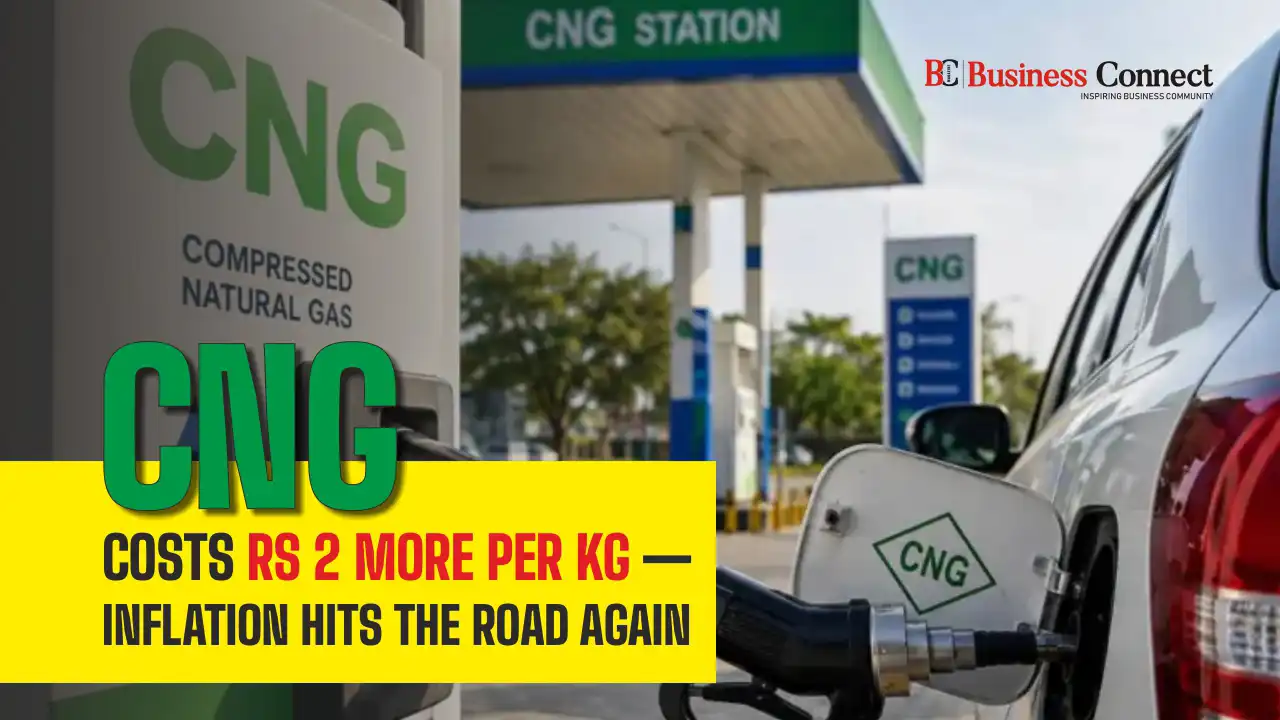
After back-to-back petrol and diesel price increases, compressed natural gas joins the inflationary wave — squeezing commuters, cab drivers, and fleet operators across India’s major cities.
For Indraprastha Gas Limited (IGL) and Mahanagar Gas Limited (MGL), the hike is a necessary balancing act. Both companies have faced investor pressure over compressing marketing margins as input gas prices surged. Analysts at several brokerages had been flagging a revision as overdue, and Monday’s move is expected to restore some margin buffer — though stock-market reaction will hinge on whether the quantum is seen as sufficient or likely to dampen CNG vehicle adoption.
The broader inflationary picture for households is worsening. With food inflation still elevated, cooking gas (LPG) remaining above pre-pandemic levels, and now CNG joining petrol and diesel in a multi-fuel price rally, transportation and energy together are consuming a meaningfully larger share of middle-class monthly budgets. Economists warn that if this cost pressure feeds through to freight rates, a secondary wave of consumer goods inflation could follow within six to eight weeks.
What this means for you: A typical CNG car travelling 1,500 km/month will see fuel costs rise by roughly Rs 120–160/month. Auto-rickshaw operators covering 80–100 km/day face an additional Rs 100–130/day in fuel expenses, significantly pressuring livelihoods for self-employed drivers.
- The Rs 2/kg CNG hike with a live price strip showing CNG, petrol, and diesel at a glance
- Why the hike happened — LNG benchmark linkage and distributor margin pressure
- The human impact on auto-rickshaw drivers and CNG car owners with rough monthly cost estimates
- The broader inflation chain — how fuel costs could trigger secondary goods price increases
- IGL and MGL market context for investors watching city gas distribution stocks
The prices shown (Rs 79/kg for Delhi CNG etc.) are approximate/illustrative — let me know if you have the exact revised rates and I’ll update them.