How Curated E-Commerce Is Changing the Way Indian Consumers Discover Everyday Products
The Indian e-commerce industry has transformed dramatically over the past decade. Online shopping was once primarily about convenience: consumers knew what they wanted, searched for it online and placed an order. Today, however, the shopping journey has become far more dynamic.
Consumers are increasingly discovering products while browsing social media, watching videos, reading online content or exploring specialised online stores. This shift is creating new opportunities for emerging e-commerce businesses that focus on product discovery rather than simply offering an endless catalogue.
The rise of curated e-commerce represents an important change in how consumers interact with online retail. Instead of asking shoppers to navigate through thousands of similar products, curated platforms aim to help them discover products that are useful, interesting, practical or relevant to their everyday lives.
The Problem With Unlimited Choice
One of the biggest challenges in modern e-commerce is the abundance of choice.
Large marketplaces provide access to millions of products across almost every imaginable category. While this creates convenience, it can also make product discovery overwhelming. A customer searching for a simple kitchen tool, desk accessory or gift may have to browse through hundreds of listings before finding something suitable.
The challenge is not always product availability. Often, it is product discovery.
Consumers increasingly want answers to simple questions:
- What are some genuinely useful products for everyday life?
- Which products can help organise a home more effectively?
- What are interesting gifts that do not feel repetitive?
- Which gadgets offer practical value?
- Where can shoppers discover products they did not know they needed?
This is where curated e-commerce platforms can create a differentiated customer experience.
From Searching for Products to Discovering Solutions
Traditional e-commerce is largely driven by search. A consumer types the name of a product, compares available options and makes a purchasing decision.
Curated e-commerce adds another dimension: discovery.
For example, a customer may not specifically search for a desk organiser until they encounter a product that solves a workspace problem. Similarly, a person may not know about a particular kitchen gadget until they discover a product designed to simplify a routine task.
This creates a significant opportunity for e-commerce businesses.
Rather than thinking only in terms of individual products, retailers can focus on the problems, lifestyles and everyday requirements that their products address.
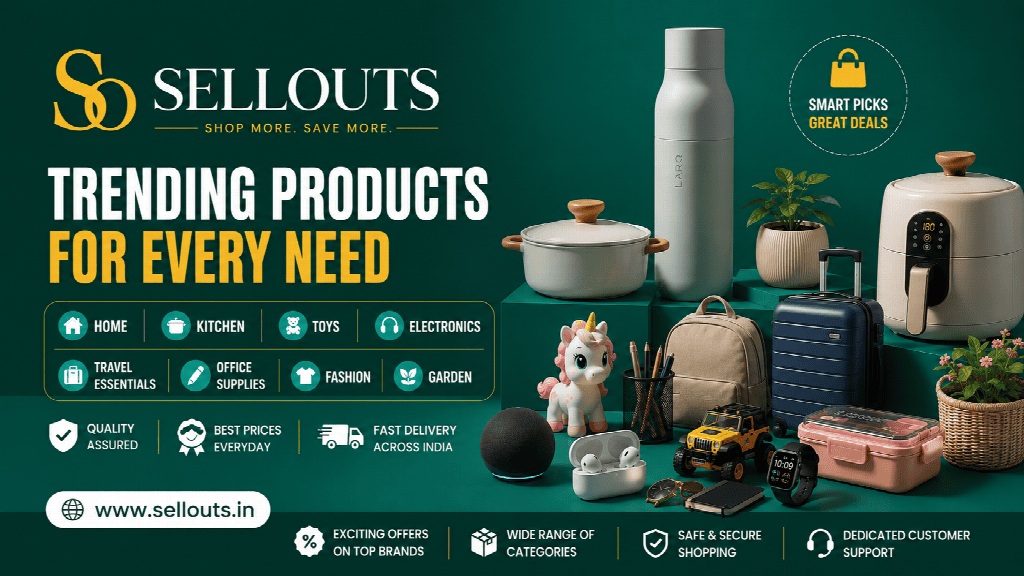
A platform such as Sellouts represents this approach by bringing together products from multiple everyday categories, helping shoppers explore useful, unique and trending items through a more discovery-oriented shopping experience.
Why Product Curation Matters in Modern E-Commerce
Product curation is not simply about selecting products and placing them on a website. Effective curation requires an understanding of customer interests, emerging trends and practical needs.
A well-curated e-commerce catalogue can provide several advantages.
1. It Simplifies the Customer Journey
Consumers have limited time and attention. An organised product catalogue makes it easier for shoppers to move from interest to purchase.
For example, grouping products into areas such as kitchen essentials, home organisation, technology, travel, toys and gifting can help customers browse according to their needs rather than searching through unrelated listings.
2. It Encourages Product Discovery
Some of the most successful consumer products solve small but common problems.
A storage solution may improve home organisation. A travel accessory may make a journey more convenient. A simple gadget may improve productivity or everyday comfort.
Customers often discover these products rather than actively searching for them. This makes product presentation and content increasingly important for e-commerce businesses.
3. It Creates Opportunities for Emerging Brands
Large marketplaces dominate generic product searches. Competing directly with them for every broad keyword or product category can be difficult for emerging retailers.
However, smaller and growing e-commerce brands can differentiate themselves through:
- Carefully selected products
- Clear product descriptions
- Useful buying guides
- Niche collections
- Better product discovery
- Category-specific content
This allows businesses to build a distinct identity rather than becoming another general online store.
The Growing Importance of Content in E-Commerce
The relationship between content and commerce is becoming increasingly important.
Consumers no longer rely exclusively on search engines when making purchasing decisions. They discover products through articles, social media, short-form videos, reviews and buying guides.
As a result, e-commerce businesses must think beyond traditional product listings.
Content can help explain:
- How a product solves a problem
- Who may benefit from it
- What features customers should consider
- How different products can be compared
- Which products are suitable for specific situations
For an emerging e-commerce business, this creates an opportunity to build trust before a customer reaches the checkout stage.
For example, a business can create content around topics such as:
- Useful products for improving everyday routines
- Practical home organisation ideas
- Essential travel accessories
- Gift ideas for different occasions
- Products that can improve a workspace
- Interesting gadgets for modern households
The objective should not simply be to promote products. Good commerce content should help consumers make better decisions.
Building a Multi-Category E-Commerce Experience
One interesting trend in Indian online retail is the growing demand for platforms that allow consumers to discover products across different areas of their lives.
A single shopper may be interested in:
- A useful kitchen accessory
- A home organisation product
- A travel gadget
- A gift for a friend
- A toy for a child
- A practical office accessory
A thoughtfully structured multi-category platform can serve these diverse interests while maintaining a clear focus on product usefulness and discovery.
For instance, shoppers exploring a collection of useful and trending products may discover items across multiple categories without needing to visit several specialised websites.
The key is not simply to add more products. It is to organise them in a way that helps customers find relevant solutions.
What Emerging E-Commerce Businesses Can Learn
The evolution of online shopping provides several important lessons for entrepreneurs and emerging brands.
Focus on Relevance Rather Than Catalogue Size
Having thousands of products does not automatically create a better shopping experience.
A smaller, carefully selected catalogue can sometimes be more effective when customers clearly understand what the platform offers.
Businesses should ask:
- Why would a customer browse our store?
- What types of products are we particularly good at discovering?
- What problems can our products help solve?
- How can we make the shopping experience easier?
These questions can help shape a stronger e-commerce identity.
Invest in Category Architecture
Website structure plays an important role in both customer experience and digital visibility.
Clear categories and subcategories help customers navigate the website while also making it easier to create focused content around different product areas.
Instead of placing every product into a broad “Shop” section, retailers can develop meaningful collections around specific interests and needs.
Create Content Around Customer Intent
Not every customer is ready to purchase immediately.
Some people are researching products. Others are looking for ideas. Some may simply be browsing.
A strong content strategy should address different stages of the customer journey.
For example:
Discovery stage:
“Useful products you may not know you need”
Research stage:
“How to choose practical kitchen accessories”
Purchase stage:
“Product features, benefits and comparisons”
This approach allows an e-commerce business to build relationships with potential customers before the final buying decision.
Trust Will Remain a Competitive Advantage
As online shopping continues to expand, consumers will have more choices than ever before.
Trust will therefore become increasingly valuable.
Customers want clear product information, transparent pricing, reliable service and an easy shopping experience. Emerging e-commerce businesses cannot always compete with the marketing budgets of major marketplaces, but they can compete through clarity, relevance and customer experience.
Building trust requires consistency.
This includes:
- Accurate product descriptions
- Clear product images
- Easy website navigation
- Transparent policies
- Helpful customer communication
- Relevant content
Over time, these factors contribute to a stronger brand identity.
The Future of Product Discovery
The future of e-commerce may not be defined solely by who has the largest product catalogue.
Instead, an important differentiator could be who helps consumers discover the right products more effectively.
Artificial intelligence, personalised recommendations, social commerce and content-driven discovery are all changing how people find products online. However, the underlying principle remains simple: consumers value convenience and relevance.
For emerging e-commerce businesses, this represents an opportunity.
By combining carefully selected products with useful content and an organised shopping experience, brands can create meaningful alternatives to traditional marketplace shopping.
Platforms such as Sellouts reflect this emerging approach to online retail by focusing on a broad range of everyday product categories while encouraging customers to discover useful, unique and trending products in one place.
Final Thoughts
Indian e-commerce is entering a more mature phase. Consumers are no longer simply looking for the ability to purchase products online; they are increasingly looking for easier ways to discover products that fit their lifestyles and everyday requirements.
For entrepreneurs and e-commerce businesses, the opportunity lies in understanding this change.
The businesses that succeed will not necessarily be those with the largest catalogues. They may be the ones that make product discovery easier, provide useful information and create a shopping experience that feels relevant to their customers.
Curated e-commerce is therefore more than a retail trend. It represents a shift toward a more thoughtful and customer-focused approach to online shopping.
Author Bio
Sellouts Team is the team behind Sellouts.in, an emerging Indian e-commerce platform focused on making online product discovery simpler. The platform brings together useful, unique and trending products across categories including home, kitchen, technology, toys, travel, gifts and everyday essentials.