By: Business Connect India Team
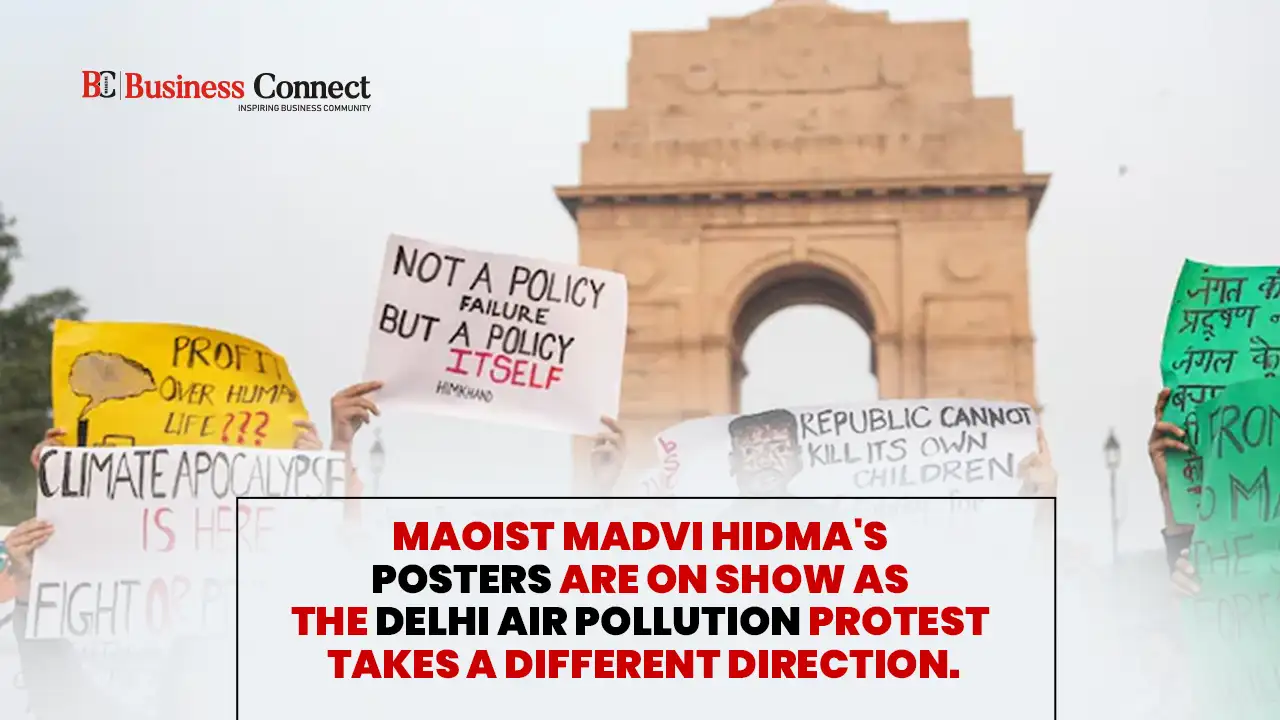
Following the exhibition of posters of top Maoist commander Madvi Hidma, who was slain in a police encounter in Andhra Pradesh last week, a protest about Delhi’s poisonous air problem near the India Gate caused controversy.
An FIR and a broader investigation into how the posters appeared at the event resulted from the protestors’ attempts to obstruct traffic on Sunday night and their alleged pepper-spraying of police officers trying to disperse them.
#WATCH | Delhi: A group of protesters holds a protest at India Gate over air pollution in Delhi-NCR. They were later removed from the spot by police personnel pic.twitter.com/DBEZTeET0U
— ANI (@ANI) November 23, 2025
15 to 20 persons have been arrested by Delhi Police thus far in relation to the protest and the purported assault on employees at India Gate.
According to Deputy Commissioner of Police (New Delhi) Devesh Kumar Mahla, this was the first instance of demonstrators using pepper spray on traffic and law enforcement authorities.
The Delhi Coordination Committee for Clean Air organized the demonstration against the Delhi government’s alleged “cosmetic measures”—such as cloud seeding and water sprinklers—in an effort to reduce the dangerous levels of air pollution in the nation’s capital, which have gotten worse over the last week.
The organization stated in a statement that the toxic air has turned into a “serious risk” to public health and that “when the state makes the air itself poisonous, it becomes necessary for people to unite and raise their voices for their own survival.”
The group claimed that the current development model, which includes mining projects, forest clearances, and rapid infrastructure expansion in vulnerable areas, is causing pollution, uprooting communities, and exacerbating extreme weather across the nation, while also drawing attention to the Rekha Gupta-led Delhi government’s inability to address the crisis.
Additionally, they said that when individuals speak up, the government responds with “suppression” and that activists are subjected to limitations, detentions, and attempts to quell dissent.