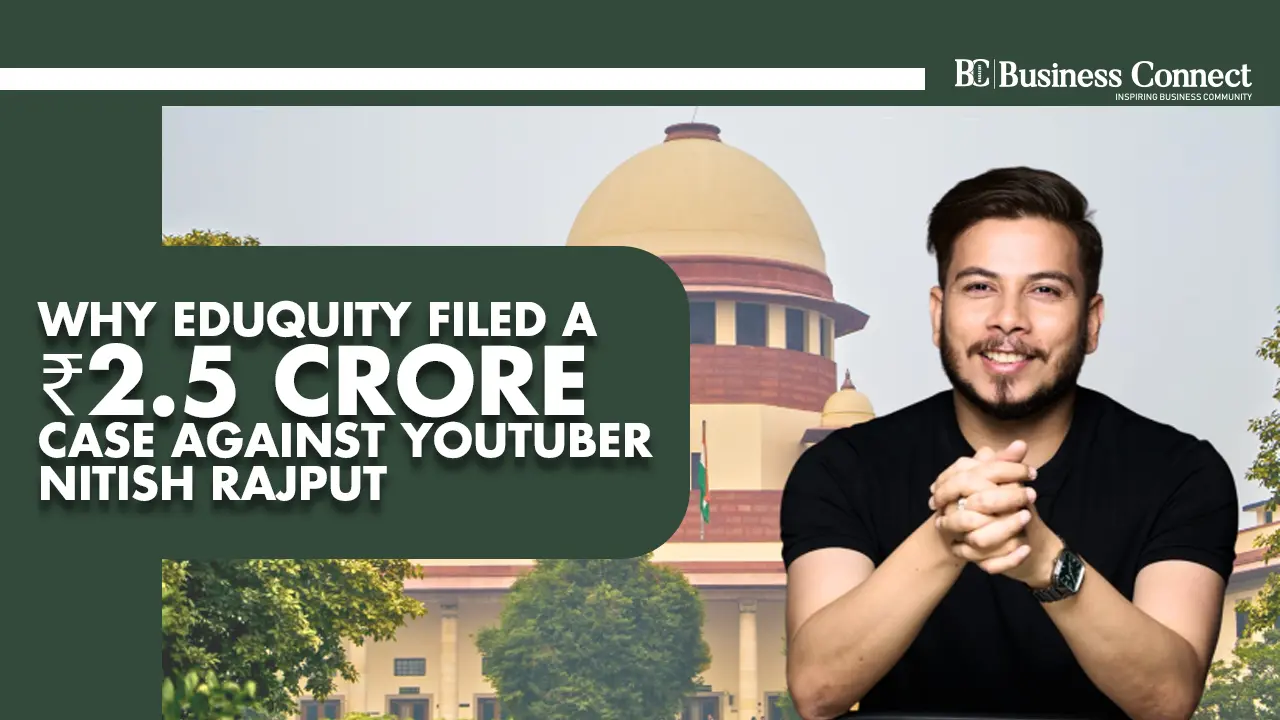
YouTuber Nitish Rajput published a video titled “Reality of the SSC Exam” on his YouTube channel on September 11, 2025. In the video, he claimed to expose the real story behind the SSC examination system—the struggles that millions of students have been facing for years.
According to the video, the content brought before the camera what aspirants have long experienced: how a centralized examination body was formed, how pressure on the system steadily increased, how repeated paper leaks occurred, and how controversies multiplied after private companies entered the examination process. It was in connection with these claims that a private company later filed a ₹2.5 crore case against Nitish Rajput.
To understand the dispute, it is important to first examine what Nitish Rajput asserted in his video.
In the video, Nitish explained that the Staff Selection Commission (SSC) is not a newly created system. It was established on November 4, 1975, originally under the name Subordinate Services Commission. In 1977, it was renamed the Staff Selection Commission. The objective was straightforward: to conduct a common examination for government jobs at a similar level—such as railway posts, bank jobs, and clerical positions—so that the recruitment process could be centralized.
However, Nitish argued that the problems began right there. Unlike the UPSC, the SSC was not granted constitutional status under Articles 315 to 320 of the Constitution. As a result, the commission remained under the control of the government in power at any given time.
Initially, the system functioned smoothly. There was no involvement of private companies, and government employees and institutions managed the entire examination process. Over time, however, the situation changed. By 2012, the burden on the SSC had increased significantly, with over 30 lakh applications being submitted simultaneously. Results were delayed, management systems failed, and incidents of paper leaks from printing presses became common. The system began to struggle, and the government found it increasingly difficult to manage the process efficiently—yet the old framework continued.
A major turning point came on September 29, 2013, when the CBI took action in an SSC CGL paper leak case, triggering widespread outrage. The credibility of the SSC came under serious scrutiny. In response, the government and the Department of Personnel and Training (DoPT) decided that SSC examinations would henceforth be conducted in computer-based format.
This decision marked the entry of private companies into the examination process. Tenders were issued with strict eligibility conditions: companies were required to have an average annual turnover of more than ₹75 crore for at least three years, along with a minimum of four years’ experience in conducting computer-based tests (CBT).
The first major contract was awarded to Sify Technologies, but according to the video, problems continued. Servers crashed, systems froze, power backups failed, and examinations were conducted amid repeated disruptions. Similar issues occurred during the mains examinations. Additionally, allegations of cheating surfaced, and screenshots of question papers began circulating on social media.
By 2018, the SSC stated that it could no longer continue with smaller or unstable service providers and needed a larger, more reliable company. As a result, the tender conditions were tightened further. Two categories were created—large and small. To qualify under the large category, a company had to have conducted computer-based tests (CBT) for more than 50 lakh candidates. This is where TCS (Tata Consultancy Services) entered the picture.
TCS won the tender. While initial challenges did arise, the company managed to stabilize operations, and the examination system functioned relatively better.
Later, a new name appeared in the story—Eduquity, formally known as Edutique Career Technologies Private Limited. According to Nitish Rajput, the company was registered in 2000 and initially conducted small-scale examinations. Around 2010, it began receiving larger opportunities, starting with examinations conducted for the Gujarat government. Gradually, Eduquity started winning more tenders.
Nitish further claimed that Eduquity had previously been rejected in several major tenders, including one floated by the National Testing Agency (NTA). However, after changes were made to the tender conditions, Eduquity was eventually awarded work. According to the video, problems began as soon as examinations were conducted—technical glitches, exam cancellations, and other disruptions were reported.
It was also alleged that the SSC modified its tender eligibility criteria. The requirement of conducting CBTs for 50 lakh candidates was reportedly reduced to 10 lakh, making Eduquity eligible. Eventually, Eduquity secured the SSC tender as well. However, the outcome remained the same—server crashes, mismanagement, and growing anger among students.
Several questions were raised:
If TCS was performing satisfactorily, why were the tender conditions changed?
If Eduquity had already been involved in controversies related to exams such as the Madhya Pradesh Patwari recruitment and constable recruitment examinations, why was the company trusted again?
SSC responded by stating that Eduquity’s overall technical score was higher than that of TCS, which is why it was awarded the tender. SSC also clarified that if TCS had submitted a lower financial bid, it would have won the contract instead. According to SSC, this process follows Government of India procurement rules, not SSC-specific policies.
It was this entire sequence of events that Nitish Rajput discussed in his video. However, the video now appears to have serious consequences for him. According to a Moneycontrol report, Eduquity—the agency responsible for conducting SSC examinations—has filed a ₹2.5 crore defamation case against Nitish Rajput. The company has alleged that the video contains misleading information that has damaged its reputation and has demanded that the video be taken down.
Nitish Rajput has responded to these allegations. Speaking to the media, he stated that his video is based entirely on publicly available information, official records, and statements from candidates. He maintained that nothing in the video was fabricated and refused to remove it.
On one side is a multi-crore legal claim, on the other is a YouTuber raising questions, and caught in between are millions of students who apply every year, appear for examinations, and continue to bear the consequences of systemic failures.
What is your opinion on this entire matter? Share your views in the comments section.
Nitish Rajput SSC Exam Video Controversy: FAQs
Who is Nitish Rajput?
Nitish Rajput is a YouTuber and content creator known for publishing explanatory and investigative-style videos on social, political, and educational issues in India.
What is the “Reality of the SSC Exam” video about?
The video titled “Reality of the SSC Exam”, published on September 11, 2025, claims to explain the long-standing problems within the SSC examination system. It highlights issues faced by millions of aspirants, including exam delays, paper leaks, technical failures, and administrative challenges.
What claims did Nitish Rajput make in his video?
In the video, Nitish Rajput alleged that problems within the SSC system grew due to increasing pressure on a centralized examination body, repeated paper leaks, and the entry of private companies into exam conduction. He traced the issue historically and linked structural weaknesses to ongoing controversies.
When was the Staff Selection Commission (SSC) established?
The SSC was established on November 4, 1975, originally as the Subordinate Services Commission. It was renamed the Staff Selection Commission in 1977 to conduct common examinations for similar-level government jobs.
Why did Nitish Rajput say structural issues existed in SSC?
According to Nitish, unlike UPSC, SSC does not have constitutional status under Articles 315–320, which leaves it under the control of the government of the day. He argued this made the system vulnerable to administrative and policy changes.
What problems did SSC start facing after 2012?
By 2012, SSC began receiving over 30 lakh applications at once. This led to delayed results, management failures, and incidents of question paper leaks from printing presses, putting immense strain on the system.
What happened in the 2013 SSC CGL paper leak case?
On September 29, 2013, the CBI took action in an SSC CGL paper leak case, which sparked nationwide outrage and raised serious questions about SSC’s credibility.
Why were SSC exams shifted to computer-based tests (CBT)?
After the 2013 controversy, the government and the Department of Personnel and Training (DoPT) decided to move SSC exams to a computer-based format to improve efficiency and reduce paper leaks.
Which private companies conducted SSC exams initially?
The first major CBT contract was awarded to Sify Technologies. However, according to the video, exams faced technical issues such as server crashes, system freezes, power failures, and allegations of cheating.
Why did TCS enter the SSC exam process?
By 2018, SSC tightened tender rules, requiring companies to have conducted CBT exams for over 50 lakh candidates. Tata Consultancy Services (TCS) met this criterion and won the tender. The system reportedly stabilized to some extent under TCS.
Who is Eduquity?
Eduquity, officially Edutique Career Technologies Private Limited, is a private examination services company registered in 2000. It initially conducted small-scale exams and later expanded after securing government contracts, including those in Gujarat.
What allegations were made against Eduquity in the video?
Nitish Rajput claimed that Eduquity had previously been rejected in major tenders, including those by the National Testing Agency (NTA), but later received contracts after tender rules were modified. He also alleged technical failures and exam cancellations during Eduquity-conducted exams.
Why was the SSC tender criteria change controversial?
According to the video, the eligibility requirement was reduced from conducting CBTs for 50 lakh candidates to 10 lakh, which made Eduquity eligible. This raised questions about transparency and fairness in the tender process.
How did SSC justify awarding the tender to Eduquity?
SSC stated that Eduquity scored higher on technical evaluation than TCS and that government procurement rules prioritize combined technical and financial scores. SSC added that if TCS had submitted a lower bid, it would have won the tender.
Why was a ₹2.5 crore case filed against Nitish Rajput?
According to a Moneycontrol report, Eduquity filed a ₹2.5 crore defamation case against Nitish Rajput, alleging that his video contained misleading information that harmed the company’s reputation. Eduquity also demanded the video’s removal.
What was Nitish Rajput’s response to the lawsuit?
Nitish Rajput stated that his video is based on publicly available records, official documents, and candidate testimonies. He denied fabricating any information and refused to take down the video.
What is the broader impact of this controversy?
The dispute highlights ongoing concerns about exam governance in India. While legal action is underway, millions of SSC aspirants continue to face uncertainty due to repeated exam disruptions and systemic challenges.