
Written By Puja Bhardwaj
The future of mobility is not crafted in notes or tested in labs, but it is continuously taking shape on roads, included in city systems, and evolving through industrial ecosystems. From EVs and smart automation to autonomous driving, urban air mobility and drone-enabled logistics, future mobility is becoming one of the defining industries of the next decade.
The transformation in the near-future shift is not only about cleaner transport; it is about how cities move people, goods, data, and capital more efficiently. The transport sector touches 23% of total global energy-related CO₂ emissions. Without intervention, the transport emissions could range from 16% to 50% by 2050. Means electrification and intelligent mobility are not just a part of the advanced anymore but a strategic economic and climate priority. These are the emerging evolutions reflecting the future of mobility:
EV (Electronic Vehicles)
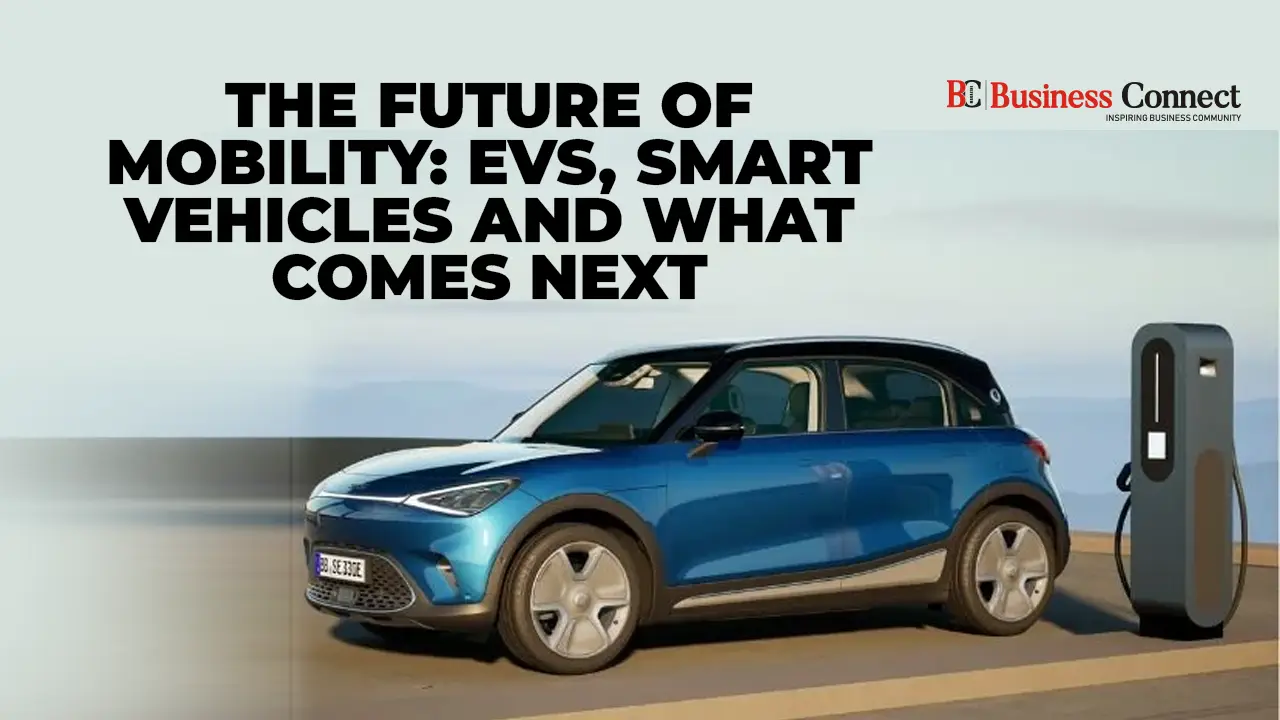
The EV industry is making slow but continuous progress. The lack of charging infrastructure and higher cost as compared to petrol and diesel vehicles has impacted the industry’s growth. But there have been multiple positive changes as well, like a reduction in battery prices, the increasing number of charging points, and supportive schemes from the Government incentives are fuelling the growth of the EV industry.
The development of EVs directly depends on the availability of charging infrastructure. Companies worldwide are expanding their charging network. Further private sector investments are fostering the installation of fast chargers in urban areas and making electric mobility more feasible for consumers, an ideal example to show the future of mobility.
Moreover, the smart technology integration in the EVs adds another wing to the mobility landscape. The innovative features, like vehicle-to-grid (V2G) technology, enable EVs to supply energy back to the grid when the demand is at its peak and promote energy efficiency.
Smart City Mobility
Redefining the future of mobility, smart mobility is revolutionising urban transportation. It works by replacing outdated and old systems with intelligent, connected solutions that make cities more efficient, adaptable and sustainable. Today, smart mobility is not just about public transport, but it includes on-demand transportation and AI-driven traffic systems for dealing with the urban mobility hurdles.
Smart mobility is a dynamic ecosystem; it encompasses digital and physical infrastructure and optimises the movement of people and goods. Physical components, including public and private vehicles, road networks, smart traffic signals, CCTV cameras and more. Digital infrastructure, including mobility platforms, fleet management software and cloud-based systems for better coordination and a transport experience.
While many believe that smart city solutions mean enhancing urban transport. But that’s not true; this is a fundamental shift in how people move, whether in urban or rural areas. The shared mobility services, flexible travel options and AI-powered solutions will help in easing congestion, cutting emissions and developing cost-efficient solutions, shaping the future of mobility.
Autonomous Vehicle
When it comes to the future of mobility, autonomous vehicles or smart vehicles are the most significant and complex paradigm shift since the invention of the internal combustion engine. This concept introduces a unique transition that moves beyond the traditional concept of the vehicle from a mechanical “machine” to a new identity called an “intelligent companion”.
At its core, an autonomous vehicle is basically a robotic system that can sense its environment and can operate without human support. Traditionally, cars need an individual as the primary “perceptual and decision-making unit. In contrast, an autonomous vehicle does not need human eyes and ears but rather sensors and the human brain with high-performance computing.
From isolated, human-driven tools to fully integrated, connected, and automated entities, these autonomous vehicles will mark a fundamental restructuring of the global economy, urban infrastructure, and our day-to-day life.
Bottom Line
These are major driving forces shaping the future of mobility. This shift enables the creation of integrated and innovative mobility solutions and partnerships across different sectors like insurance technology, automotive innovation, telecommunications, renewable energy, and logistics management. The future of mobility is electric, advanced and automated. Individuals and companies who wholeheartedly embrace innovation and sustainability will stand at the forefront of this evolution.