
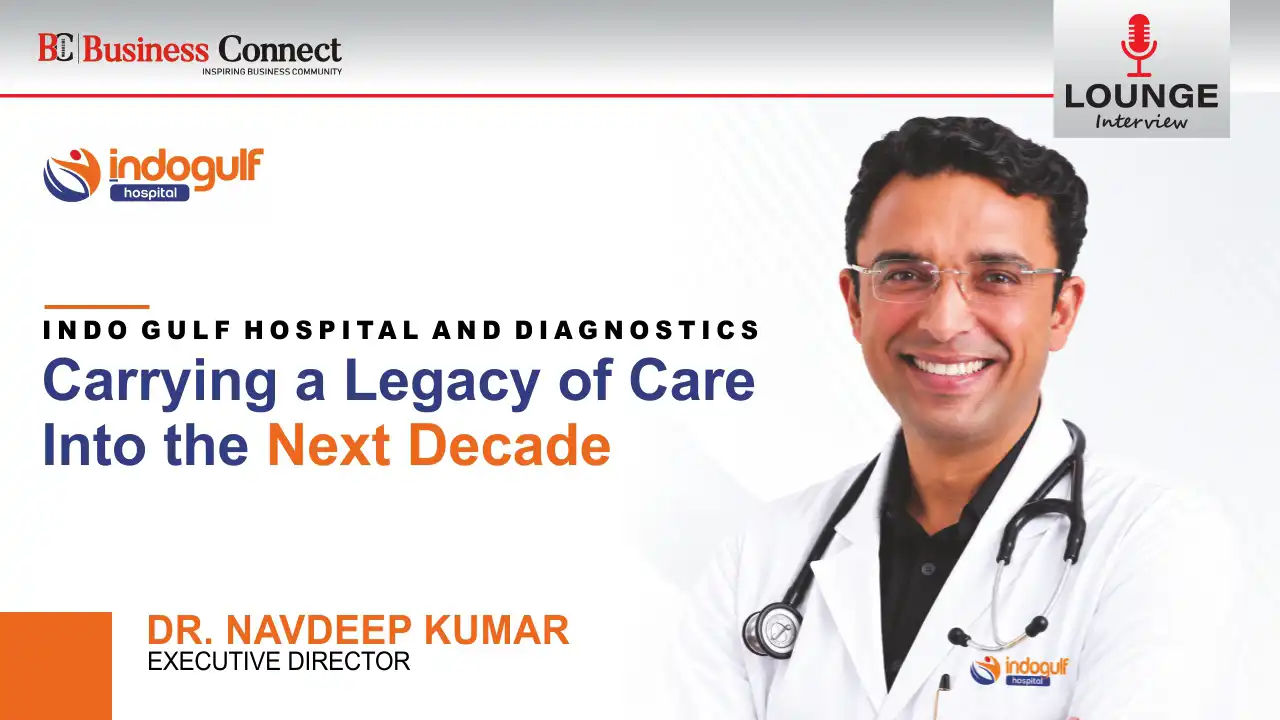
What began in 2003 as one doctor’s promise to the people of Noida continues today under founder and Managing Director Dr S. Kumar and his son, Executive Director Dr Navdeep Kumar. The belief behind it is unchanged: healthcare works best when it is built around the patient.
In a healthcare sector where patients arrive with questions, worries and a need to be heard, Indo Gulf Hospital and Diagnostics has built a strong foundation on dependable, accessible and comprehensive healthcare. Established in 2003 by Dr S. Kumar, the hospital set out with a clear vision: to make that care available to the people of Noida and surrounding areas.
The idea was to create an integrated institution where patients could access medical consultations, specialist care, diagnostic investigations and treatment under one roof, with clinical expertise, responsible medical practice and compassion at its core.
Today, Dr S. Kumar continues as Managing Director, while his son, Dr Navdeep, is Executive Director and Senior Neurologist with over 22 years of medical and neurological experience. The hospital’s strength lies in an integrated model of consultations, specialist care, diagnostics and treatment.
Two Decades of Evolution
Over the past two decades, Noida has changed, and so have the healthcare needs of its people. Indo Gulf has grown alongside the city, strengthening its services as medical technology, diagnostics and patient expectations moved ahead. Medical technology, diagnostic capabilities, treatment approaches and patient expectations have all evolved, and the hospital has continuously worked to strengthen its services in response.
Today, hospital services, specialist consultations, pathology, radiology, diagnostic investigations and treatment facilities come together in one integrated setting. Patients can access several aspects of their healthcare journey through a single institution.
The belief has stayed consistent that every patient deserves to receive appropriate medical guidance and to be treated with dignity. Technology and infrastructure are important, but so do the values guiding their use.
“ For us, this journey represents more than institutional growth. It represents years of relationships, responsibility and trust,” SAYS DR NAVDEEP
A Brand Built on the Patient Experience
Having served Noida since 2003, the Indo Gulf sees its responsibility as going beyond individual medical services. It aims to remain a dependable healthcare partner for families, built on clinical responsibility, accessibility, transparency and trust. A healthcare brand, Dr Navdeep believes, is built through the experience and confidence of the people it serves. It is shaped by the quality of clinical care, the reliability of diagnostics,
the conduct of healthcare professionals and the consistency of the patient experience. Indo Gulf’s value proposition lies in bringing multiple services together, which supports better coordination between departments and helps simplify what can otherwise be a complicated healthcare journey.
Indo Gulf’s Range of Services
Indo Gulf is a multi-speciality hospital and diagnostic centre. Its services include neurology, orthopaedics and joint replacement, laparoscopic surgery, plastic surgery and cosmetology, critical care, a dental spa, a pathology lab, and radiology and medical imaging, along with consultations across other medical specialities. This integrated approach lets doctors and diagnostic teams work in step, creating a more connected and convenient experience for individuals and families at every stage of their medical journey.
Why Integrated Diagnostics Matter
Diagnostics form an essential part of modern healthcare. A clinical examination gives the doctor important information, but investigations are often needed to confirm a diagnosis, assess the severity of a condition or monitor how a patient is responding to treatment. Pathology, radiology and medical imaging all contribute to this process, and their findings help doctors make informed decisions alongside the patient’s symptoms, medical history and clinical assessment.
Healthcare often involves several connected steps: a specialist consultation, laboratory tests, imaging, treatment and followup. When these services operate in isolation, patients may have to move between facilities and coordinate information themselves. At Indo Gulf, doctors can consider diagnostic findings alongside their clinical assessments.
“ The real value of an integrated model is not simply the availability of different services in one place but the ability to connect them meaningfully around the patient’s needs,” SAYS DR NAVDEEP
The Case for Preventive Healthcare
Preventive healthcare is an important part of maintaining long-term well-being. Many health conditions, including diabetes, hypertension and high cholesterol, may develop without obvious symptoms in their early stages. Regular health assessments and investigations, when recommended based on age, medical history and risk factors, can help identify concerns that require attention.
At the same time, preventive healthcare should not be reduced to routine testing alone. It involves awareness, healthy lifestyle choices, appropriate medical consultations and timely followup. Dr Navdeep’s objective is to encourage people to take a more proactive approach to their health. Diagnostic investigations are most valuable when they are clinically appropriate and interpreted in the context of an individual’s overall health.
Why Neurology Matters in Modern Healthcare
Neurology deals with the brain, spinal cord, nerves and the complex network that controls movement, sensation, speech, memory and several other essential functions. A neurological condition can therefore affect almost every aspect of a person’s daily life and independence.
Some neurological conditions develop suddenly, such as stroke, while others may progress over time, including Parkinson’s disease and Alzheimer’s. Headache, epilepsy (seizures/fits), nerve-related problems and balance disorders are also common reasons for neurological consultation.
What makes neurology particularly important, Dr Navdeep says, is the need for timely recognition, careful clinical evaluation and appropriate management. Symptoms that may initially appear minor should not always be dismissed, particularly when they are sudden, recurrent or progressively worsening.
Dr Navdeep on Common Neurological Conditions
Dr Navdeep often encounters some common neurological conditions like stroke, migraine and other headaches, seizures, Parkinson’s disease, dementia and memory problems, neck and back pain, nerve disorders, and dizziness and balance problems.
He advises seeing a neurologist for persistent or recurring headaches, loss of awareness, seizures, tremors, memory changes, unexplained weakness or numbness in the limbs, or difficulty with balance and coordination. Sudden symptoms such as facial drooping, weakness in an arm or leg, difficulty speaking, sudden vision problems or loss of balance need immediate emergency attention rather than a routine appointment.
Dr Navdeep is especially firm on forgetfulness: it should never be ignored at any age. There are now medicines that can actually reverse dementia if it is diagnosed at an early stage. His message is simple: do not self-diagnose or wait it out. A proper neurological assessment helps determine whether further investigations or treatment are necessary.
Recognising and Responding to a Stroke
A stroke happens when blood supply to part of the brain is interrupted, either by a clot blocking an artery or by an artery bursting and causing bleeding in the brain. It can cause serious disability and can be life-threatening. Dr Navdeep stresses that timely medical attention can greatly improve treatment options and outcomes.
He urges people to watch for sudden facial drooping, limb weakness or numbness, difficulty speaking or understanding speech, sudden vision changes or loss of balance or coordination, and to seek emergency care at once. Do not wait for symptoms to improve or try to manage a suspected stroke at home; even if symptoms fade, medical evaluation is essential. Families, workplaces and communities must learn these signs, as the patient may not be able to call for help.
How Indo Gulf’s Neurologist Approaches Diagnosis and Care
Dr Navdeep believes that good neurology begins with listening. In neurology, history matters most, and most diagnoses are made by detailed history-taking alone: the duration, frequency, nature and progression of symptoms. A thorough examination then guides any laboratory, imaging or specialised tests, read alongside the patient’s story to confirm the diagnosis and shape treatment.
Treatment, he adds, is personalised, because two patients with similar symptoms may have different underlying conditions, and similar diseases can have different outcomes and so need different approaches. It is also important to explaining the diagnosis, treatment and follow-up clearly to patients and families, so they can take part in their care.
Importance of Early Diagnosis, Rehabilitation and Long-term Follow-up
Early diagnosis can change a patient’s life. A stroke caught in time can be treated with clot-dissolving or clot-removing techniques that can alter the outcome altogether. Dementia, if diagnosed early, can actually be reversed, and most neurological conditions are easier to treat, need fewer medicines and cause fewer troublesome days.
Care does not end with initial treatment. Patients with stroke, Parkinson’s, dementia or headache often need ongoing medication, exercises, physiotherapy, speech and occupational therapy, and regular follow-up. For stroke patients, the aim is to regain function and independence to the greatest extent possible, and families need guidance and realistic expectations. Families are an important part of this journey, and good neurological care must look beyond the immediate diagnosis to the patient’s long-term quality of life.
Patient-Centric Care at Indo Gulf
Indo Gulf defines patient-centric care as placing a patient’s needs, concerns and well-being at the centre of every decision. It begins with careful listening and clear explanation, so patients understand their diagnosis and treatment options. A patient’s hospital experience involves many touchpoints. It begins with the first interaction at security and continues through registration, consultation, investigations, treatment, nursing care, housekeeping, billing and discharge. Each interaction contributes to the overall experience.
“ At Indo Gulf, we recognise that all departments play an important role in patient care. Our focus is on improving coordination, maintaining transparency and ensuring that patients and their families are treated with dignity and respect throughout their healthcare journey,” SAYS DR NAVDEEP
Choosing a Hospital or Diagnostic Centre
Patients should consider more than just the location or convenience of a healthcare facility, Dr Navdeep says. The clinical experience of the doctors, the relevance and reliability of diagnostic services, the availability of appropriate treatment facilities and the quality of communication are all important factors.
It is also worth understanding whether the hospital can coordinate different aspects of care when a patient’s condition requires multiple consultations or investigations.
An integrated hospital and diagnostic centre can offer practical value by bringing consultations, investigations and treatment services together. However, what matters most is that the services are clinically appropriate, well-coordinated and delivered responsibly. Ultimately, patients should feel comfortable asking questions and confident that their medical concerns are being addressed in their best interest.
Leading with Legacy: Balancing Clinical Care and Institutional Responsibility
Practising neurology keeps Dr Navdeep close to patients and what they expect from a hospital: timely decisions and dependable care. As Executive Director, he also ensures that systems, teams and accountability across departments support that care. This includes clinical coordination, operational discipline, team development and patient experience.
The two roles complement each other. Indo Gulf was founded by his father, Dr S. Kumar, who continues as Managing Director, and has become part of many families’ lives. For Dr Navdeep, carrying that legacy forward is a responsibility and a commitment: preserving the founding values while continually improving how care is delivered. Legacy, he says, should be measured by the trust it earns, the standards it maintains and its contribution to the community.
What Makes a Dependable Institution
Integrity, accountability, empathy and clinical responsibility are fundamental to healthcare leadership, says Dr Navdeep. Every decision within a hospital has the potential to affect a patient’s well-being, so ethical practice and patient safety must remain central.
Dr Navdeep also places great importance on teamwork, communication and continuous learning. A hospital functions through the combined efforts of doctors, nurses, technicians, administrative professionals and support teams. Each department contributes to the overall standard of care. A dependable institution is one where people take ownership of their responsibilities, communicate openly, follow established processes and understand that the patient’s well-being is the common objective.
Technology and the Next Phase of Growth
Technology is changing how healthcare is delivered. Laboratory automation, advanced imaging, digital reporting and clinical information systems are speeding up investigations and making medical information easier to access. For diagnostics, that means more consistent results and reports that reach doctors sooner.
“ Technology can earn its place only when it serves a clear clinical purpose, supporting doctors’ judgement and never replacing it,” SAYS DR NAVDEEP
Looking ahead, Indo Gulf expects the future of healthcare in India to be shaped by early diagnosis, preventive health, specialised clinical expertise, better coordination and a stronger focus on patient experience. Its priority is to strengthen the integrated model and invest in its people. This includes improving clinical capabilities, diagnostic services, operational processes, coordination between departments and the overall experience of patients and their families.
Doctors, nurses, technicians and support teams need the right environment, training and systems to deliver consistent care. As healthcare becomes more specialised and patients become more informed, institutions will need to combine clinical excellence with accessibility, transparency and compassion.
A Vision for a Healthier Noida: Dr Navdeep’s Message
Dr Navdeep’s vision is for Indo Gulf to continue as an institution that Noida and its neighbouring communities can trust, recognised for clinical expertise, integrated services, responsible medical practice and a patient-first approach.
His message to residents is to be proactive about their health. He urges people to exercise regularly and not to ignore persistent or transient symptoms or delay seeking medical advice. Sudden neurological symptoms such as facial drooping, weakness or difficulty speaking need immediate medical attention.
To fellow professionals, he says that trust is the foundation of medicine. Technology, infrastructure and medical knowledge will keep advancing, but integrity, empathy and responsibility towards patients must remain at the heart of healthcare.
He also thanks the families who have placed their trust in the hospital over the years and commits to serving them with the same sense of responsibility with which the institution began in 2003.
Add Business Connect magazine to your Google News feed