
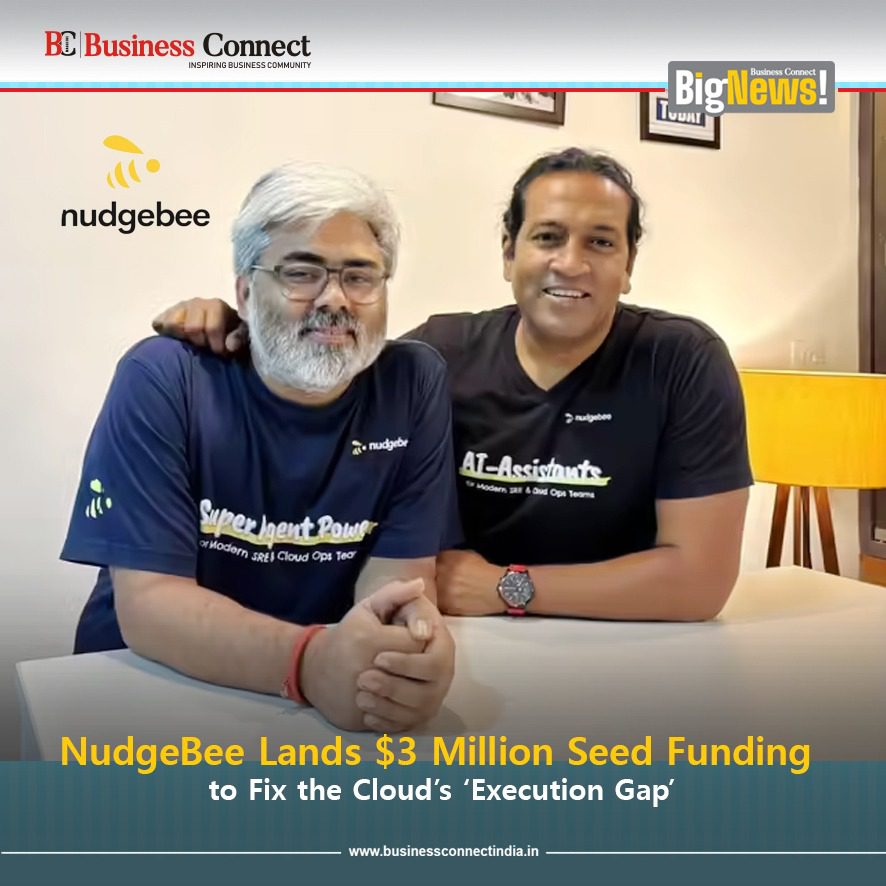
For many engineering teams, the cloud era has been a double-edged sword. While companies have successfully moved to complex, multicloud architectures, their ability to actually fix issues hasn’t kept pace with their ability to monitor them. This often leaves teams buried under a mountain of alerts, struggling with fragmented tools, and watching operational costs skyrocket.
NudgeBee, a cloud operations platform founded in 2024, is stepping in to change that. The company just announced a $3 million seed funding round led by Kalaari Capital, with support from several notable tech founders.
Moving Beyond Dashboards to Actionable Intelligence
The core problem, according to co-founders Rakesh Rajendran and Shiv Pratap Singh, is that modern engineering teams are drowning in data but starving for context. While they have no shortage of dashboards, critical knowledge remains siloed across different tools and teams, which ultimately creates bottlenecks in daily workflows.
NudgeBee is tackling this “execution gap” by building a unified operational foundation. Here’s how they’re doing it differently:
Semantic Mapping: The platform uses a semantic knowledge graph to map complex relationships across various data points within a cloud environment.
Contextual Integration: By blending telemetry data from distributed systems with infrastructure topology, the platform can analyze historical patterns alongside the system’s real-time state.
AI-Powered Execution: Rather than just flagging issues, NudgeBee empowers AI agents to take actionable steps within existing engineering workflows. This includes specialized “AI-SRE” agents that help maintain stability and an “AI FinOps” assistant designed to hunt down and execute cost-saving opportunities.
Scaling for the Future
Sampath P, a Partner at Kalaari Capital, noted that NudgeBee stands out because it doesn’t just surface signals—it translates them into reliable action.
With this fresh $3 million injection, the team plans to sharpen its core technology and broaden its reach. The focus will be on further developing its enterprise context layer, scaling its partnership-led distribution model, and investing heavily in customer success. The goal is simple: helping enterprises stop just “watching” their cloud infrastructure and start getting more value out of it, faster.
As businesses continue to navigate increasingly complex cloud environments, it’s clear that the appetite for platforms that move from mere observation to intelligent, automated execution is only going to grow.