
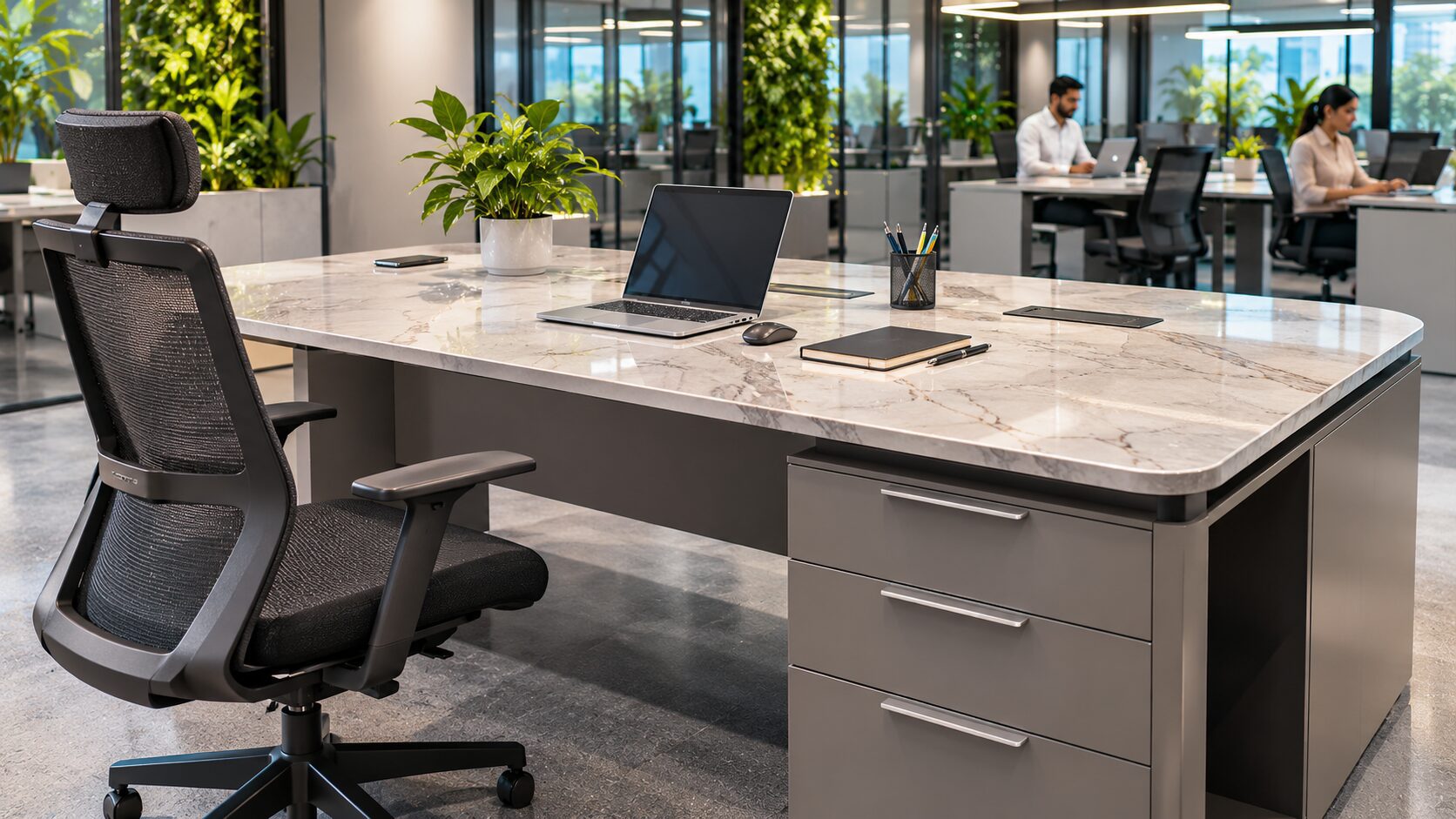
Some desks have an easy life. The ones in a busy office do not. They take long hours, shared use, spilled coffee, heavy equipment and constant cleaning, often all in a single day. In these settings, a smart office table design does more than look good. It keeps people comfortable, keeps the workspace tidy, and holds up to years of hard use without losing its charm.
Start With How The Workspace Is Used
Before comparing finishes, picture a typical day at the desk. A hot-desking floor with many users has different needs from a private office, and a workshop bench asks more of a surface than a meeting table.
A few questions point to the right choice:
- How many people will use the desk, and how often?
- What equipment and weight will the surface carry each day?
- How much wear, from spills to sliding laptops, will it see?
- How quickly does it need to be cleaned between users?
Answering these first keeps the decision rooted in real, daily use rather than showroom appeal, and makes the shortlist much shorter.
What Heavy Use Demands From A Surface
A desk in constant use needs a surface that can take it in its stride, and a good office table design plans for that from the start. Durability sits at the heart of a good table top design, since the surface meets the most wear of any part of the desk.
The qualities that matter most include:
- Strong scratch resistance, so the top stays smooth under daily use.
- Stain resistance, for quick clean-ups after coffee and ink.
- A hard-wearing edge that resists chips and knocks.
- An easy-clean finish that stays hygienic on a shared desk.
Choosing a surface with these strengths keeps a busy desk looking smart for years, even on the hardest-working floors.
Comparing The Main Surface Materials
Each popular surface brings its own balance of durability, looks and upkeep. Here is how the common choices compare for heavy use.
- Laminate: affordable and offered in many finishes, and best for lighter wear.
- Solid wood: warm and hard-wearing, with occasional refinishing to stay at its best.
- Engineered and sintered surfaces: dense, scratch-resistant and easy to clean.
- Glass: light and modern in look, and happiest where handling is gentle.
- Metal: tough and industrial in character, and prone to showing marks.
For a desk that faces constant use, a dense, scratch-resistant surface tends to offer the best mix of looks and longevity, and keeps cleaning quick between users.
Getting The Design And Ergonomics Right
A handsome desk that leaves people aching is no help, so comfort deserves equal weight. A height of around 72 to 75 centimetres suits most users, and a height-adjustable frame is a welcome bonus for anyone who likes to alternate between sitting and standing. Depth matters too, since a surface of at least 70 centimetres keeps a screen at a comfortable distance.
The frame carries the surface, so it deserves attention as well. A sturdy base keeps a wide top steady under leaning and quick typing, and good cable management keeps leads tidy and the surface clear. Pairing a durable top with a solid frame gives a desk that feels dependable every day, with no wobble to distract from the work.
Style That Suits The Space
A workspace feels better when the desks suit the room, so a good office table design treats finish and colour as part of the plan. A pale, matt surface reads as calm and keeps a busy office feeling open, while a warmer tone adds character to a smaller studio. A good table top design also considers how the desks sit together, so a shared floor looks cohesive rather than piecemeal. Viewing samples in the actual light of the office helps confirm a finish everyone will enjoy working with.
Storage And Layout That Keep Desks Clear
A tidy desk is a joy to work at, and good storage keeps the surface clear for the task in hand. Planning this early helps a busy workspace run smoothly and stay calm to look at.
A few choices make a real difference:
- Drawers or a pedestal unit that keep stationery and files off the top.
- Cable trays and grommets that tidy away the tangle behind a screen.
- Shared storage nearby that keeps hot-desks clear between users.
Thinking about storage alongside the desk itself gives a workspace that stays tidy and easy to use all day.
Durability And Easy Care That Keep Their Looks
A heavy-use desk earns its keep for years, so a surface that stays smart with little effort is a real asset.
A few qualities make daily life easier:
- A non-porous surface that wipes clean in moments.
- Strong resistance to scratches from laptops, mugs and files.
- Stain resistance against coffee, ink and daily spills.
- A finish that holds its colour under constant use and cleaning.
For a workspace that sees heavy daily use, surfaces from manufacturers such as Neotra Advanced Surfaces come in large-format slabs that cover more ground in a single piece, so there are fewer joints to catch crumbs, collect grime or break up the look. A durable, near-seamless top at the outset usually means years of clean lines with very little upkeep, and a workspace that stays a pleasure to use.
Conclusion
Choosing a desk for a busy workspace comes down to matching the design and surface to the way people work. Start with how hard the desk will be used, pick a surface that resists scratches and stains, and check that the height and frame keep everyone comfortable. Balance durability, comfort and style, and the desks will support both the team and the look of the office for many years.
Add Business Connect magazine to your Google News feed