
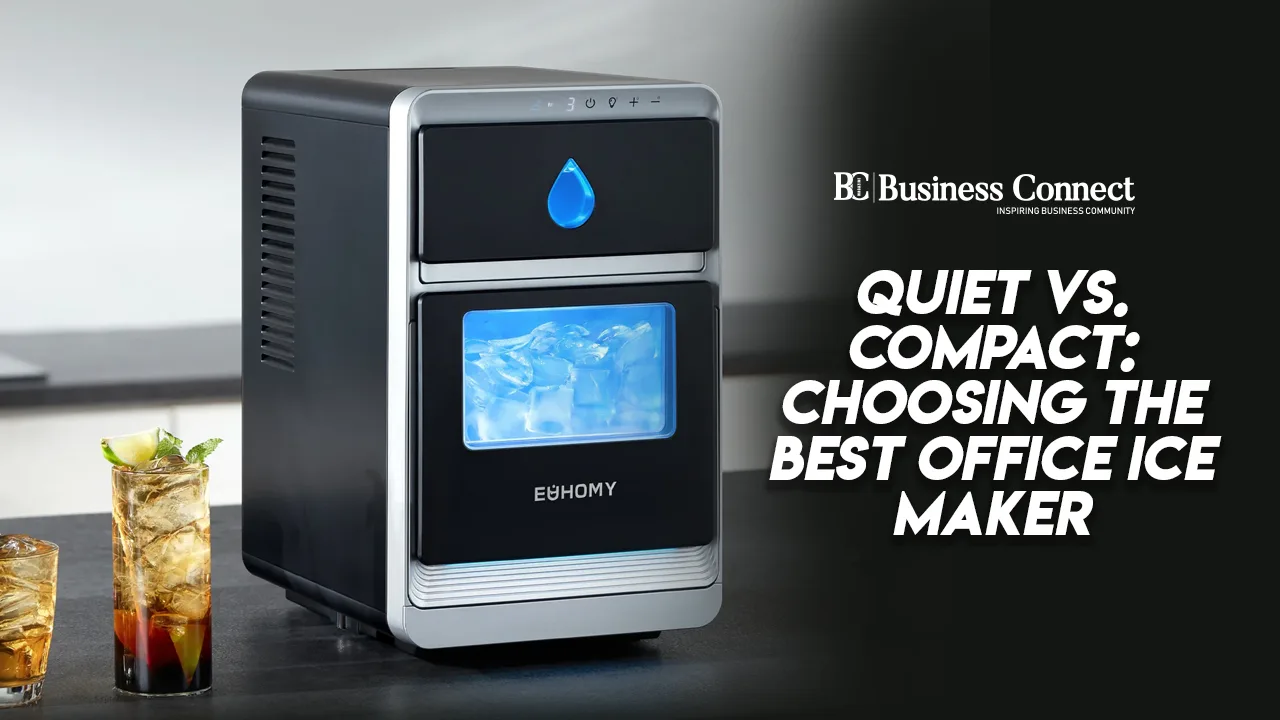
Every office manager faces the same balancing act: improving workplace amenities without creating new problems. Adding an ice maker to the break room sounds simple enough, but the wrong choice can turn a thoughtful upgrade into a daily annoyance. The two most common concerns pull in opposite directions—you need a machine quiet enough to avoid disrupting nearby workspaces, yet compact enough to fit a crowded kitchenette counter. So how do you find an ice maker that genuinely excels in both areas without forcing a painful compromise?
This guide breaks down exactly what matters when evaluating office ice makers, from decibel ratings and footprint dimensions to popular options like nugget ice makers that employees love. You’ll find a clear comparison of features, practical placement advice, and a step-by-step decision framework designed specifically for office environments. By the end, you’ll have the confidence to select the best countertop ice maker that fits your space, respects your team’s need for focus, and delivers ice reliably throughout the workday.
Why Your Office Needs the Right Countertop Ice Maker
A well-stocked break room signals that a company values its people. Something as straightforward as readily available ice elevates the daily coffee ritual, keeps afternoon drinks refreshing, and gives employees one less reason to leave the building during breaks. It’s a small investment that pays off in convenience and morale—when it works properly.
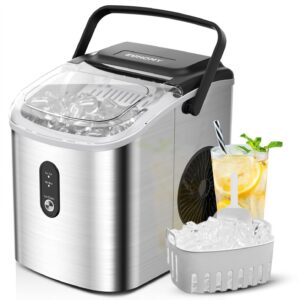
The problem emerges when the wrong machine enters the picture. An ice maker that hums loudly enough to bleed into adjacent workstations creates resentment rather than appreciation. A bulky unit that dominates precious counter space forces awkward workarounds, pushing microwaves and coffee machines into inconvenient corners. Suddenly, the amenity feels like an imposition.
The best countertop ice makers for office use share a specific set of qualities tailored to shared professional spaces. They operate at noise levels that won’t interrupt a phone call ten feet away. They occupy a modest footprint that coexists peacefully with other break room essentials. They produce enough ice to serve a team throughout the day without constant babysitting. And they’re simple enough that no one needs a manual to grab a scoop. Understanding how these criteria interact—and which ones matter most for your particular office—is the foundation for making the right choice.
The Quiet Office Imperative: Evaluating Noise Levels
In open-plan offices where desks sit just a thin wall or a few steps away from the break room, noise isn’t a minor annoyance—it’s a productivity killer. An ice maker that cycles on every fifteen minutes with a grinding compressor or rattling fan becomes background stress that accumulates throughout the day. This makes noise evaluation one of the most critical steps when selecting an office ice maker.
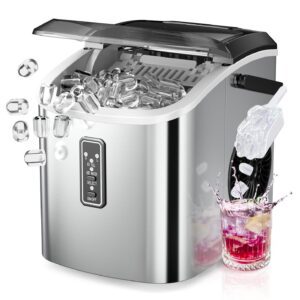
Ice maker noise is measured in decibels (dB), and context matters. A typical conversation registers around 60 dB, while a quiet library sits near 40 dB. The best quiet ice makers for office use operate between 35 and 45 dB—roughly equivalent to a soft hum or a residential refrigerator. Anything above 50 dB becomes noticeable and potentially disruptive in a professional setting.
Several mechanical factors determine how loud a machine runs. The compressor type matters most; models with inverter compressors adjust their speed rather than cycling on and off abruptly, producing steadier and softer sound. Internal insulation dampens vibration before it reaches the outer casing. Fan design also plays a role—smaller, high-speed fans tend to whine, while larger, slower fans move air more quietly. Some nugget ice makers have earned reputations for particularly quiet operation because their ice-forming process involves less mechanical impact than bullet-style machines that eject hard cubes from molds.
Placement amplifies or reduces perceived noise significantly. Position the machine against an interior wall rather than a shared partition with workstations. Rubber anti-vibration pads underneath the unit prevent hum from transferring into the countertop. Keeping the machine away from hard reflective surfaces like tile backsplashes also helps absorb rather than bounce sound outward.
Real-World Impact of a Noisy Machine
Picture a sales representative on a client call when the ice maker kicks into a loud harvest cycle three feet from the break room doorway. Or consider a developer trying to maintain focus while a compressor drones through the thin wall behind their monitor. These aren’t hypothetical frustrations—they’re the exact complaints that lead office managers to unplug a machine entirely within weeks of installing it. A quiet ice maker isn’t a luxury feature; it’s the difference between an amenity that stays plugged in and one that collects dust in a storage closet.
Maximizing Limited Space: The Compact Ice Maker Advantage
Office kitchenettes rarely have counter space to spare. Between the coffee machine, microwave, toaster, and dish rack, every square inch carries weight. Introducing an ice maker into this environment demands careful attention to physical dimensions—not just whether it technically fits, but whether it fits comfortably alongside everything else your team uses daily.
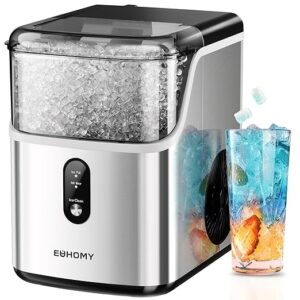
A compact ice maker typically occupies a footprint roughly the size of a bread box, with widths ranging from 9 to 12 inches and depths between 12 and 15 inches. Brands like Euhomy have designed countertop models specifically with these space constraints in mind, allowing the machine to tuck beside a coffee station or slide beneath upper cabinets without crowding neighboring appliances.
For smaller offices with minimal break room real estate, this space-saving design isn’t merely convenient—it’s mandatory. A machine that forces you to relocate the microwave to a filing cabinet defeats the purpose of improving the break room experience.
However, compact dimensions introduce a genuine tension with capacity. Smaller machines generally hold less ice in their internal storage bins, meaning they may struggle to keep up during peak afternoon demand when multiple employees want cold drinks simultaneously.
The key is matching production rate to your team’s actual consumption patterns. A machine producing 26 pounds of ice per day comfortably serves a team of 10 to 15 people, even with a modest storage bin, because it continuously replenishes throughout the day. Understanding this relationship between size, storage, and production rate prevents you from either overspending on capacity you don’t need or underbuying a machine that leaves the bin empty by 2 PM.
Key Measurements: Beyond Just the Footprint
Before purchasing, measure more than just the counter space where the machine will sit. Check the height clearance, especially if the unit has a top-opening lid that needs room to swing upward beneath cabinets. Account for rear ventilation clearance—most machines require two to three inches of breathing room behind them to prevent overheating.
Also verify the depth won’t push the machine past the counter’s edge. Finally, weigh the trade-off honestly: a unit two inches wider might produce significantly more ice per day, and that extra capacity could matter more than the marginal space savings of the smallest available model.
Beyond Quiet and Compact: Other Essential Features
Once you’ve narrowed your search by noise level and physical size, several additional features separate a good office ice maker from a great one. Ice type tops this list. Traditional bullet-shaped ice works fine for water glasses, but nugget ice makers have become the clear favorite in office settings.
Nugget ice—sometimes called pebble or sonic ice—is soft, chewable, and absorbs the flavor of whatever drink it’s in. Employees genuinely get excited about it, which sounds trivial until you see how a small perk like quality ice transforms break room culture.
Production speed matters for offices with more than a handful of people. Look for machines that complete a batch cycle in eight to fifteen minutes, ensuring the bin stays stocked even during the post-lunch rush. Ease of maintenance deserves equal weight—removable parts that are dishwasher-safe and self-cleaning cycles save whoever draws the short straw on break room duties. Models with straightforward indicator lights that signal when to add water or clean the unit prevent neglect from turning into malfunction.
Finally, consider the water source. Portable reservoir models offer placement flexibility since they don’t need plumbing, but they require manual refilling. Direct-line connections eliminate that task entirely, though they limit where the machine can live. For most offices, the portable option wins on versatility unless you have an existing water line within reach of your preferred counter spot. Energy efficiency rounds out the picture—look for machines that enter a low-power standby mode when the bin is full rather than cycling endlessly.
Your Step-by-Step Guide to Choosing the Best Office Ice Maker
With all the variables in play, a structured approach prevents decision paralysis and ensures you land on a machine that actually serves your team well. Follow these steps in order, and you’ll move from overwhelmed to confident in a single afternoon.
Start by identifying your non-negotiable priority. If the break room shares a wall with a quiet workspace or conference room, noise performance must lead your decision. If your kitchenette barely accommodates what’s already there, dimensions take precedence. Being honest about which constraint is harder to work around simplifies every comparison that follows.
Next, measure your available space with precision. Grab a tape measure and record the width, depth, and height clearance at your intended location, including room for ventilation and any top-opening lids. Write these numbers down before browsing a single product listing.
Then estimate your daily ice demand. Count the employees who regularly use the break room and assume each person uses roughly two to three cups of ice per day. Multiply that out, and you’ll know whether a machine producing 26 pounds daily is sufficient or whether you need higher output.
Set a realistic budget range before you start shopping—this prevents feature creep from pulling you toward machines that exceed what your office actually requires. With your constraints defined, research two or three models that meet your space, noise, and capacity requirements.
Read verified user reviews specifically mentioning noise levels and long-term reliability, since manufacturer claims don’t always match real-world performance. Finally, choose the model offering the strongest balance across all your criteria rather than chasing perfection in any single category. The machine that scores well everywhere will outlast the one that excels in one area but frustrates in another.
Finding the Right Balance for Your Office Break Room
The tension between quiet operation and compact design is real, but it doesn’t have to be paralyzing. Every office has a unique layout, a different proximity between the break room and focused workspaces, and its own counter space limitations.
The machine that works perfectly for a startup in a converted loft won’t necessarily suit a traditional office with a dedicated kitchenette down the hall. What matters is recognizing which constraint carries more weight in your environment and letting that priority guide your search without ignoring the other factor entirely.
The best office ice maker isn’t the quietest one on the market or the smallest one available—it’s the one that strikes the right balance for your team’s specific situation. Use the step-by-step framework outlined above to move through the decision methodically.
Measure your space, estimate your demand, listen to what verified buyers report about real-world noise, and trust that a thoughtful selection process leads to a machine your team will appreciate every single workday. A reliable ice maker quietly doing its job in the corner of the break room is exactly the kind of upgrade that makes an office feel like a place people want to be.