
Bihar has delivered its decision. “Phir ek baar, with 200 paar” is the NDA. They have the potential to surpass the NDA’s 2010 record of 206 seats. Both spectacular wins and devastating losses have been the outcomes. The main winners and losers of Bihar’s crucial 2025 election are shown below.
Bihar Election 2025 WINNERS
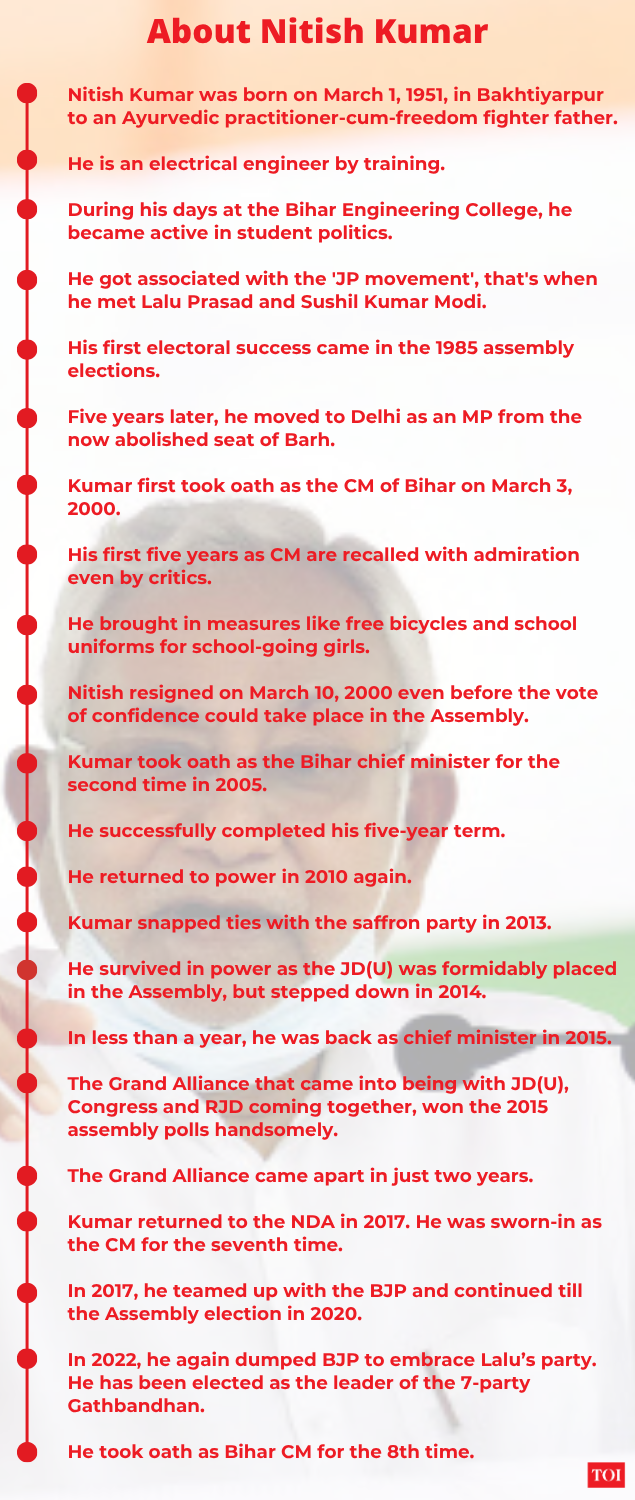
1. Nitish Kumar
Nitish Kumar, the leader of the Janata Dal (United), has once again emerged as the largest winner in the 2025 Bihar elections after successfully combating voter fatigue and 20 years of anti-incumbency sentiment. In the 243-member legislature, Nitish’s JD(U) led in more over 80 seats, while the NDA had more than 200, despite nearly two decades in power.
Nitish has prevented Tejashwi Yadav’s ascent by doing this (again). With the RJD emerging as the largest single party in the previous election, Tejashwi had significant momentum and hoped for a full-term run this time. However, the findings demonstrate that Nitish has won the “youth vs. experience” debate.
Bihar Election Results 2025 Live Updates
2. PM Modi
With the NDA’s performance mostly dependent on Prime Minister Narendra Modi’s personal popularity, the Bihar election results have once again demonstrated that Modi is the greatest of all time. Voters appear to have clearly differentiated state concerns from PM Modi’s national leadership and supported the “Modi ki guarantee” despite local anti-incumbency sentiment against Nitish Kumar.
His social programs undoubtedly produced a sizable beneficiary base that supported the NDA. In addition to stopping any opposition momentum, the findings confirm PM Modi’s unparalleled ability to transfer votes, solidifying the BJP’s position till 2029. With 89 seats, his BJP became the largest party. Bihar demonstrates that PM Modi’s appeal continues to propel the coalition’s triumph in a state characterized by caste and shifting alliances.
3. Chirag Paswan
In contrast to 2020, when his LJP won only one seat while receiving over 6% of the vote, Chirag Paswan has been one of the greatest winners in 2017 Bihar election. This time, his party won 22 of the 29 seats it was running for, turning that dispersed support into significant gains.
This outcome demonstrates that Chirag’s personal appeal to Dalits and “yuva Biharis” was successful. He established himself as a rising figure with autonomous negotiating power by first separating himself from the Nitish Kumar-led NDA and then reentering as a more powerful ally. He goes from being a peripheral disruptor in 2020 to a major power player in 2025 thanks to his better tally, which also indicates the consolidation of the Paswan support.
4. Women voters
The Bihar elections were dominated by women, who significantly influenced the outcome and generated a record-breaking turnout. Women outvoted males for the first time, 72% to 63%, with a 10–20 point advantage in female turnout in several districts. Welfare programs like the Rs 10,000 Mukhyamantri Mahila Rozgar Yojana, which resonated with underprivileged and disadvantaged populations, helped the NDA win the mandate thanks to their huge participation.
Mobilization was reinforced by years of empowerment through Jeevika self-help organizations and panchayati raj reservations. Women voters, who prioritized stability, safety, and governance, supported parties that promised security and welfare, making them the real kingmakers of Bihar 2025.
5. Asaduddin Owaisi
Even if Owaisi’s AIMIM did not win many seats in the 2025 Bihar election, Owaisi emerges as a clear strategic winner. As the Bihar assembly results were being counted, the Election Commission reported that AIMIM was ahead in five seats.
The party is running for 29 of the 243 seats in the legislature and has considerable influence in the Muslim-majority Seemanchal district. The Seemanchal area is home to twenty-four of the seats it is running for.
In a state where every percentage point counts, his party once again demonstrated its capacity to influence close elections in Seemanchal’s Muslim-majority seats, confirming his significance.
Bihar Election 2025 Losers
6. Tejashwi Yadav
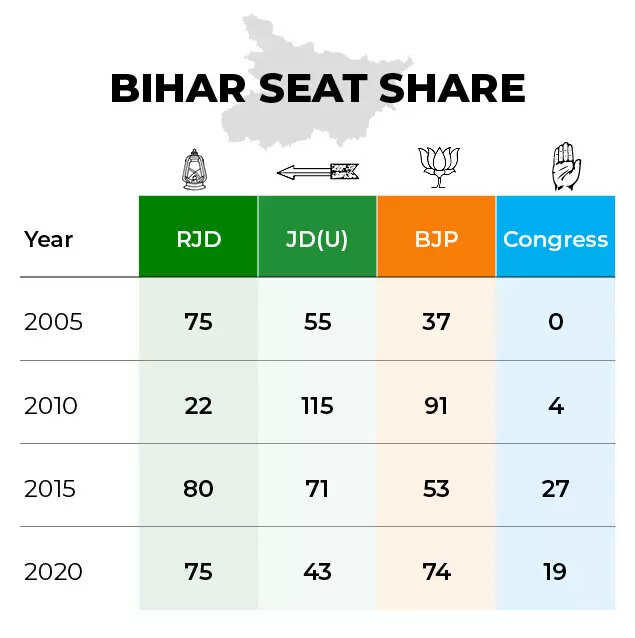
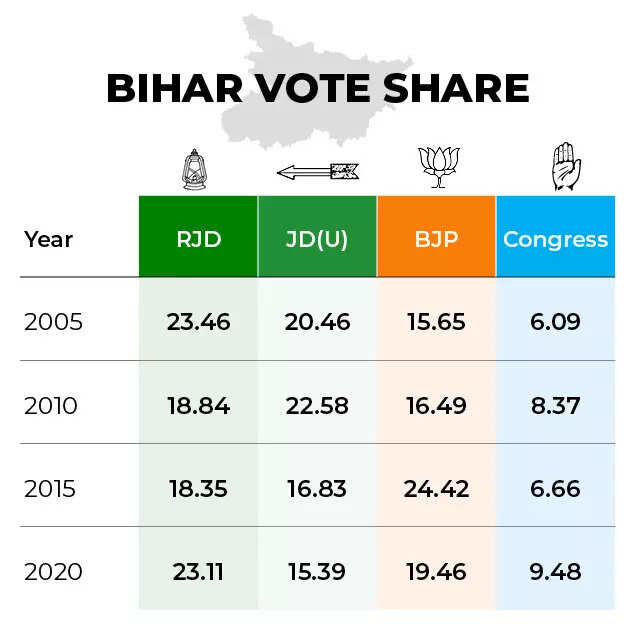
Tejashwi Yadav, who ran as the opposition’s chief ministerial candidate and the Mahagathbandhan’s only viable rival to the NDA, has suffered a significant blow as a result of the Bihar election. In 2020, Tejashwi led RJD to 75 seats, making it the largest party. It was generally anticipated that Tejashwi would expand on that success in 2025. Rather, Tejashwi was unable to turn the energy and inti-incumbancy surge against Nitish Kumar into votes. Only 29 seats are in his party’s favor.
After winning just 22 seats in the 2010 elections, this would be RJD’s second-worst performance in the Bihar election.
This election served as a test of Tejashwi’s ability to break away from the RJD’s traditional Muslim-Yadav base and win over a new generation of voters seeking leadership with an emphasis on governance. The party’s vote share did not see the significant increase required to skew the state’s statistics, despite vigorous campaigning and a scathing message against Nitish.
The narrative loss is the most detrimental to Tejashwi. He became the new face of Bihar politics after the 2020 election. Tejashwi, a man who aspired to be the next chief minister of Bihar, is the biggest loser of this election since he is stuck this time rather than growing his political influence.
7. Rahul Gandhi
Rahul Gandhi has suffered a serious setback in the Bihar election, as his Congress was relegated to a single digit and once again failed to make any notable progress in the state.
Rahul Gandhi has attempted to turn around the party’s fortunes in Bihar through a number of high-profile campaigns, such as the Voter Adhikar Yatra, the Special Intensive Revision in Bihar, and the “vote chori” accusations against the Election Commission and the Center. However, the Congress has not had a significant impact. In contrast to the local concerns that are more appealing to Bihar’s people, these issues seem to have failed to mobilize voter support.
Despite Tejashwi Yadav’s impressive performance, Congress only won 19 of the 70 seats it ran for in the Mahagathbandhan in 2020, lowering the alliance’s total. The idea that Congress offers little political value in crucial Hindi heartland races was reinforced by the Congress’s failure to increase its footprint in this election, which presented a chance to reverse that direction.
8. Prashant Kishor
Once praised as India’s best election strategist, Prashant Kishor contested the Bihar elections as a political candidate and emerged as the largest loss. Following a two-year padyatra throughout Bihar and widespread media coverage of Jan Suraaj, Kishor presented himself as a revolutionary alternative to the Mahagathbandhan and the NDA. However, the election results demonstrate that his party did not make much progress in turning visibility into votes.
The results demonstrate that in a divisive election dominated by Nitish Kumar’s governance image, Tejashwi Yadav’s social justice appeal, and the NDA’s welfare story, Kishor’s technocratic, development-first pitch did not connect. His last-minute withdrawal from the race only served to heighten feelings of political unpredictability.
9. Mukesh Sahani
Even before the results were made public, Mukesh Sahani, also known as the “Son of Mallah,” emerged as a major winner in this Bihar election as the Mahagathbandhan designated him its deputy chief ministerial candidate. However, his party had little effect when the ballots were tallied on Friday.
Sahani was unable to turn his caste appeal into significant seats in spite of his boisterous campaigning and efforts to unite the Mallah-Nishad group. His base of support turned out to be softer than anticipated, with a sizable portion of Nishad’s votes shifting in favor of the NDA, who provided more robust welfare promises and rhetoric focused on security. It appears that his many coalition changes over the past few years have also undermined his reputation, making people reluctant to support him.
10. INDIA bloc
Due to inadequate coordination, poor organization, and a lack of narrative, the INDIA bloc emerges as the largest loser in the Bihar elections. With disagreements over seat distribution and no cohesive plan, the coalition went into the election split.
While Tejashwi Yadav was unable to grow beyond the RJD’s M-Y base, Congress dropped to single digits, pulling down the bloc’s arithmetic. Important campaign topics, like as the SIR scandal, did not catch on, but the NDA’s organizational discipline and welfare-focused rhetoric did. The INDIA bloc’s loss in Bihar, just a year after a strong 2024 Lok Sabha performance, demonstrates its declining cohesiveness and trustworthiness.
1. Who is the biggest winner of the Bihar Election 2025?
The biggest winner is Nitish Kumar, whose JD(U) led in over 80 seats and helped the NDA cross 200 seats, overcoming 20 years of anti-incumbency and beating Tejashwi Yadav’s momentum.
2. How did PM Narendra Modi influence the Bihar 2025 election results?
PM Modi’s personal popularity and welfare schemes played a major role in NDA’s victory. His “Modi ki guarantee” narrative helped BJP emerge as the single largest party with 89 seats.
3. Why is Chirag Paswan considered a major winner in 2025?
Chirag Paswan’s LJP won 22 of 29 seats, converting scattered votes from 2020 into solid support, especially among Dalits and young voters, making him a key power player in the NDA.
4. What role did women voters play in the Bihar elections?
Women recorded a higher turnout than men—72% vs. 63%—and strongly supported welfare schemes and security-focused governance, making them decisive in NDA’s win.
5. Why is Asaduddin Owaisi seen as a strategic winner?
AIMIM showed strong influence in the Muslim-majority Seemanchal region, leading in multiple seats and impacting close contests, even without major seat wins.
6. Why did Tejashwi Yadav and the RJD perform poorly?
Despite high expectations, RJD won only 29 seats. Tejashwi failed to expand beyond the traditional M-Y base and couldn’t convert anti-incumbency into votes against Nitish Kumar.
7. Why did Rahul Gandhi’s Congress fail in Bihar 2025?
Congress fell to single digits, unable to connect with state-level issues. Despite high-profile campaigns, the party couldn’t mobilize voters or strengthen the INDIA bloc.
8. What happened to Prashant Kishor’s Jan Suraaj movement?
Despite long groundwork and visibility, Jan Suraaj couldn’t convert presence into votes. His development-first pitch failed to resonate in a polarized election.
9. Why is Mukesh Sahani considered a loser in 2025?
Although projected as deputy CM candidate, Sahani’s party couldn’t convert caste support into seats. Many Nishad voters shifted towards NDA due to stronger welfare messaging.
10. Why did the INDIA Bloc collapse in Bihar?
Internal conflicts, weak coordination, poor seat-sharing, and no unified narrative led to the bloc’s major setback, especially compared to NDA’s disciplined strategy.
Add Business Connect magazine to your Google News feed