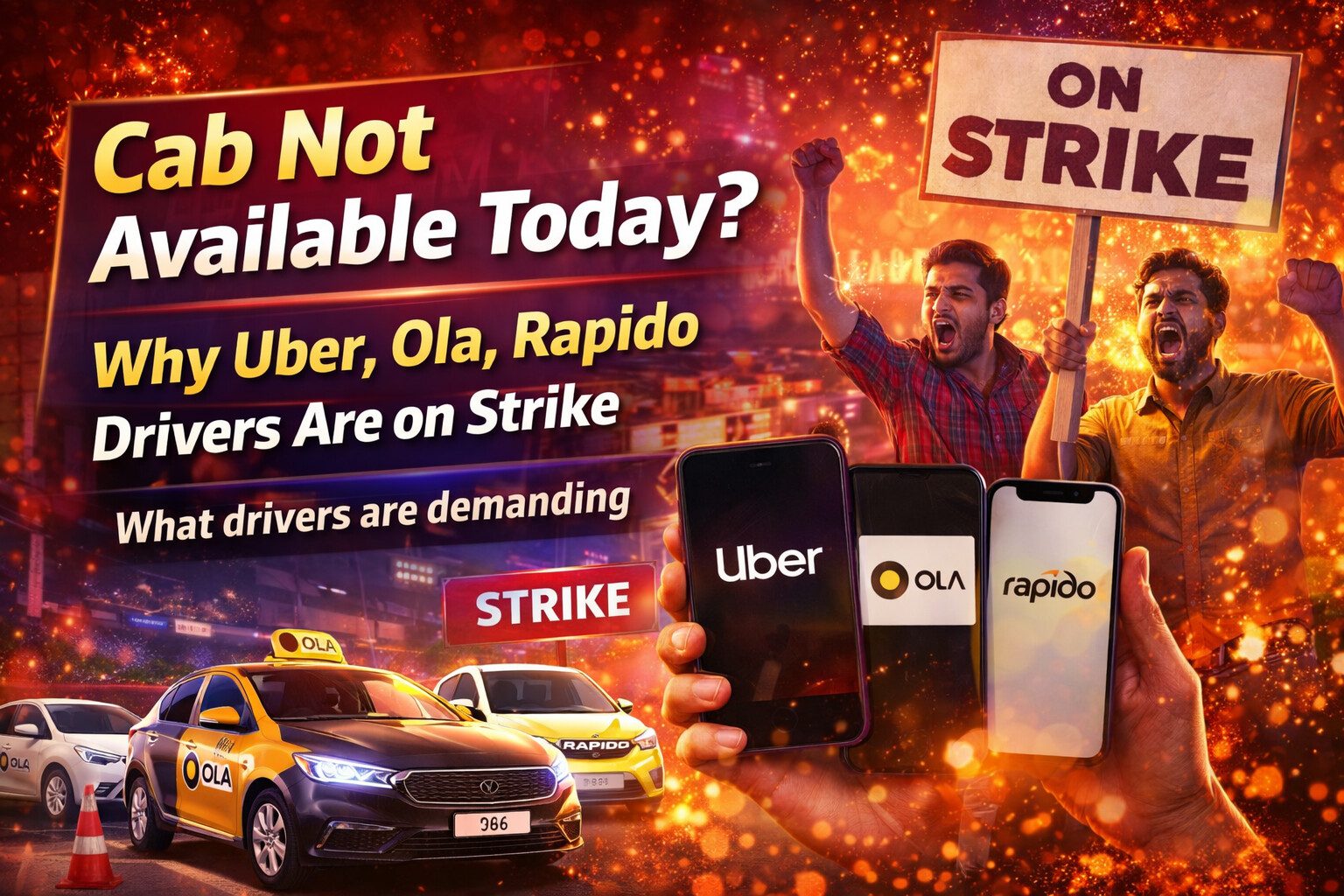
New Delhi: If you rely on app-based taxis or autorickshaws for your daily commute, you may face disruptions today. Drivers associated with ride-hailing platforms across India have announced a nationwide strike on February 7, saying they will go offline for six hours in what they are calling an “All India Breakdown.” The protest is aimed at pressing their demands over fare structures, tighter regulations and rising compliance costs. As a result, services are likely to be affected in several major cities.
Who Is Behind the Nationwide Protest?
The strike has been announced by the Telangana Gig and Platform Workers Union (TGPWU), with support from several labour groups working with app-based drivers across the country. The union says the move is aimed at highlighting concerns over fare structures and what it describes as inadequate regulation in the ride-hailing sector.
According to the union, aggregator platforms continue to determine fares on their own, despite the presence of the Motor Vehicle Aggregator Guidelines, 2025. It argues that drivers are bearing the brunt of rising costs while having little say in pricing decisions.
In its post, the union said, “No minimum fares. No regulation. Endless exploitation. Govt must act now. Millions of app-based drivers are pushed into poverty while aggregators profit. Govt silence = platform impunity.”
Key Demands Raised by Transport Workers
The protesting drivers have put forward several demands, saying these steps are necessary to protect their earnings and ensure fair practices in the sector.
Appointment of an overseer:
In a letter addressed to Union Minister Nitin Gadkari, the union pointed out that the Motor Vehicle Aggregator Guidelines, 2025 provide for regulatory oversight. This means a government-appointed authority should monitor fare transparency and safeguard drivers’ livelihoods. The union has urged the government to implement this provision and related rules without delay.
Minimum base fare notification:
The workers have also demanded that both central and state governments immediately fix and notify minimum base fares for app-based taxi and auto services. According to the Telangana Gig and Platform Workers Union (TGPWU), these fares should be decided in consultation with recognised driver unions, as outlined in the 2025 guidelines. In the past, such base fares have been officially set for other taxi categories.
Ban on private vehicles for commercial use:
Another key demand is a strict ban on the use of private (non-commercial) vehicles for passenger and goods transport. Alternatively, the union has asked that such vehicles be mandatorily converted into commercial category vehicles to ensure compliance with regulations.
So far, ride-hailing companies have not issued any detailed statement on the immediate reasons behind the strike.
Part of a Wider Wave of Gig Worker Protests
The February 7 strike is not an isolated development. It follows a series of protests by gig workers across different platform-based industries in recent months. In December 2025, food delivery and quick-commerce workers staged demonstrations, raising concerns over low payouts and difficult working conditions especially during high-demand days when business peaks but earnings, they claim, do not rise proportionately.