
Urinals For Home & Commercial Spaces: Wall-Mounted, Sensor & Floor Models
A good urinal makes a bathroom look neater and is easier to keep clean. Options range from small wall-mounted designs to sensor models that flush automatically and save water. More homes now add one to a guest or ground-floor bathroom, and offices and malls rely on them to handle heavy daily use. The right choice depends on the space, how many people will use it and the plumbing system. Knowing how each type works and what to check before installation makes the choice simpler and helps avoid costly rework later.
Types Of Urinals: Wall-Mounted, Sensor And Floor-Mounted Models
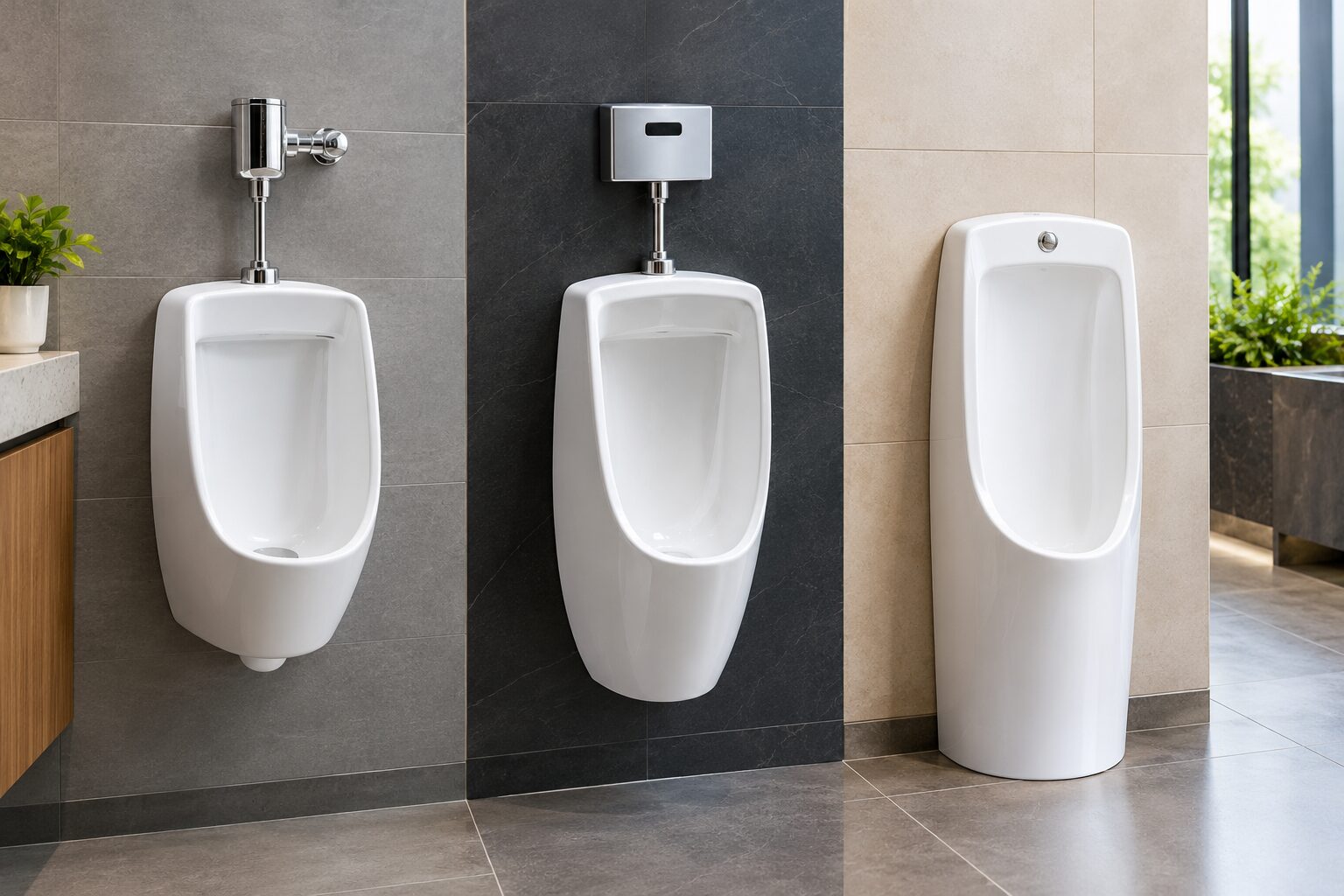
Every urinal falls into one of three main types: wall-mounted, sensor and floor-mounted. A small guest bathroom and a crowded airport washroom need very different fixtures. The three types differ in how they are fixed, how they flush, and how much space they need.
Wall-Mounted Urinals
A wall-mounted urinal is fixed to the wall at a set height, keeping the floor clear and easy to mop. Smaller models fit into narrow guest bathrooms, and deeper bowls keep splashing down in busy washrooms. Most use a manual push valve or a sensor.
Sensor Urinals
A sensor urinal uses an infrared sensor to detect when the user steps away and flushes automatically. No one has to touch a handle, which is more hygienic in shared washrooms. Each flush is measured, so no water is lost to a valve left half-open. The sensor runs on mains power or batteries.
Floor-Mounted Urinals
A floor-mounted urinal, also called a stall urinal, starts at floor level, so people of any height, including children, can use it. Its tall design handles heavy foot traffic, which is why it is common in airports and stadiums. It needs a floor drain and more space than a wall-mounted unit, so people rarely use it at home.
What To Consider Before Buying A Urinal?
Choosing a urinal comes down to footfall, flushing method, mounting, splash control, cleaning access and plumbing. Think about how many people will use it, where the pipes run and how often it will be cleaned:
- Footfall: A home bathroom may see a few uses a day, while an office washroom can see hundreds.
- Flushing method: Manual valves, sensor flushing and waterless designs each use different amounts of water and need different upkeep.
- Mounting: Wall-mounted units leave the floor free, while floor models suit high-capacity washrooms.
- Splash control: The depth and shape of the bowl decide how much spray gets out.
- Cleaning access: Smooth bowls with few gaps are quicker to wipe down each day.
- Plumbing: Hidden pipes look tidier, though they need planning before the walls are finished.
These points narrow your options before you compare designs. They also let you brief your plumber early, before the walls and floors are finished.
Choosing A Urinal For Homes And Commercial Washrooms
The right urinal depends on where it goes. At home, it has to look right next to the basin and WC. In a commercial washroom, it has to handle hundreds of uses a day.
Urinals For Homes
A small wall-mounted unit in a guest or ground-floor bathroom keeps the WC cleaner and saves water on quick, frequent visits.
Standing, corner and sensor designs all work well at home, and a corner model is handy for an awkward spot. Picking one in the same white and style as your basin and WC keeps the room looking matched.
Urinals For Commercial Washrooms
A public washroom is used far more than a home bathroom. Heavy footfall, frequent cleaning and water bills all affect which fixture makes sense. These are the points to focus on:
- Hygiene and footfall: Touch-free flushing and easy-clean surfaces count for more than decorative details.
- Water use: Waterless models need their cartridges or seals serviced regularly to stay odour-free.
- Flooring: Splashes and constant cleaning wear floors down fast, so the floor deserves as much thought as the fixture.
Get these right, and a busy washroom stays clean and runs smoothly. Premium suppliers like Simpolo Tiles & Bathware offer wall-mounted sensor urinal designs with durable, antibacterial surfaces that are easy to clean.
Common Urinal Installation Mistakes To Avoid
The most common urinal installation mistakes are the wrong height, no partitions, poor ventilation, a neglected trap and no power point for sensors. These problems usually show up only after the work is finished, when fixing them often means breaking tiles:
- Wrong height: A rim that is too high or too low causes more splashing, and children’s washrooms need it lower.
- No partition: Privacy screens between units make commercial washrooms more comfortable.
- Poor ventilation: Even spotless fixtures need good airflow to keep smells away.
- Ignoring the trap: Blocked or dry traps often cause lingering smells.
- Forgetting sensor power: A sensor model needs a nearby power point or easy access to change batteries.
Sorting these out at the drawing stage keeps the washroom clean and trouble-free for years. It also saves you from expensive repairs later.
Conclusion
The right urinal depends on where you’ll use it. At home, a compact wall-mounted design works well, while commercial spaces need fixtures made for constant use. A sensor urinal offers touch-free hygiene and better water control in high-traffic areas, while floor models suit the busiest public washrooms. Plan the fixture, plumbing, and surrounding surfaces together, and the washroom will stay clean and work well every day.
Add Business Connect magazine to your Google News feed