
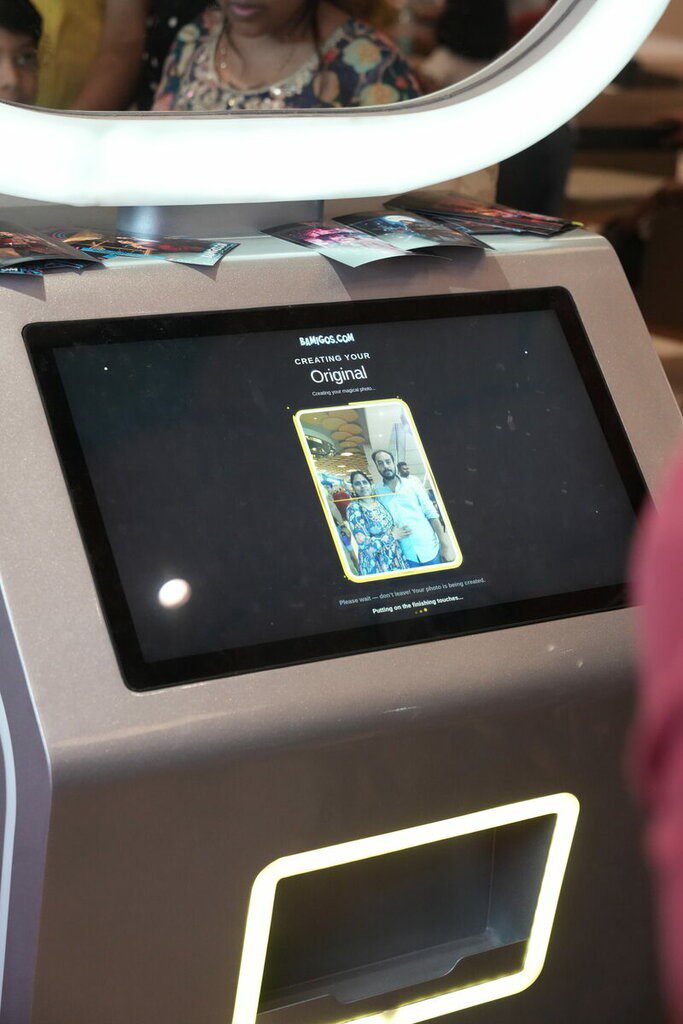
A new category of self service business is gaining traction across Indian malls, gaming zones, and hotels. The AI photo booth, a kiosk that uses generative artificial intelligence to transform customer photos into stylized portraits and prints the result in under 30 seconds, has emerged as one of the cleanest passive income opportunities for small investors in India.
What Makes It Work
An AI photo booth charges ₹129 to ₹250 per session via UPI. Customers walk up, pay through Google Pay or PhonePe, select an AI effect like Mughal royalty, Bollywood transformation, or Korean style photo strips, and collect their printed photo without any staff assistance. According to RBI data, UPI processed over 13.9 billion transactions in March 2025, making it the default payment rail for unmanned kiosks.
The machine costs ₹3.5 to ₹6 lakh including GST. At 50 to 100 sessions per day in a high footfall location, monthly gross revenue runs ₹2 to ₹4 lakh. After venue revenue share (typically 20 to 30 percent) and annual maintenance, net monthly income sits at ₹1 to ₹2 lakh per unit. Payback period: 6 to 14 months.
Why Indian Manufactured Booths Win
Most photo booths deployed globally come from Chinese or Korean factories. Indian manufacturers now build the full stack in house: cabinet, PCB, firmware, AI software, and operator dashboard. The practical difference for operators:
| Factor | Chinese Import | Indian Manufactured
|
|---|---|---|
| Spare parts | 6 to 8 weeks from Shenzhen | 48 hours domestic |
| Software updates | Fixed at factory | Monthly OTA, culturally localized |
| Payment | Card or token, 1.5 to 2.5% MDR | Native UPI |
| Warranty | Unenforceable across borders | Indian consumer law |
| AI effects | Static library | 200+ effects, updated monthly |
Indian built AI photo booth machines in India run proprietary AI calibrated for Indian cultural moments: Diwali, Holi, wedding season, regional festivals. The effects library refreshes monthly over the air, keeping the experience fresh for repeat customers.
The Business Model
The typical operator buys one machine, places it in a mall or gaming zone on revenue share, validates the economics over two to three months, then scales to a fleet. A single person can manage six to eight booths across multiple cities using fleet management software that tracks revenue, paper levels, and connectivity in real time from a phone.
India’s indoor entertainment market is estimated at ₹15,000 crore by the Indian Association of Amusement Parks and Industries (IAAPI), growing at 16 percent CAGR through 2030. The AI photo booth captures a small but fast growing slice of that market, with the cleanest unit economics of any self service entertainment category: highest per unit revenue, zero staff requirement, and the shortest payback window.