
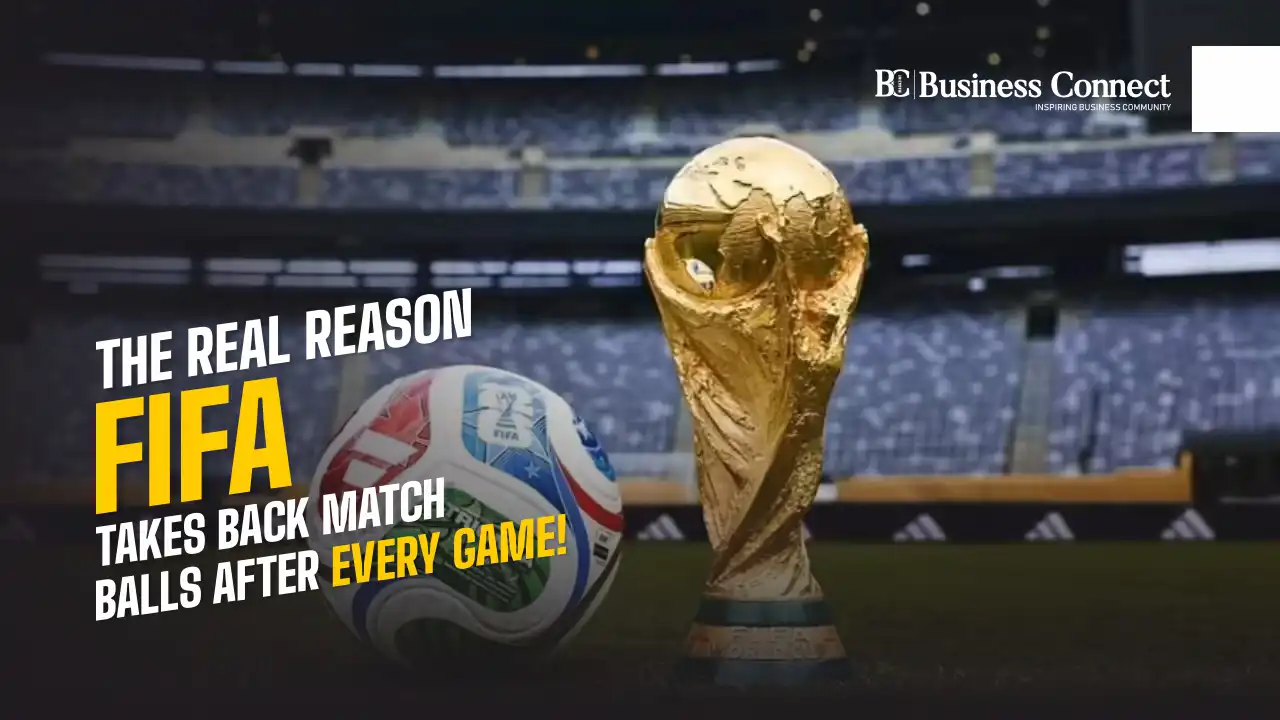
The best memento from a FIFA World Cup game should be catching a football that is kicked into the stands. Fans are expected to return it very quickly instead.
You’ve probably noticed it if you’ve paid careful attention to any World Cup match. A fortunate fan catches a stray shot that flies into the crowd, celebrates for a little while, takes a brief picture and then tosses the ball back onto the pitch.
The natural question for many first-time spectators, particularly those who have travelled thousands of dollars to attend the event, is: It’s just a ball? Why are you unable to keep it?
Football heritage and contemporary technology work together to provide the solution.
FIFA wants the ball back all the time.
Football has never regarded match balls as souvenirs, in contrast to baseball. There was frequently only one ball accessible during a game in the early days of the sport. Play simply could not continue until it was returned if it vanished into the crowd. Returning the match ball has remained an unwritten rule of the game, despite the fact that several extra balls are now placed throughout the pitch in contemporary stadiums.
FIFA still requires fans to return the ball as soon as possible so that the game can go on uninterrupted.
VERY EXPENSIVE EQUIPMENT
Another, much more contemporary cause exists. Adidas’ Trionda, the official World Cup match ball, is loaded with technology.
Every ball has a motion sensor that sends data to FIFA’s officiating systems 500 times per second. Together with other tracking cameras positioned across the stadium, the sensor aids goal-line technology in determining if the ball has fully crossed the line and aids the semi-automated offside system in pinpointing the precise instant a pass is made.
Engineers working on the technology claim that it is one of the most sophisticated footballs ever made since the sensor can detect the ball’s movement with remarkable accuracy.
The balls are meticulously calibrated to function with the stadium’s tracking system, and they also need to be wirelessly charged prior to games. Much of that technology is useless outside of a World Cup stadium.
MATCH BALLS: WHY CAN’T FANS KEEP THEM?
It is extremely unlikely that a spectator will ever walk home with an official World Cup match ball due to the combination of specialised technology, the expense of the equipment, and football’s long-standing traditions, even though FIFA has never made this policy public.
FIFA’s retail stores and authorised vendors still sell official reproductions to supporters; however, these are copies of the match ball rather than the actual one.
Therefore, football offers something distinct from baseball, where hitting a home run awards you a trophy that lasts a lifetime.
You may briefly grasp the same ball that Harry Kane, Kylian Mbappe, or Lionel Messi just kicked. You are then expected to throw it back, just like everyone else who came before you.