
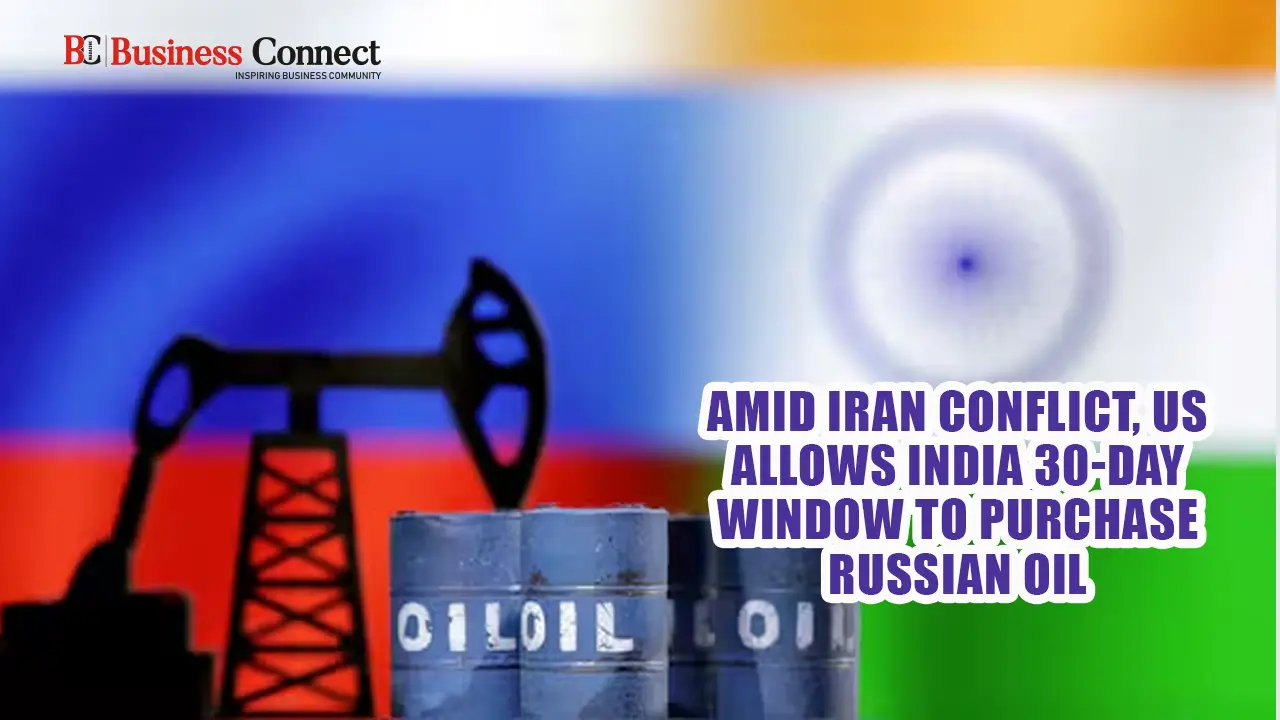
As energy supplies are impacted by the conflict in West Asia, US Treasury Secretary Scott Bessent announced on Thursday, March 5, a 30-day waiver permitting Indian refiners to buy Russian oil. As the conflict between the US, Israel, and Iran expands throughout the region and disrupts the world’s oil supply, the interim solution will allow oil to continue entering the global market.
“Oil and gas production has reached the highest levels ever recorded as a result of President Trump’s energy agenda,” Bessent said in a statement on X.
The Treasury Secretary stated that because the short-term action only allows transactions pertaining to oil cargoes that are already stranded at sea, it is unlikely to result in significant financial gains for the Russian government.
The Treasury Department is granting Indian refiners a temporary 30-day waiver to buy Russian oil in order to maintain the flow of oil into the world market. Since it only permits transactions involving oil that is already stranded at sea, this purposefully temporary policy will not significantly help the Russian government financially, Bessent continued.
The administration of US President Donald Trump “fully anticipates” that New Delhi will increase its oil purchases from the US, according to Bessent, who highlighted India as a “essential partner” of the US.
“This stop-gap measure will alleviate pressure caused by Iran’s attempt to take global energy hostage,” he said.
Earlier, the Trump administration had pushed India to stop purchasing Russian oil, saying that by doing so, New Delhi is funding Moscow’s war in Ukraine. However, the US and Israeli military operations in Iran have struck the global supply of oil from West Asia, as the conflict widens across the region.
This follows attacks on Iran by the US and Israeli military on Saturday, February 28, which resulted in the deaths of Iran’s supreme leader, Ali Khamenei, and a number of other senior Iranian officials. The US called the operation “Epic Fury,” while Israel called it “Lion’s Roar.” The bombings coincided with continuing negotiations over Iran’s nuclear program and increased hostilities between Washington and Tehran. Iran retaliated by attacking US and Israeli military installations in the region, including those in Bahrain, Kuwait, the United Arab Emirates, Qatar, Saudi Arabia, and Jordan.
Disclaimer: Business Connect Magazine takes great care to correctly and ethically write on continuing conflicts in West Asia including the US, Israel, Iran, Gulf countries, and non-state players such as the Islamic State, Hamas, Hezbollah, and the Houthis. Disinformation, misrepresentation, and allegations and counterclaims are being made both locally and online. Because of this, Business Connect is unable to independently confirm the veracity of every comment, social media post, image, and video.