In the rapidly evolving digital landscape of 2026, the mantra “everything in the cloud” is facing its first major challenge. For over a decade, enterprises have migrated every conceivable workflow to remote servers. However, as high-definition media—4K video, lossless audio, and massive data sets—becomes the daily language of corporate marketing and internal communication, the hidden costs of this “Cloud-First” obsession are surfacing.
From bandwidth bottlenecks to escalating subscription fatigue, decision-makers are now pivoting toward a more efficient, secure, and cost-effective alternative: Browser-First Local Processing.
The Financial Leak: Subscription Fatigue and Bandwidth Waste
For the modern enterprise, the financial drain isn’t just the monthly SaaS bill; it is the time lost in the “Upload-Process-Download” cycle. When a marketing team needs to extract a 10-second soundbite from a 2GB video file, the traditional cloud-based workflow consumes significant bandwidth and minutes of employee time just for data transfer.
In a world where speed is a competitive advantage, waiting for server-side rendering is an operational liability. Forward-thinking companies are shifting these micro-tasks to the edge—the user’s own browser. By utilizing browser-based tools, teams can achieve near-instant results without the overhead of heavy software suites or cloud latency.
Security and Compliance: The “Zero-Upload” Advantage
Data sovereignty has reached a tipping point in 2026. With stringent privacy regulations and the rise of AI models trained on scraped data, uploading sensitive corporate assets—internal meeting recordings, unreleased advertisements, or legal memos—to a third-party server represents a significant compliance risk.
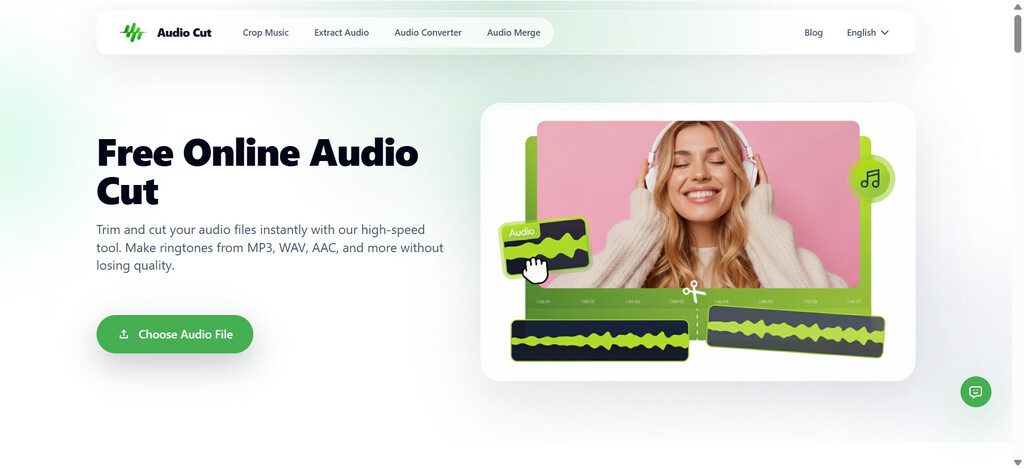
This is where the technological breakthrough of WebAssembly (WASM) changes the game. By moving the processing power to the client-side, sensitive data never leaves the employee’s device. For instance, using a professional-grade audio cut utility that operates entirely within the browser ensures that 100% of the data remains private. There are no logs on a remote server, no data breaches to fear, and no “shady” third-party storage.
Operational Agility: A Case Study in Efficiency
Consider the marketing workflow of a mid-sized firm producing daily short-form content. Using legacy professional software requires heavy RAM consumption and long boot times. Cloud tools, on the other hand, require stable high-speed uplinks that aren’t always available on the go.
The “Browser-First” approach, exemplified by platforms like AudioCut.io, offers a frictionless middle ground. These tools require:
- No Sign-ups: Immediate access for temporary contractors.
- No Installs: Zero friction for IT departments managing hardware.
- Instant Execution: An audio cut task that used to take six minutes of “uploading and waiting” now takes thirty seconds of local processing.
By empowering the workforce with these “surgical” tools, enterprises are reclaiming thousands of collective hours previously lost to “rendering” progress bars.
Feature Spotlight: The All-in-One, Browser-Based Media Station
While the shift toward local processing is a broad strategic trend, platforms like AudioCut.io are setting the technical gold standard for what a pro https://audiocut.io/audio-converter fessional-grade “Surgical” tool should offer in 2026. Beyond simply avoiding the cloud, the tool provides a comprehensive suite of features—from precision trimming to advanced AI-powered separation—designed for corporate agility:
- Instant Media Trimming and Extraction: With the high-performance Crop Music and Extract Audio modules, marketing teams can grab exact soundbites from a 4K video file in seconds, without ever uploading the original GB-heavy asset. It is the core of an agile workflow.
- Seamless Conversion and Compression: The integrated Audio Converter and Audio Compressor allow employees to instantly convert high-fidelity assets (like WAV or FLAC) to enterprise-ready formats (MP3/AAC) and shrink large files for easy email sharing—all performed within the local browser memory at native speeds.
- Precision Merging and Recording: The Audio Merge and Audio Recorder functions make it easy for HR or internal communications teams to quickly combine segments from separate interviews or record high-quality memos, creating an all-in-one suite for internal podcasting or training content.
- Advanced “Splitter AI” Module: This is the tool’s definitive advantage for business communications. The Audio Splitter (both manual and the powerful Splitter AI) can instantly isolate vocals or specific instruments from a recording. It is an invaluable feature for cleaning up noisy conference calls or preparing professional-grade marketing music, providing a level of surgical control over the process that was previously only possible in desktop apps.
- Privacy-by-Design Architecture: Across all eight powerful modules, the “Zero Upload” policy remains a technical reality. Since the code runs on the client side, every operation from conversion to AI separation is performed in a “black box” on the user’s machine, ensuring absolute compliance with corporate intellectual property and data sovereignty laws.
Conclusion: Embracing the “Local-First” Future
As we navigate through 2026, the most successful enterprises will be those that recognize not every task requires a massive backend. The shift toward decentralized, browser-side processing is not just a technical trend; it is a strategic move to lower operational costs, enhance data security, and respect the most valuable corporate asset: time.
For the modern CXO, the goal is clear: audit the toolchain, eliminate cloud bloat, and embrace the speed of the local browser.