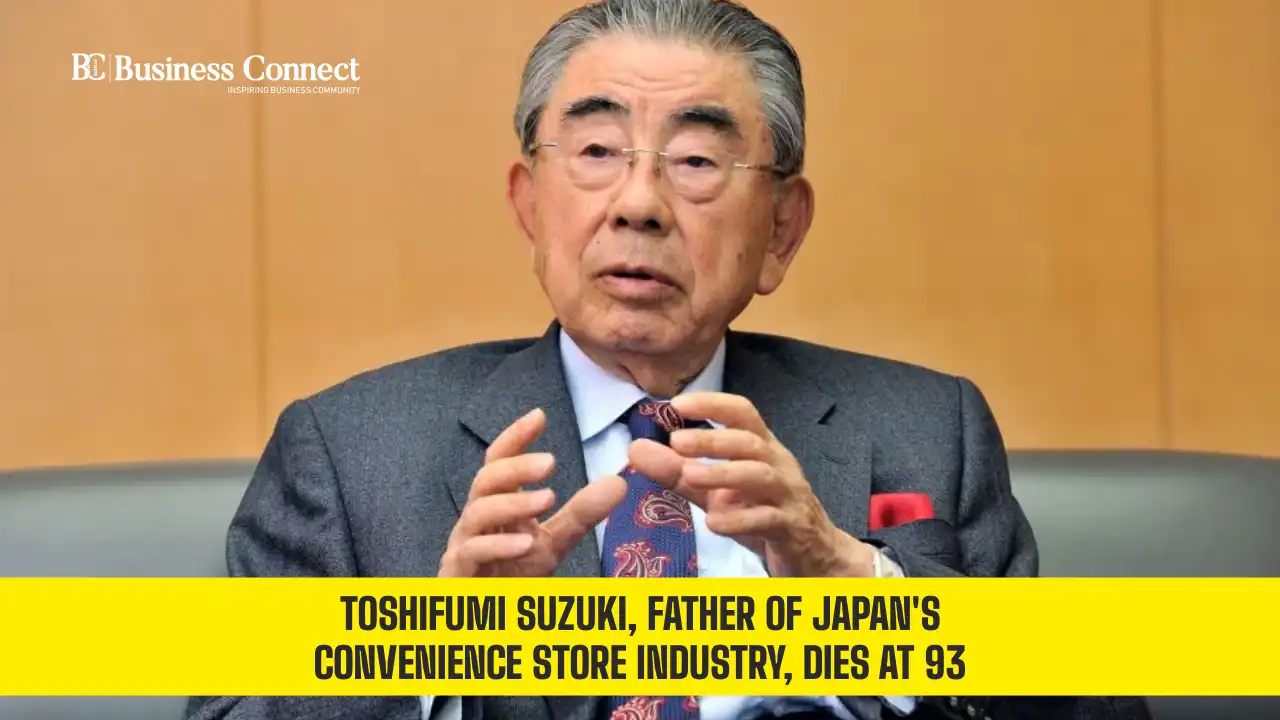
The visionary who brought 7-Eleven to Japan in 1973 and built it into the world’s largest convenience store chain passed away on May 18 due to heart failure.
- Born
- Died
- Legacy
Key facts from the story:
- Suzuki died of heart failure on May 18; Seven & i Holdings confirmed his passing on Monday.
- Born in Nagano in 1932, he joined Ito-Yokado in 1963 and went on to partner with Southland Corp to launch Seven-Eleven Japan in 1973, opening the first Tokyo store the following year.
- He built 7-Eleven into the world’s largest convenience store chain before losing the top job following a boardroom coup.
TOKYO — Toshifumi Suzuki, the visionary businessman who founded Seven-Eleven Japan and is widely credited as the father of Japan’s convenience store industry, has died. He passed away due to heart failure on May 18, as confirmed by Seven & i Holdings on Monday. He was 93.
Born in Nagano in 1932, Suzuki joined retailer Ito-Yokado in 1963 after an early career at a book wholesaler. Defying widespread scepticism, he partnered with the US-based Southland Corporation — operator of the 7-Eleven brand — to establish Seven-Eleven Japan in 1973, opening the first store in Tokyo the following year.
“He transformed an American franchise concept into something uniquely Japanese — a cultural institution built on data, freshness, and precision.”
- 1963
- 1973
- Early 1990s
- 2005
- 2016
- 18 May 2026
Suzuki pioneered the use of data to tailor inventory and built a business model centred on ready-to-eat meals and rapid inventory turnover, helping transform convenience stores into a cornerstone of Japan’s retail landscape. His approach reshaped not just retail, but the daily rhythms of millions of Japanese consumers.
Seven-Eleven Japan was founded in 1973 by Toshifumi Suzuki in partnership with the US-based Southland Corporation. The first store opened in Tokyo in 1974.