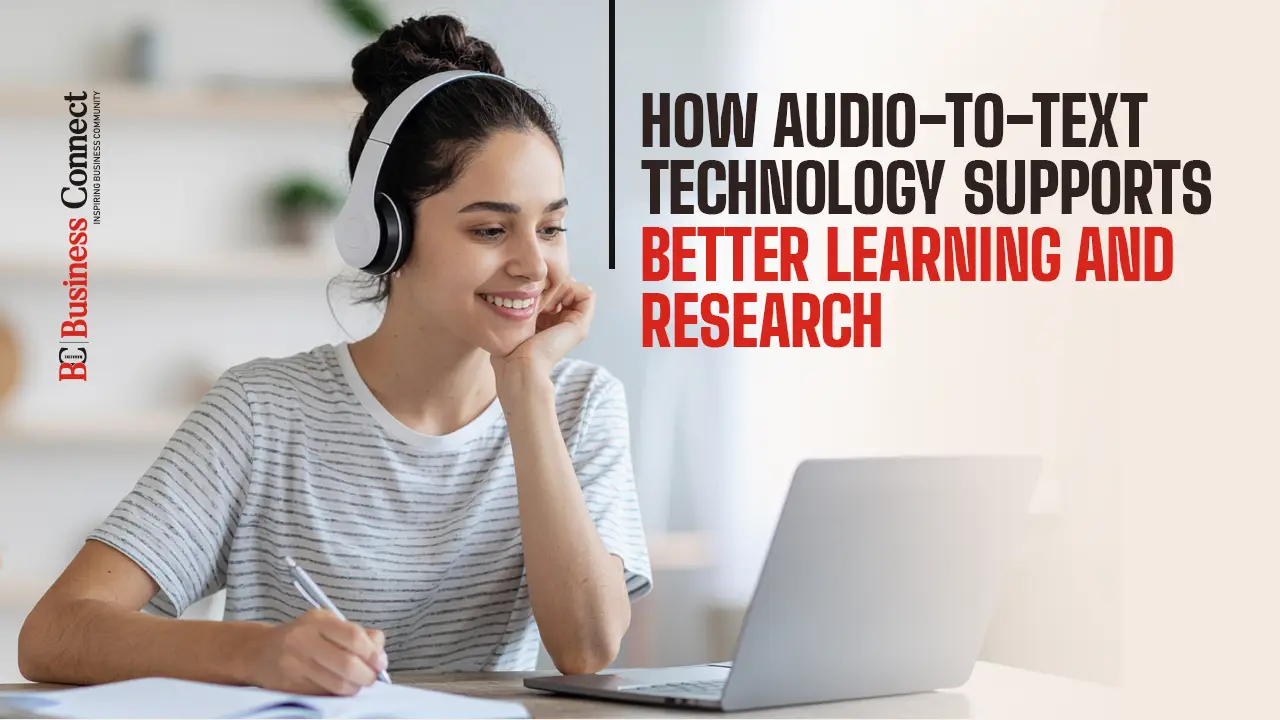
Learning and research have always depended on capturing information effectively. Whether the source is a lecture, an interview, a seminar, a webinar, or a field recording, the challenge is the same: valuable ideas often arrive through speech, but speech alone can be difficult to organize and revisit.
That is why more students, educators, and researchers are using tools like audio to text free to convert spoken material into text they can search, annotate, and review later. Instead of relying only on memory or rushing to take notes in real time, they can work from a more complete written record.
This shift improves far more than convenience. It changes how people study, compare evidence, and retain knowledge. A practical voice to text converter online free workflow helps learners and researchers move from raw spoken content to structured analysis much more efficiently.
As educational and research environments become more digital, transcription is becoming a foundational support tool rather than an optional extra.
Why Spoken Information Is Hard to Manage
Speech is immediate and often rich in detail, but it also disappears quickly. If no reliable system captures it, important points can be lost.
Live Lectures Move Too Fast
Students often struggle to listen, understand, and write everything down at the same time. Even strong note-takers can miss definitions, examples, or clarifications.
Interviews Contain Nuance That Is Easy to Forget
Researchers conducting interviews may remember the broad themes of a conversation while forgetting the exact wording that gives those themes meaning.
Webinars and Recorded Classes Can Be Hard to Review
When learners return to a long recording, finding one useful section may require replaying large chunks of audio. That slows revision and reduces efficiency.
Why Text Improves Study and Analysis
Converting audio into text does not replace listening. It enhances what listening can lead to.
Text Makes Review Faster
Instead of replaying an entire lecture or interview, users can skim a transcript and focus immediately on the sections that matter most.
Text Supports Annotation
Written material is easier to highlight, comment on, and organize. Learners can label key points, and researchers can tag themes or compare participant responses.
Text Helps With Quotation and Citation
For academic and research work, exact wording often matters. Transcripts make it easier to locate and verify the language used in the original recording.
Text Strengthens Retention
Seeing and revisiting information in written form can improve understanding and memory, especially when the spoken material is complex or dense.
Who Benefits Most from Audio-to-Text Workflows
Many people in learning and research settings can benefit, even if their roles are quite different.
Students
Students can use transcripts to revisit lectures, clarify confusing sections, and prepare for exams more effectively.
Teachers and Instructors
Educators can use transcripts to turn recorded lessons into study materials, summaries, or accessible class resources.
Academic Researchers
Interview-based research becomes easier to organize and analyze when spoken responses are available in text form.
Independent Learners
People taking online courses or consuming educational content informally can move through material more efficiently when transcripts are available.
A More Effective Workflow for Educational Use
Transcription becomes much more powerful when it is integrated into a simple learning process.
Convert Recordings Soon After They Are Created
The sooner audio becomes text, the easier it is to review and annotate while the context is still fresh.
Mark Key Concepts Immediately
Important terms, arguments, examples, and questions should be highlighted early so they stand out during later review.
Create Summaries from the Transcript
Instead of depending on the full transcript alone, learners can turn it into shorter summary notes that reinforce understanding.
Reuse the Transcript Across Study Materials
A single transcript can support flashcards, discussion prompts, reading notes, essay preparation, or research coding depending on the context.
Why Online Tools Are Especially Useful in Education
Educational and research settings often involve multiple devices, changing locations, and limited technical support. That makes online tools especially practical.
They Are Easier to Access
Students and researchers do not always have time to manage complicated software installations. Browser-based tools reduce setup friction.
They Support Flexible Study Habits
People learn in different places and on different schedules. Online access makes transcripts easier to generate and revisit from wherever work happens.
They Fit Remote and Hybrid Learning
As more classes and research discussions happen online, tools that work naturally in digital environments become even more valuable.
Common Mistakes to Avoid
Good transcription habits improve learning, but a few mistakes can reduce the benefit.
Treating the Transcript as a Replacement for Thinking
A transcript is a support tool, not a substitute for review or analysis. Users still need to interpret, organize, and apply what they read.
Failing to Edit for Clarity
Depending on the source audio, some transcripts may need light correction or formatting before they are comfortable to study from.
Storing Transcripts Without a System
If transcripts are not organized clearly, they become just another pile of files. Naming, tagging, and grouping them helps preserve their value.
Why This Will Matter More in the Future
Education and research are becoming more digital, more recorded, and more distributed. That means spoken content will continue to grow as a source of valuable information.
The people who can convert that information into structured text quickly will be in a stronger position to learn, analyze, and produce better work. Transcription supports not only convenience, but depth of engagement.
In many cases, it is the bridge between hearing something once and being able to truly work with it.
Practical Advantages Beyond Note-Taking
Many people first think of transcription as a better note-taking method, but its benefits often reach further than that.
It Helps Compare Multiple Sources
Researchers and students frequently work across several lectures, interviews, or discussion sessions. When all of them exist in text form, comparing themes and differences becomes far easier.
It Reduces Review Fatigue
Listening repeatedly to long recordings can be mentally tiring, especially when only a few sections matter. Reading and scanning a transcript is often a lighter and faster review method.
It Supports Better Knowledge Sharing
When one student, teacher, or researcher needs to share findings with others, text is usually the easier format. A transcript can be quoted, summarized, and distributed more efficiently than audio alone.
It Creates a More Reliable Study Archive
Over time, transcripts build a useful library of searchable learning material. Instead of relying on scattered notes, learners and researchers can revisit past sessions with much more confidence and much less effort.
Conclusion
Audio-to-text technology is becoming an increasingly important part of learning and research because it turns temporary spoken material into durable written resources. That change makes review easier, analysis faster, and study habits more effective.
For students, teachers, researchers, and independent learners, the ability to move fluidly between audio and text can improve both efficiency and understanding. It helps preserve detail without sacrificing accessibility.
As more education and research activity happens through recorded conversations and digital lessons, transcription will continue to become a practical cornerstone of serious information work.