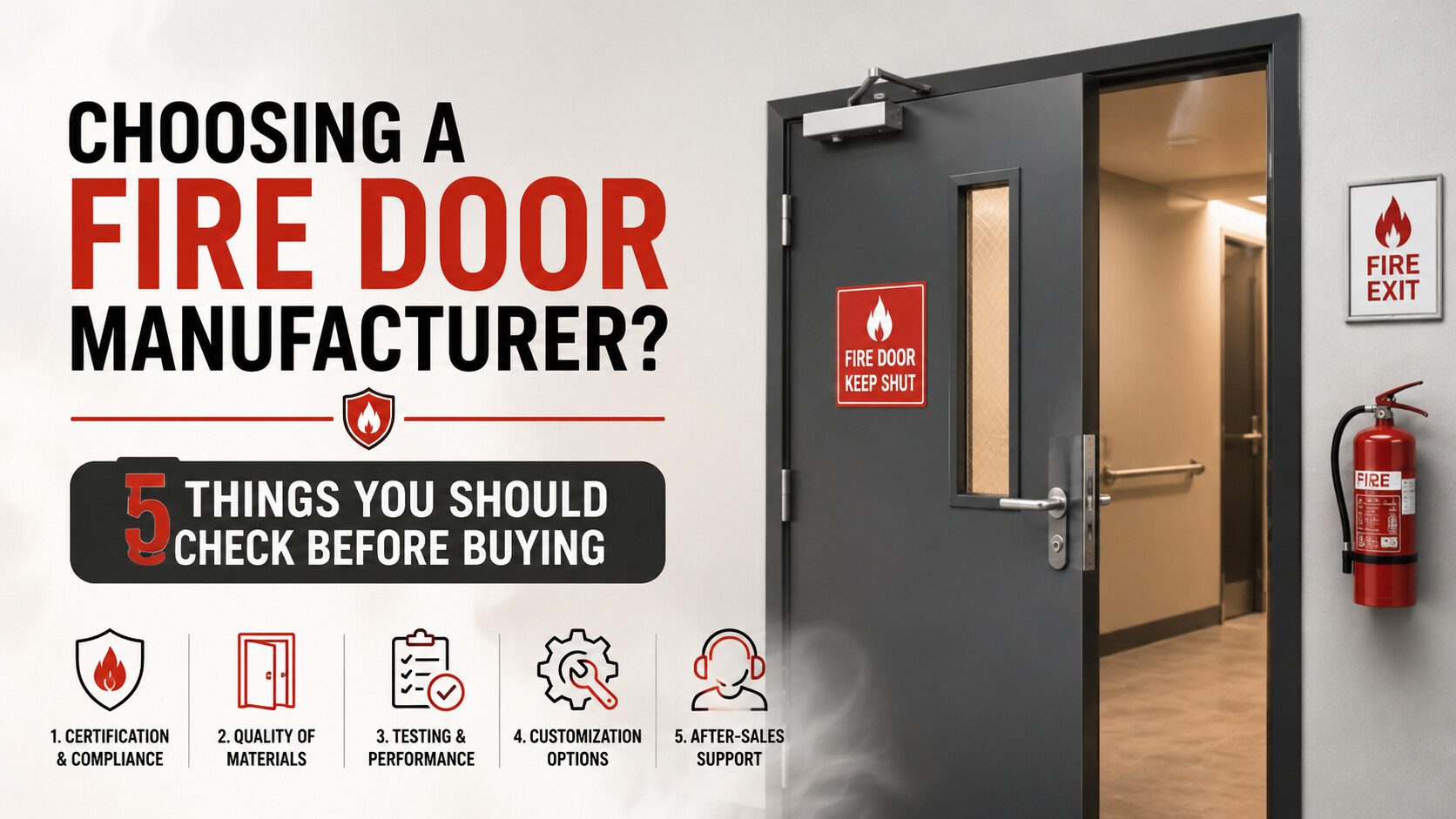
Fire doors are among the most important passive fire protection elements in a building. They help contain fire and smoke, protect escape routes, and provide valuable time for evacuation.
However, the performance of a fire door depends not only on the product itself but also on the manufacturer’s expertise. With numerous fire door manufacturers in India, selecting the right partner can directly impact safety, compliance, and long-term building performance.
This fire door buying guide explains the five critical factors to evaluate before choosing a manufacturer.
Why Choosing the Right Fire Door Manufacturer Matters
A reliable fire door manufacturer contributes directly to fire safety compliance and the overall effectiveness of fire protection systems. The right manufacturer provides tested products, technical expertise, and documented performance that supports regulatory requirements.
The Risks of Choosing a Non-Compliant Manufacturer
Fire doors only perform effectively when they have been properly tested and certified as complete systems. Manufacturers that cannot provide adequate documentation may expose projects and the people who occupy the buildings to significant risks.
Poor-quality doors may fail during a fire, allowing flames and smoke to spread rapidly through a building. In addition, compliance issues can delay inspections, approvals, and occupancy certifications. Selecting an experienced fire-rated door supplier helps reduce these risks while ensuring dependable fire safety performance.
1. Verify Fire Door Certifications and Test Reports
Certified fire doors should always be supported by documented testing and recognised certifications.
Which Certifications Should You Check?
Manufacturers should provide relevant fire door testing certifications conducted by internationally accredited laboratories.
Important documents include:
● Fire resistance certification
● Third-party laboratory reports
● Product-specific test certificates
● Compliance documentation for applicable standards
● Certification from an internationally known body to ensure what is produced is what is sold
The availability of these documents demonstrates that the products have undergone rigorous evaluation rather than relying solely on marketing claims.
Why Test Evidence & certification Matters More Than Claims
A common mistake is assuming that individual components guarantee overall performance. In reality, fire doors must be tested as complete assemblies.
The door leaf, frame, glazing, hardware, seals and accessories work together as a tested system. Documented performance provides evidence that the entire assembly can achieve its intended rating. Manufacturers that readily share test reports and technical evidence offer greater confidence than those relying solely on general product claims.
In addition, a certification program will ensure that the manufacturing unit is audited by a capable notified body who will inspect if the product that is produced is as per the tested evidence.
2. Evaluate Fire Resistance Ratings and Product Range
Every building has different fire safety requirements. A manufacturer should therefore provide a range offire-rated doors suitable for various applications.
H3: Does the Manufacturer Offer Multiple Fire Ratings?
Different projects require different levels of protection depending on occupancy type, building height and regulatory requirements. Manufacturers should offer products with varying fire-resistance ratings to address multiple project needs.
This flexibility enables designers and consultants to specify the appropriate fire-rated door for each location within a building. A broader product range often indicates greater technical expertise and testing capabilities.
Can Their Solutions Meet Different Building Applications?
Fire door performance requirements vary considerably across sectors, including:
● Commercial office buildings
● Healthcare facilities
● Educational institutions
● Industrial and manufacturing sites
● Hospitality developments
Manufacturers with experience across multiple building types are often better equipped to recommend suitable solutions and address project-specific challenges. For example, fire doors from Vetrotech may be specified for certain projects that require both fire protection and aesthetic considerations.
3. Assess Manufacturing Quality and System Performance
The quality of a fire door system extends beyond the visible door itself.
Look Beyond the Door Leaf
A tested fire door assembly includes several critical components such as frames, hardware, glazing systems, smoke and intumescent seals, hinges and closing devices, etc. Failure of any one component can compromise the overall system. When assessing fire door quality, buyers should evaluate how the manufacturer integrates all these elements into a tested and certified solution.
Questions to Ask About Manufacturing Standards
Before selecting a manufacturer, look for whether the manufacturing is audited and certified by an independent third party. This audit certifications helps answer:
● What quality control processes are followed?
● How are products inspected during production?
● What manufacturing capabilities does the factory possess?
● How is product consistency maintained across projects?
Strong manufacturing standards contribute to reliable fire door systems and consistent performance across multiple installations.
4. Check Technical Support and Specification Assistance
A manufacturer’s role should not end with supplying products. Technical support is equally important.
Does the Manufacturer Support Architects and Consultants?
Many projects require collaboration during the design and specification stages. Fire door manufacturers that provide architectural support can assist with product selection, design-stage guidance, specification assistance, and compliance documentation, etc. This support helps architects, engineers and fire safety consultants make informed decisions while reducing specification errors.
Availability of Technical Documentation
Technical information should be readily available throughout the project lifecycle. Important documents include:
● Test certificates
● Installation guidelines
● CAD details
● Technical data sheets
● Compliance documents
Accessible documentation simplifies approvals and assists contractors during installation.
5. Review Installation, After-Sales Support, and Project Experience
Even the best fire rated products can fail if they are not installed correctly.
Why Installation Quality Matters
Fire doors depend heavily on proper installation. Incorrect fitting can affect the integrity of the entire assembly and reduce its fire performance.
Manufacturers should support with trained installers and provide installation guidance. A post installation inspection can help ensure products perform as tested. Regular fire door checks and maintenance also help preserve long-term performance.
Responsible fire door manufacturers provide inspection services to audit every installation for compliance
Check the Manufacturer’s Project Portfolio
Project experience offers valuable insight into a manufacturer’s capabilities. Review factors such as similar completed projects, industry sectors served, case studies and references. Manufacturers with a strong portfolio often demonstrate proven expertise and dependable service.
Quick Fire Door Manufacturer Evaluation Checklist
This fire door inspection checklist can help simplify the selection process:
● Verified certification and fire door testing reports
● Multiple fire ratings available
● Complete tested assemblies rather than individual components
● 3rd party audited manufacturing
● Strong technical support and specification assistance
● Installation guidance and after-sales support
● Inspection report from the manufacturer for confirming compliant installation
● Documented project experience and references
Using this fire door checklist allows project teams to compare manufacturers more effectively and make informed purchasing decisions.
A Certified and Experienced Manufacturer Delivers Long-Term Fire Safety
Choosing among fire door manufacturers requires careful evaluation of certification, testing, manufacturing quality, technical support and installation capabilities. A dependable supplier delivers documented performance, compliance assurance and long-term reliability.
By following this buying guide and conducting thorough checks before purchase, project teams can select certified fire doors that contribute to safer buildings and stronger fire protection outcomes.
FAQ
1. How do I choose a reliable fire door manufacturer?
Choose a fire door manufacturer that provides certified products, documented test reports, technical support, audited manufacturing, and proven project experience. Reviewing their certifications, product range, and previous installations can help verify their reliability.
2. What certifications should a fire door manufacturer have?
A manufacturer should have recognised fire-resistance certifications, third-party fire-test reports for its products and an audited manufacturing facility. These documents demonstrate compliance with applicable fire safety standards, testing requirements and manufacturing consistency.
3. Why are fire door test reports important?
Fire door test reports provide documented evidence that a door assembly has been tested and proven to perform during a fire. They help verify the product’s fire resistance rating and support regulatory compliance.
4. What fire resistance rating should I choose?
The appropriate rating depends on the building type, occupancy, and applicable fire safety regulations. Consulting fire safety professionals or project specifications can help determine the required rating.
5. Does fire door installation affect performance?
Yes, improper installation can significantly reduce the performance of a fire door, even if it is fully certified. Correct installation ensures that the complete door assembly performs as tested.
6. What questions should architects ask fire door manufacturers?
Architects should ask about certifications, test reports, available fire ratings, technical support, evidence of audited manufacturing, and installation guidance. They should request documentation that demonstrates compliance and system performance.
7. How can I verify whether a fire door is certified?
You can verify a fire door’s certification by requesting its test reports, certification documents, and third-party laboratory approvals. Genuine certified doors are supported by documented evidence of performance.
8. Why is technical support important when selecting a fire door supplier?
Technical support helps ensure proper product selection, specification, and compliance throughout the project. Manufacturers that provide documentation and expert guidance can help reduce errors and improve project outcomes.