
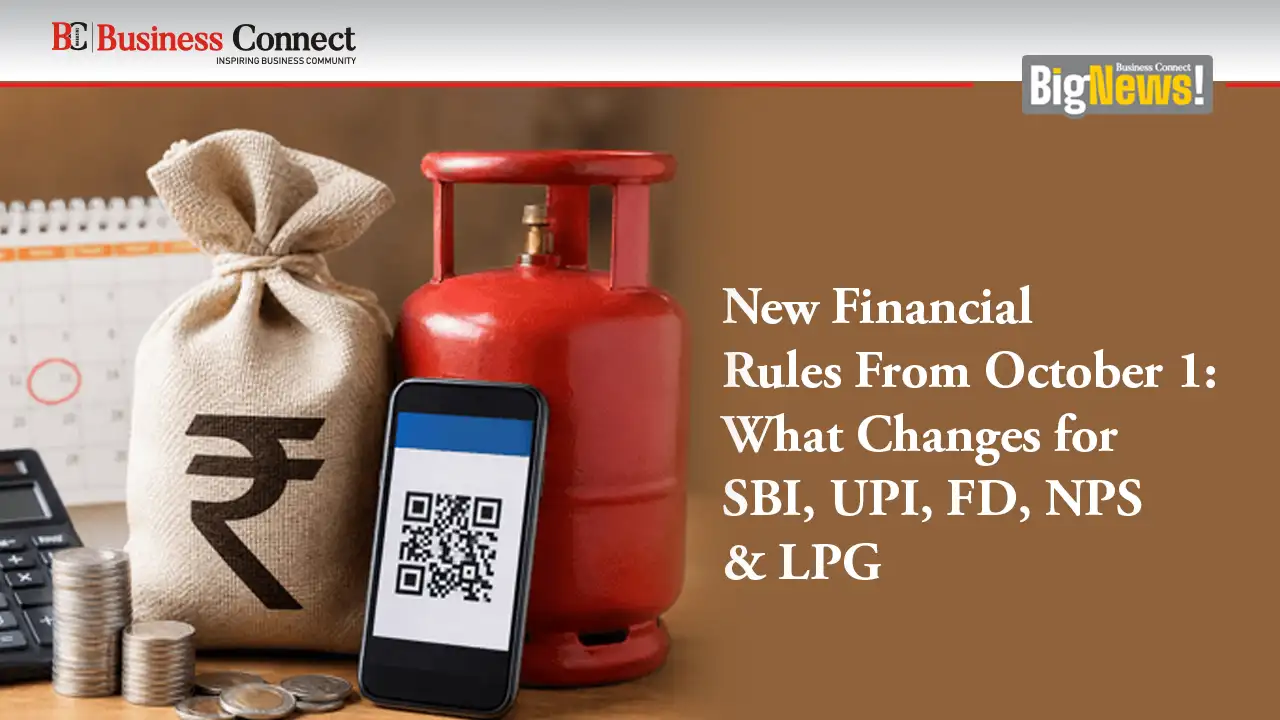
Revised ATM transaction limitations for specific SBI salary account holders, new disclosure requirements for bulk fixed deposits, adjustments to NPS fees, and the requirement for Aadhaar authentication for subsidised residential LPG refills are all part of the October 1 rule changes.
October 1 rule changes: On October 26, a number of regulations pertaining to banking, pensions, digital payments, and LPG will be altered. The modifications include additional disclosure requirements for bulk fixed deposits, adjustments to NPS fees, required Aadhaar identification for subsidised residential LPG refills, and updated ATM transaction limitations for specific SBI salary account holders.
The revised Merchant Discount Rate (MDR) framework for specific UPI merchant transactions will take effect on October 15, however the majority of modifications will take effect on October 1.
SBI ATM regulations: Fewer free transactions at ATMs owned by other banks
The amount of free monthly transactions that salary package account holders can make at other banks’ ATMs and Automated Deposit/Withdrawal Machines (ADWMs) using SBI debit cards is being revised by State Bank of India (SBI).
The amount of free transactions at other banks’ ATMs would drop from ten to five per month for all SBI pay package account variations starting on October 1, 2026. All centers will be subject to the updated cap, which covers both financial and non-financial transactions.
Four cash withdrawals per month will remain free for holders of Basic Savings Bank Deposit (BSBD) accounts. Each transaction will then be subject to a fee of Rs 15 + GST. Digital transactions will remain free and unrestricted, according to SBI.
Bulk FD rates: New disclosure requirements from October 1
RBI Bulk Deposit Rules: Banks to Publish Interest Rates Daily
The Reserve Bank of India (RBI) is introducing changes to the framework governing bulk deposits from October 1, 2026.
Under the revised rules, banks will be required to disclose the applicable interest rates on bulk deposits in advance and publish those rates every day by 10 am.
For similar types of bulk deposits, banks will generally be expected to offer the same interest rate. However, different rates may be offered depending on how the deposits are treated under the Liquidity Coverage Ratio (LCR) framework.
UPI MDR: Charges on Certain Merchant Payments Above ₹2,000
A new framework for Merchant Discount Rate (MDR) on specified UPI transactions will come into effect from October 15, 2026.
The changes will apply to certain merchant payments above ₹2,000. UPI transactions between individuals will continue to remain free, regardless of the amount involved.
Payments made to merchants up to ₹2,000 will also remain free, along with transactions covered under the zero-MDR framework for eligible small merchants. According to the government, around 96% of person-to-merchant (P2M) UPI transactions are expected to remain unaffected.
MDR is not a tax or a government levy. It is a fee shared among various participants in the digital payments ecosystem, including banks and payment service providers.
The Supreme Court has also declined to grant an interim stay on the government’s decision allowing MDR on specified UPI merchant transactions above ₹2,000.
NPS Charges: ₹200 One-Time Onboarding Fee
Subscribers joining the National Pension System (NPS) or NPS Lite through Points of Presence (PoPs) will also see a change in charges.
From October 1, 2026, a one-time onboarding fee of ₹200 will be applicable for each Permanent Retirement Account Number (PRAN) registered through a PoP.
The revised fee is part of the new charge structure notified by the Pension Fund Regulatory and Development Authority (PFRDA).
LPG Subsidy: Aadhaar Biometric Authentication Required
Domestic LPG consumers seeking refills at the regulated selling price along with the applicable subsidy will need to complete Biometric Aadhaar Authentication (BAA) from October 1, 2026.
Consumers who have already completed the authentication process will not be required to do it again.
Those who are yet to complete the process can authenticate their Aadhaar during LPG delivery, by visiting their distributor’s showroom or through the mobile application of the relevant oil marketing company.
According to the government, 27.43 crore consumers, representing around 89.9% of the total LPG consumer base, had completed biometric authentication as of September 19.
Consumers who have not completed Aadhaar authentication will still be able to receive LPG cylinders. However, access to the subsidised refill at the regulated selling price will be enabled after the authentication process is completed.