Russia Proposes 360 km/h Ivolga FG Train for India, Eyes Joint R&D and Local Production
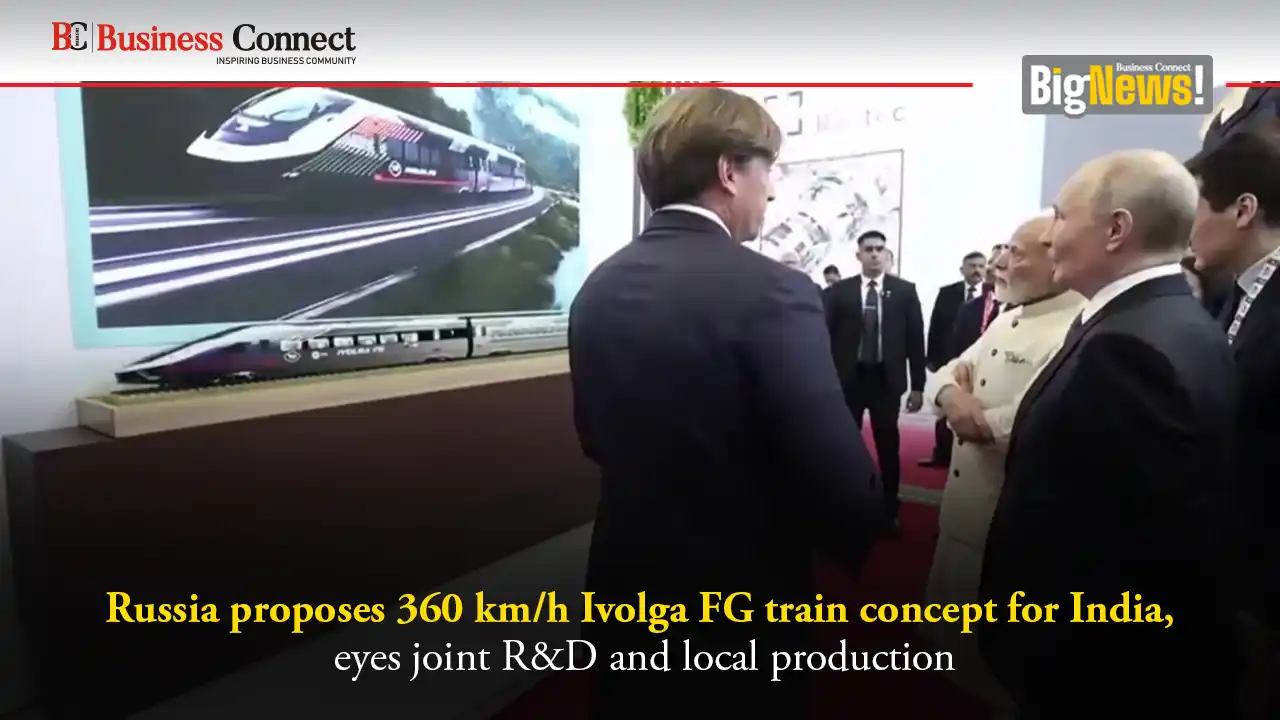
Russia has proposed bringing its next-generation Ivolga FG high-speed train concept to India, with plans for joint research and development and local manufacturing. The proposal from Russian rolling-stock manufacturer Transmashholding (TMH) could add a new dimension to India’s expanding high-speed rail ambitions.
The Ivolga FG is being designed for speeds of up to 360 km/h, putting it firmly in the high-speed rail category. The concept was showcased during the India-Russia industrial and technology engagement held alongside the BRICS Summit in New Delhi.
Russia Offers Joint Development With India
Rather than simply supplying finished trains, TMH has proposed working with Indian partners on research, technology development and manufacturing. The approach is aimed at combining Russian railway engineering expertise with India’s growing domestic manufacturing capabilities.
Reports on the proposal indicate that the train could be manufactured locally, with Russia also offering technology cooperation and a high degree of localisation. One report cited a potential 80% local component share, although the final level of localisation would depend on the eventual agreement and technical programme.
TMH Already Has a Railway Partnership in India
The Russian company is not new to India’s railway manufacturing ecosystem. TMH operates in India through Kinet Railway Solutions, a joint venture involving TMH and Rail Vikas Nigam Limited (RVNL).
The partnership is involved in the production and maintenance of 120 Vande Bharat sleeper trainsets, with manufacturing planned at the upgraded Marathwada Rail Coach Factory in Latur, Maharashtra. Each trainset is planned to have 16 coaches, while the first prototype is expected to roll out during the current financial year, by March 2027.
The proposed Ivolga FG initiative could therefore build on an existing India-Russia industrial relationship rather than starting from scratch.
360 km/h Would Be a Major Step Up
A 360 km/h train would represent a significant jump in speed compared with much of India’s existing passenger rail network. However, operating trains at such speeds requires much more than a faster train.
Dedicated high-speed infrastructure, advanced signalling, suitable track systems, reliable power supply, safety technology and specialised maintenance facilities would all be required.
This means the Ivolga FG proposal should currently be viewed as a potential long-term high-speed rail technology option for India, rather than an indication that 360 km/h trains are about to enter regular Indian service.
What Could Local Manufacturing Mean for India?
If the proposal moves forward, local production could offer benefits beyond the trains themselves. Joint development could help Indian companies and engineers gain experience in advanced rolling-stock technologies while creating opportunities for domestic suppliers.
It could also support India’s broader Make in India and technology localisation objectives, particularly if significant portions of the train and its systems are manufactured domestically.
For Russia, meanwhile, India represents a major potential market for railway technology. The country’s huge rail network and growing focus on faster passenger services make it an attractive destination for international rolling-stock manufacturers.
Proposal Still Needs Technical and Commercial Evaluation
Despite the headline-grabbing 360 km/h speed, several questions would need to be addressed before such trains could become a reality in India.
These include infrastructure compatibility, technology transfer, localisation levels, safety standards, lifecycle costs, maintenance requirements and the commercial viability of operating very high-speed services.
India’s high-speed rail plans are also closely linked to the development of dedicated corridors and supporting infrastructure. A train capable of 360 km/h can only deliver those speeds where the surrounding railway system is designed for them.
A New Dimension to India-Russia Rail Cooperation
The Ivolga FG proposal highlights the changing nature of India’s railway modernisation programme. International partnerships are increasingly moving beyond simple equipment supply towards joint development, domestic manufacturing and technology sharing.
For India, the proposal could provide another avenue for developing high-speed rail expertise. For Russia, it offers an opportunity to expand its presence in one of the world’s largest railway markets.
For now, the 360 km/h Ivolga FG remains a proposed concept for the Indian market, and its eventual introduction would depend on technical assessments, infrastructure development, commercial considerations and any future agreement between the two countries.
If the proposal progresses, however, it could become an important part of the next phase of India-Russia railway cooperation—and India’s broader push towards faster, locally manufactured trains.
Add Business Connect magazine to your Google News feed