
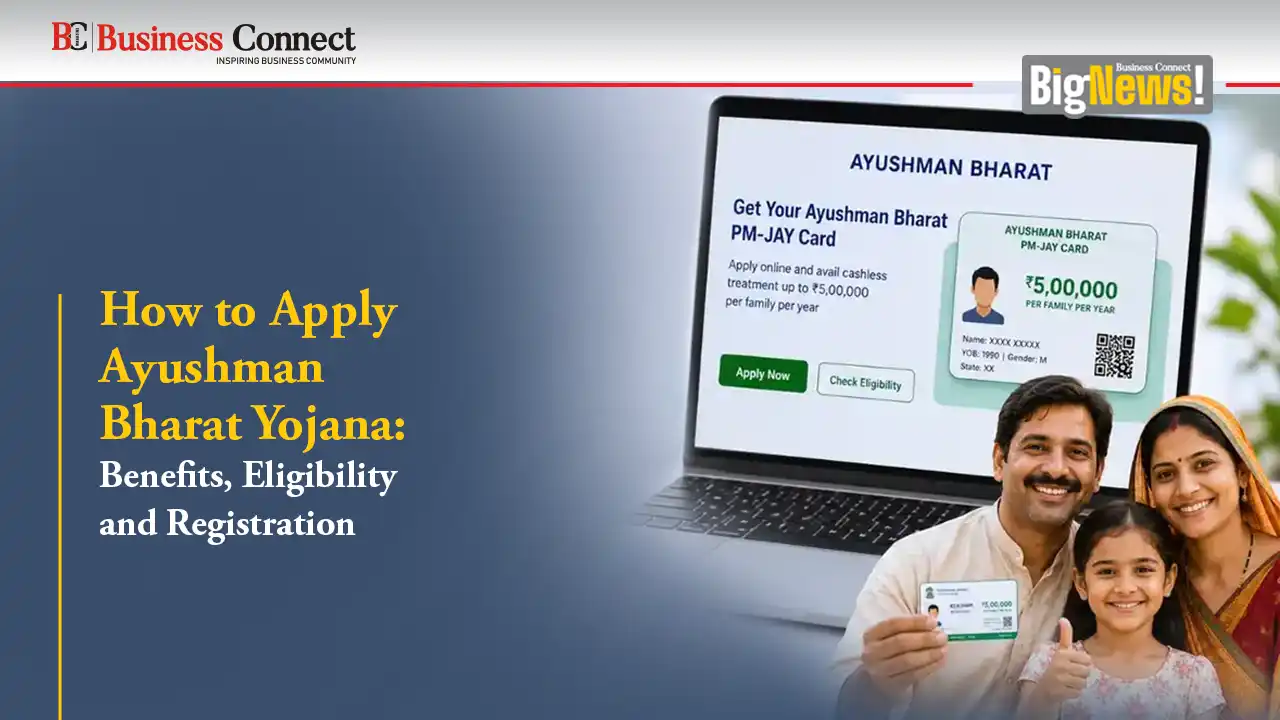
The Ayushman Bharat Pradhan Mantri Jan Arogya Yojana (PM-JAY), is a health insurance scheme administered by the National Health Authority (NHA) under the Ministry of Health and Family Welfare. It is the world’s largest government funded healthcare program.
How to Apply Ayushman Bharat Yojana: Benefits, Eligibility and Registration
Indian households are majorly middle or lower middle class. Sudden expenses can shake the entire monthly budget of the families. In between, any medical emergency is considered as a tempest which really forsakes the financial planning for paying the hospital bills or medications or consulting a medical professional, a family might spend all their sayings by keeping aside other necessities. But health care insurance can support them to reduce this burden.
Experts can discuss various schemes in terms of economics but the ordinary family sees and faces the challenges differently in their daily life. Therefore this policy can provide financial protection during a medical emergency and on the same side families can look for their other necessities.
The architecture of the benefit
Now the question comes to what kind of medical expenses the card can help cover? Under the Pradhan Mantri Jan Aarogya Yojana (PM- JAY), the eligible families can receive a medical coverage of up to 5 lakh per year which covers the hospital treatment.
The coverage focuses strictly on secondary and tertiary hospitalization. There are roughly 1,900 treatment packages defined under the scheme, covering everything from cataract surgeries to complex oncology resections. The care is cashless and paperless at the point of service. Pre-hospitalization and post-hospitalization expenses, including diagnostics and medicines, are generally included in the package rate for a defined window of days.
The eligibility filter
Who is eligible to apply? This is a clear deviation of the scheme from universal healthcare models. It is a means test. The database is unflexible. Eligibility will not be decided on the basis of a current income certificate or ration card. It is entirely dependent on the Socio-Economic Caste Census (SECC) of 2011.
The family name does not appear on that particular decade-old spreadsheet, the portal would reject the application. There are no second chances should the name not be in the central database.
These criteria for the rural population are determined through indicators of poverty. The family will be eligible if they stay in a kutcha house, lack an able-bodied male member between the ages of 16 to 59, and are either landless families or work as daily wage laborers. The criteria for urban population are directed towards informal laborers. Ragpickers, domestic helps, construction workers, and vendors are usually eligible.
This list of excluded persons is just as firm. Any individual within the household who pays income tax, has a motorized vehicle, mechanized farm tool, or a Kisan Card above a certain credit limit gets ruled out immediately. The bureaucracy does not make any compromise on this front.
The registration process on the ground
Step one begins with a mobile number. Your mobile number must be late with Aadhar for verification. The required information is entered by the operator into the system and a verification code is sent to the registered mobile number. The system then queries the SECC 2011 database.
When the name comes up, the family tree is brought up by the operator. Delays tend to occur at this point. The married daughter may appear as a member of her father’s household in 2011 data, while the now-deceased grandfather will appear to still be the head of the family. Fixing such errors demands action from the revenue officer from the concerned locality or the certified nodal authority.
Step two involves biometric authentication. Thumb impression is needed for fingerprint verification. Once it is verified, an e-card is generated. The operator prints it on standard paper. Lamination costs fifty rupees at the shop next door. That laminated sheet is the golden card.
The hospital execution
If the facility does not accept the card, then it is useless. Empanelment is a process and sometimes it is volatile. Private hospitals are roped into the network and sometimes exit citing delays in reimbursements or low package rates. It is important to check the status of active empanelment of the facility on the PM-JAY portal before visiting.
The moment a patient enters an empanelled hospital, he goes to the Ayushman Mitra desk.
This is a physical help desk, often manned by an individual wearing a blue vest. These individuals run the Transaction Management System. Ayushman Mitra enters the medical notes prescribed by the doctor in the scheme’s online portal. Reports show why the patient needs surgery and relevant concerned documents are submitted as part of the process. The document is then scrutinized either by the state trust or the insurance company.
The structural shift
Ayushman Bharat is a paradigm shift in the way the country finances healthcare. It. It shifts the poorest income deciles from catastrophic out-of-pocket spending to a state-backed risk pool. The database is getting old. Hospital associations are always fighting over the package rates. The ground-level execution is vastly different from a tier-one city to a district headquarters. But when the estimate crosses five lakhs, with an empty savings account, the golden card is the most valuable plastic in the wallet. If one knows how to get it, and knows exactly what it covers, it can only be used effectively.
Add Business Connect magazine to your Google News feed