
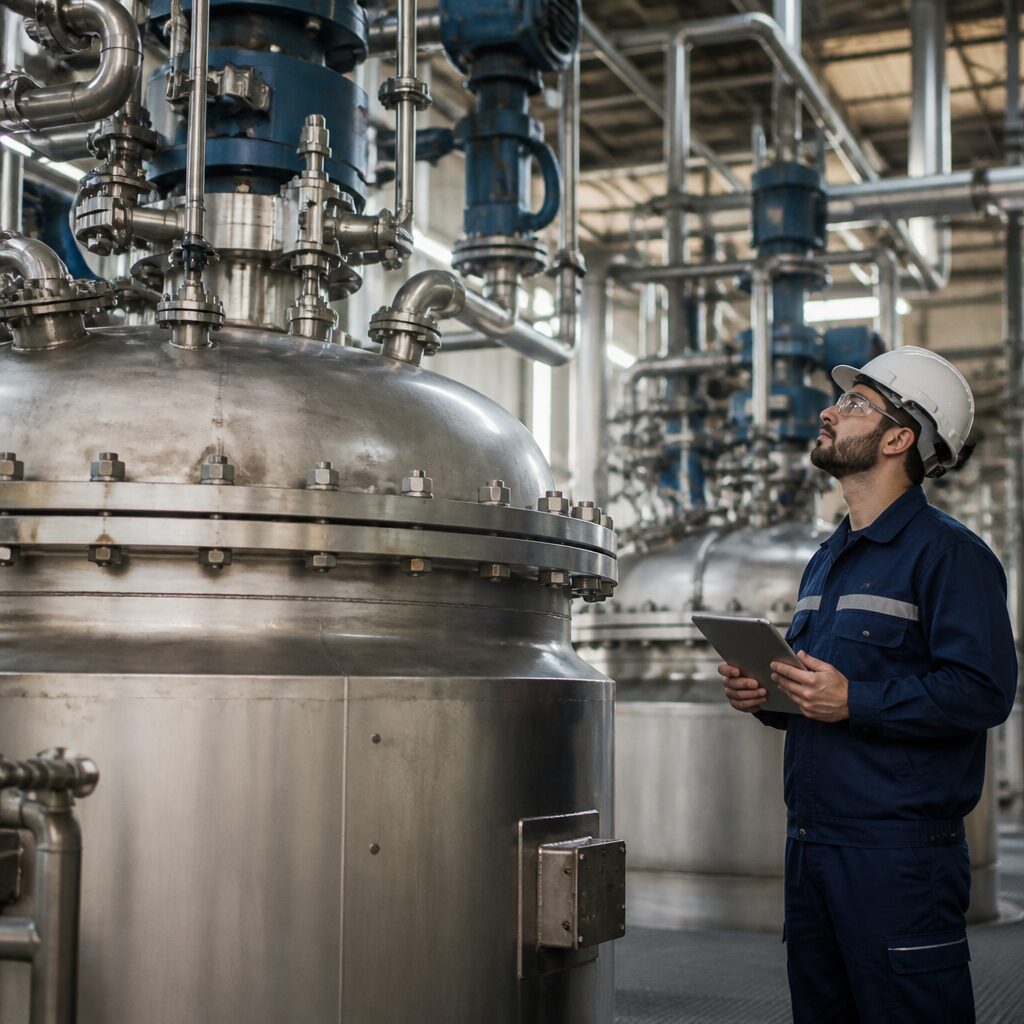
Selecting Pre-Owned Industrial Reactors Without Compromising Process Safety
Manufacturing facilities across chemical and pharmaceutical sectors face a persistent challenge: balancing capital efficiency with operational safety when acquiring process equipment. New batch reactors represent substantial capital expenditure, yet the secondary market offers alternatives that require careful evaluation. The decision to purchase pre-owned equipment demands rigorous assessment of mechanical integrity, regulatory compliance, and long-term reliability rather than upfront cost alone.
Understanding Reactor Condition Beyond Surface Inspection
Visual inspection reveals only a fraction of a reactor’s true condition. Corrosion patterns, weld integrity, and material degradation often develop in areas hidden from direct observation. Glass-lined reactors particularly warrant scrutiny, as microscopic cracks in the lining may not become apparent until the vessel enters service under pressure and temperature cycling.
Hydrostatic testing provides baseline pressure vessel integrity data, but previous operating conditions matter equally. A reactor used for aggressive chlorination processes experiences different stress patterns than one employed in standard esterification. Request complete service records including operating temperatures, pressure cycles, and any incidents involving thermal shock or mechanical impact. Documentation gaps should trigger additional non-destructive testing rather than acceptance at face value.
Material certifications verify that wetted components match process requirements. Stainless steel grades vary significantly in corrosion resistance, with 316L offering superior performance in chloride environments compared to 304. Hastelloy and titanium reactors command premium pricing precisely because these alloys withstand conditions that rapidly degrade standard stainless steel. Confirm material grades through mill test reports rather than seller representations.
Regulatory Compliance and Certification Transfer
Pressure vessels operate under strict regulatory frameworks that vary by jurisdiction and application. ASME Section VIII certification applies to most reactors in North America, while European installations require PED compliance. Canadian installations need CRN registration, and transferring these certifications between owners involves specific procedural steps that impact installation timelines.
The National Board registration number serves as a vessel’s permanent identifier, tracking its fabrication, repairs, and alterations throughout its service life. Verify that this registration remains current and that no expired holds or unresolved compliance issues appear in the database. Some jurisdictions require re-inspection and recertification when vessels change ownership or cross state or national boundaries.
Original design specifications determine allowable operating parameters that cannot be exceeded without engineering analysis and potential re-rating. A reactor originally rated for 150 psig at 350°F cannot legally operate at higher pressures or temperatures without formal engineering evaluation and authority approval. Understanding the relationship between structural integrity and preventing major structural failures becomes critical when evaluating whether existing equipment specifications match your process requirements.
Evaluating Agitation Systems and Internal Components
Agitation systems account for significant reactor functionality yet receive insufficient attention during equipment evaluation. Shaft alignment, bearing condition, and seal integrity directly affect both mixing performance and maintenance costs. Mechanical seals particularly deserve scrutiny, as seal failure represents the most common source of unplanned reactor downtime.
Impeller design must match intended process requirements. A pitched-blade turbine optimized for low-viscosity blending performs poorly in high-viscosity applications that demand anchor or helical ribbon configurations. Verify that existing impeller geometry suits your specific mixing requirements rather than assuming adaptability. Retrofitting agitation systems often costs more than anticipated and may require vessel modifications.
Baffles, thermowells, dip tubes, and other internals experience wear patterns that correlate with previous service conditions. Erosion at baffle edges indicates high-velocity fluid impingement, while coating buildup suggests inadequate cleaning protocols. These details inform realistic expectations about required refurbishment work and ongoing maintenance intensity.
Sourcing Pre-Owned Equipment Through Specialized Suppliers
The secondary market for process equipment includes direct seller transactions, auctions, and specialized brokers who maintain inventory across multiple facilities. Each channel presents distinct advantages and risks. Direct purchases from decommissioning facilities may offer lower prices but typically involve equipment sold “as-is” with limited documentation and no warranty provisions.
Specialized suppliers who focus exclusively on process equipment bring technical expertise and often provide inspection services, refurbishment options, and delivery coordination. When facilities need to acquire a used batch reactor for chemical or pharmaceutical manufacturing, working with suppliers who understand regulatory requirements and can provide complete documentation packages reduces implementation risk substantially. These suppliers typically maintain relationships with inspection firms and can arrange for third-party certification as part of the transaction.
Reactor shells sold without internals, jackets, or agitation systems represent another market segment. Body-only vessels suit specific applications where existing agitation equipment can be transferred or where custom internal configurations are required. This approach offers flexibility but demands additional engineering and fabrication coordination that extends project timelines.
Technical Standards and Process Equipment Engineering
Engineering references provide essential context for evaluating reactor suitability and identifying potential issues. Comprehensive chemical engineering handbooks document reactor design principles, materials selection criteria, and operational considerations across different process types. Resources such as academic engineering references offer detailed technical information that supports informed equipment decisions.
Heat transfer calculations determine whether existing jacket configurations provide adequate heating or cooling capacity for intended processes. A reactor with a single-zone jacket may prove inadequate for processes requiring precise temperature control during exothermic reactions. Half-pipe coil jackets generally outperform conventional jackets in heat transfer efficiency but cost more to fabricate and maintain.
Mixing time and power requirements scale non-linearly with reactor volume and viscosity. A 500-gallon reactor might require two horsepower for adequate agitation at low viscosity, but the same application at 5000 centipoise could demand fifteen horsepower or more. Verify that existing motor and gearbox specifications provide sufficient power with appropriate safety margin.
Integration Planning and Installation Considerations
Reactor acquisition represents only one component of a complete installation project. Utility connections, instrumentation integration, and safety system configuration require coordination across multiple engineering disciplines. Electrical classifications in hazardous areas dictate specific motor and control panel requirements that may necessitate upgrades even when the reactor itself meets process needs.
Physical installation logistics include rigging requirements, floor loading capacity, and clearance for maintenance access. A reactor that fits through existing doorways during delivery may still create access challenges for future maintenance when agitator removal or internal inspection becomes necessary. Account for overhead crane capacity and positioning when planning equipment layout.
Control system integration varies from simple manual valving to full automation with advanced process control. Legacy reactors may lack modern instrumentation mounting provisions, requiring custom fabrication for temperature, pressure, and level sensors. Standardizing on control architecture across multiple reactors simplifies operator training and spare parts management compared to maintaining disparate systems.
Long-Term Ownership and Lifecycle Management
Pre-owned reactor acquisition shifts capital expenditure forward but creates ongoing obligations for inspection, maintenance, and eventual disposition. Jurisdictional requirements mandate periodic internal and external inspections at intervals determined by service severity and equipment condition. These inspection cycles affect production scheduling and represent recurring costs that factor into total ownership calculations.
Spare parts availability influences long-term operational continuity. Obsolete seal designs or discontinued agitator components create supply chain vulnerabilities that increase maintenance costs and extend downtime. Identify critical wear components during equipment evaluation and verify replacement parts availability before committing to purchase.
Residual service life estimation requires engineering judgment informed by inspection data and operating history. A well-maintained reactor with documented inspection records and conservative operating conditions may provide twenty additional years of service, while equipment with aggressive process history and marginal inspection results might warrant retirement within five years. Realistic lifecycle projections inform capital planning and replacement timing decisions that avoid unexpected capacity losses.
Add Business Connect magazine to your Google News feed