
Choosing the right refrigerator size is not just about picking a model that looks good in your kitchen. It plays a direct role in how you store food, manage space, and control electricity use. A fridge that is too small can feel restrictive, while one that is too large may lead to wasted energy and unused space. With so many refrigerators available today, it helps to focus on what suits your household rather than following trends.
Start with Your Household Size and Habits
Your family size is a good starting point, but it should not be the only factor. Two households with the same number of members can have very different storage needs.
For example, if you cook daily and store fresh produce, you will need more space. If you prefer frequent grocery shopping, a smaller unit may be enough. The goal is to match the refrigerator size with your routine, not just your headcount.
A simple way to think about it:
- Small households: usually need compact storage
- Medium families: benefit from separate cooling and freezing sections
- Larger families: require higher capacity and better organisation
Understand How You Use Your Refrigerator
Before choosing a size, it helps to look at your storage habits. This often gets ignored, but it makes a real difference.
Ask yourself:
- Do you store leftovers regularly?
- Do you buy groceries weekly or daily?
- Do you rely heavily on frozen foods?
If your answer is yes to most of these, you will need a larger capacity. Otherwise, you may end up overfilling a smaller fridge or underusing a bigger one.
Measure Your Kitchen Space Properly
Many people finalise a refrigerator and then realise it does not fit well. This can be avoided with a few basic checks.
Make sure you account for:
- The width, height, and depth of the space
- Door opening clearance
- Ventilation space around the appliance
A refrigerator should fit comfortably without blocking movement or airflow. Even the best models can feel inconvenient if placed in a tight corner.
Choose the Right Type for Your Needs
Different types of refrigerators come with different size ranges and layouts.
Single door models are compact and suitable for smaller homes. Double door options offer better separation and suit mid-sized families.
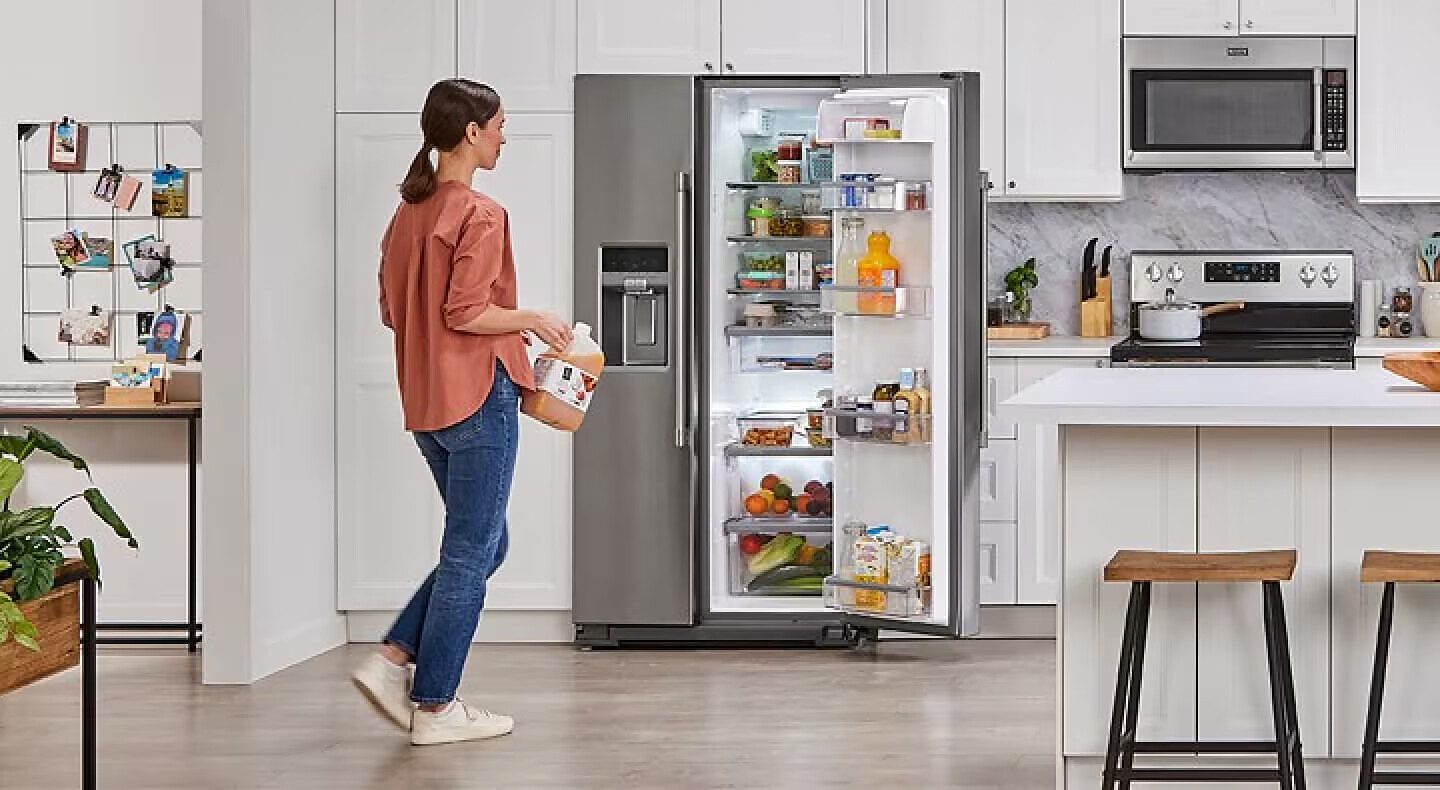
For larger households, a side-by-side refrigerator is often worth considering. It provides vertical storage for both fresh and frozen items, making it easier to organise daily essentials. Another advantage of a side-by-side refrigerator is that items are visible at eye level, which reduces the need to bend or rearrange frequently.
Balance Capacity with Energy Use
It is tempting to go for a bigger refrigerator, but size and power consumption go hand in hand.
Instead of choosing the largest option, look for:
- Energy ratings that indicate efficiency
- Models with inverter compressors
- Capacity that matches your actual use
A well-sized unit will always be more efficient than an oversized one that is rarely filled.
Pay Attention to Internal Layout
Capacity alone does not define usability. The way the space is arranged inside matters just as much.
Look for features like:
- Adjustable shelves for flexible storage
- Separate compartments for fruits and vegetables
- Door space for bottles and small items
A thoughtful layout can make even a medium-sized fridge feel more spacious and organised.
Think About Maintenance and Daily Use
A refrigerator should make life easier, not add extra work. Larger appliances can take more effort to clean and maintain.
Simple features can help:
- Removable shelves for easy cleaning
- Frost-free operation
- Smooth interiors that do not trap dirt
Choosing a model that is easy to maintain will save time in the long run.
Plan Ahead, But Stay Practical
It is sensible to think about future needs, especially if your household may grow. However, buying a much larger refrigerator “just in case” is rarely useful.
A slight increase in capacity can be helpful, but it should still be based on realistic expectations. The aim is to avoid both shortage and excess.
Industry Insight
Over the years, home-appliance brands in India have shaped how households approach refrigerators. For example, companies like Godrej Enterprises Group have introduced ranges that balance capacity, energy use, and storage design to meet the needs of different home sizes.
Final Thoughts
Choosing the right size is about finding a balance between your needs, your space, and your daily habits. It is not about choosing the biggest or the most advanced option.
With so many refrigerators in the market, it is easy to get distracted by features. However, size and layout remain the foundation of a good choice. When selected carefully, the right refrigerator can make your kitchen more organised, efficient, and comfortable to use every day.