
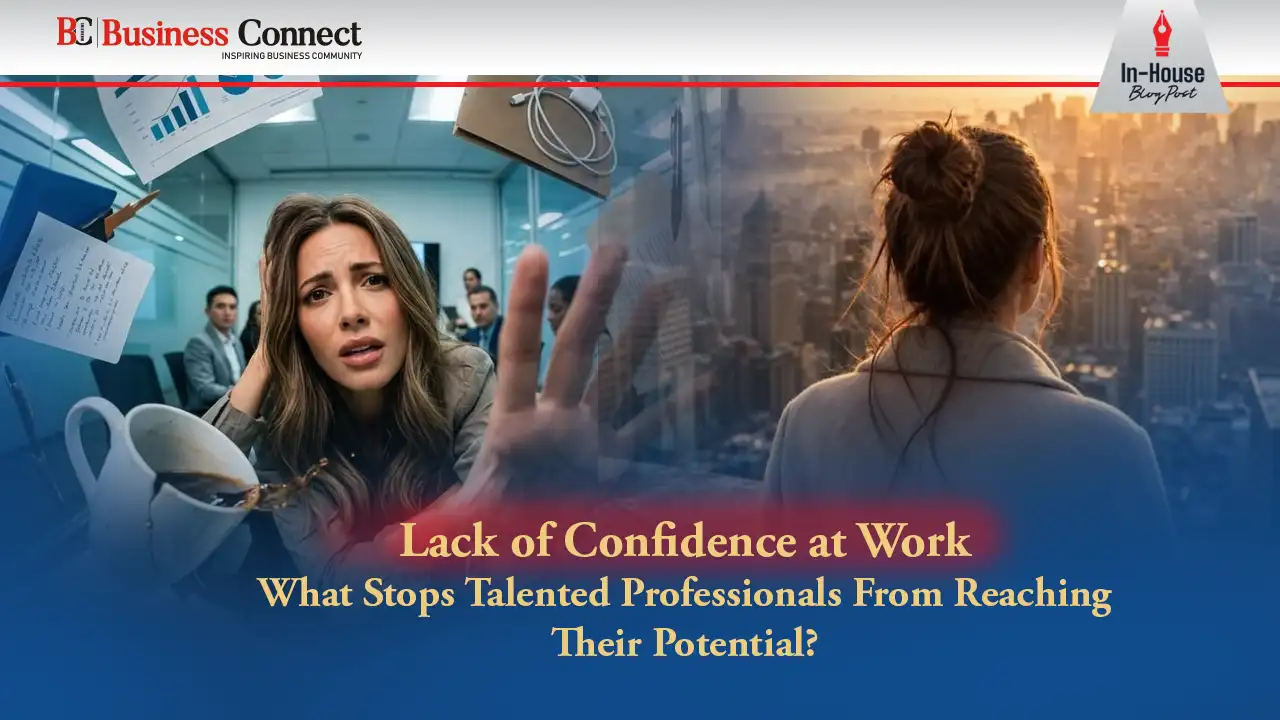
Why do some people with limited knowledge get noticed and offered new opportunities easily? While others with even greater capability do not get the chance. This mainly happens due to the lack of confidence at work. When there is a distance between what you can do and what you believe you can do, this is called the confidence gap that stops many talented professionals from reaching their potential.
What Stops Talented Professionals From Reaching Their Potential?
Key Takeaways
- The lack of confidence in the workplace separates ability from self-belief.
- Competence is more important than confidence because it builds the foundation.
- In the office, team members who spoke up more are considered more competent.
What Causes a Lack of Confidence at Work?
There are three main reasons behind the lack of confidence in people. First, many people focus on doing things with perfection at the next level. Perfectionism and confidence pull in opposite directions. If only flawless work is shared, every deadline will have to wait.
Pressure and comparison are the main drivers of self-doubt, and both wear down professional confidence. People who keep creating pressure on themselves and comparing themselves to others doubt themselves. Silent leaders rarely mention their mistakes and take every workplace mistake as a personal flaw.
Difference between Confidence Gap and Imposter Syndrome
Many believe the confidence gap and imposter syndrome are the same, but they are different. Imposter syndrome at work is the belief that your success is undeserved and you will be found out. With the confidence gap, you accept that you are good and still hesitate to act.
The core thought behind this is, when there is a confidence gap, you know you can do it, but you are never ready. In imposter syndrome, you believe you do not deserve this.
What Comes First, Confidence or Competence?
Competence will always be in first place because it gives you something real to be confident about. But competence is not equal to confidence. In the workplace, confidence is mostly rewarded.
The more dominant team members, who speak up more, are considered more competent, even when their answers are not very strong. Sometimes, capable professionals who stay quiet stay back; their lack of confidence at work hides real competence. When nobody hears your thinking, nobody can judge it.
Easy Ways to Fill the Confidence Gap
If you want to build confidence at work, follow the quick tips:
- Always name the reason why you feel a lack of confidence: it can be a skill gap, a harsh environment or perfectionism.
- Prepare a list of evidence around your achievements, wins, and hard tasks you handled.
- Set one small goal a week to get a feeling of achievement
- Speak early in meetings. Offer one clear point first.
- Do not wait to become ready. Many times, people get afraid of promotion and do not apply for it. Put your name forward, then prepare for it.
- Find the right mentor who can support you through the journey.
Overall, you can grow your confidence at the workplace through action; every small step will fill the confidence gap.
Frequently Asked Questions
How to deal with lack of confidence at work?
The first step to building confidence in your work is to separate facts from feelings. Even better, you can write down what happened, what you did well and what you want to change. Next, you can ask a trusted colleague for specific feedback on that one task. When you get a specific and honest review, it will help you to act instead of having a general sense of not being good enough.
Why do I lack so much confidence at work?
People often lack confidence when they move to a new organisation or get harsh feedback on an old mistake that still stings. Low confidence is not about ability. Notice when it began and what changed around you before blaming your skills.
How to build confidence at work?
Start with learning a new skill that is important in your role and practise it regularly. Keep asking questions, seek feedback and track growth. You will slowly experience your confidence growing as skill does. Now, you are trusting results over feelings.
Add Business Connect magazine to your Google News feed