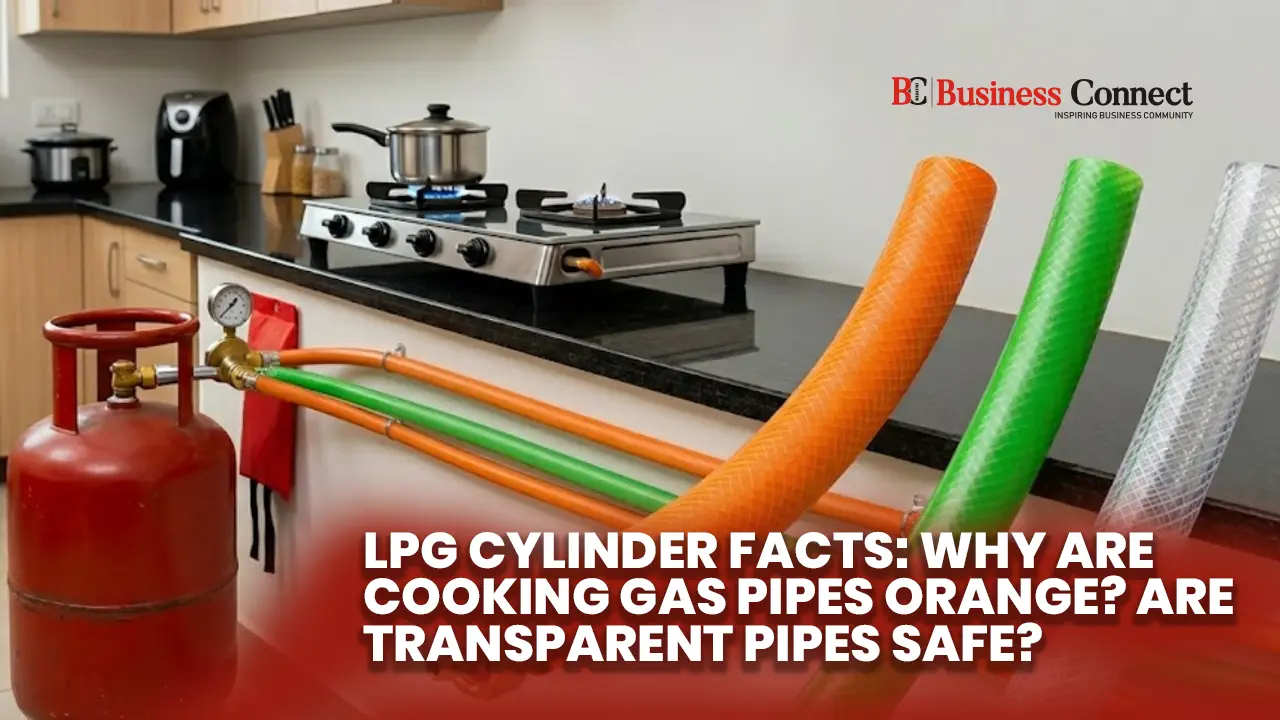
Clear plastic pipes are a hazardous kitchen hazard since certified orange LPG hoses have inside steel braiding made for high pressure and flame resistance.
Facts about LPG cylinders: For everyday cooking, nearly every Indian home uses piped gas or LPG cylinders. When handled properly, the gas itself is harmless, but its accessories—particularly the gas hose and pipe—can pose serious safety risks. Although green and translucent pipes are also on the market, most LPG hookups use orange pipes, as many people have noticed. But do these hues really signify quality or safety?
LPG cylinder facts: Which colour pipe is best for LPG safety?
When selecting an LPG gas pipe, experts advise focusing on safety certifications rather than colour. A safe gas hose should be:
Facts about LPG cylinders: For everyday cooking, nearly every Indian home uses piped gas or LPG cylinders.
- ISI-certified or compliant with recognised safety standards
- Specifically approved for LPG use
- Made from gas-resistant materials
- Clearly labelled with manufacturing and safety information
Therefore, you can say that a pipe’s colour alone does not determine whether it is suitable for carrying LPG.
Why Orange pipes are so common for LPG cylinders?
- Handle LPG pressure safely
- Resist wear and tear during long-term use
- Remain flexible for easier installation
- Improve visibility during safety inspections
But an orange pipe is only safe if it has the necessary certification and is designated for use with LPG.
Are transparent pipes safe for LPG?
Because they let users see inside the hose, transparent pipes are frequently utilized for low-pressure, water, or air applications. Transparent pipes should not be used for gas hookups unless they are properly labeled and certified for LPG service.
Supply cost of domestic LPG cylinder rises to over Rs 1,600 amid West Asia crisis
In a related development, the Modi government reported on Sunday that the under-recovery being absorbed on each household cylinder is over Rs 700, and the cost of delivering a 14.2 kg cylinder has increased to almost Rs 1,600 due to the West Asia situation. It stated that home cooking gas costs are comparatively less affected, despite an increase of Rs 29 per cylinder.
(With inputs from agencies)
FAQs: LPG Cylinder Facts – Orange vs Transparent Gas Pipes
Q1. Why are LPG cylinder pipes usually orange in color?
Orange LPG pipes are widely used because they are highly visible, durable, flexible, and designed to safely handle LPG pressure. The color also helps during inspections and maintenance checks.
Q2. Does the color of an LPG pipe determine its safety?
No. The color alone does not indicate whether a pipe is safe for LPG use. What matters most is whether the pipe is ISI-certified and specifically approved for LPG applications.
Q3. What should you check before buying an LPG gas pipe?
You should ensure that the pipe is:
- ISI-certified or compliant with recognized safety standards
- Approved for LPG use
- Made from gas-resistant materials
- Clearly labeled with manufacturing and safety information
Q4. Why are certified orange LPG hoses considered safer?
Certified orange LPG hoses often contain reinforced layers or steel braiding that help them withstand high pressure, resist flame exposure, and reduce the risk of leaks or damage.
Q5. Are transparent LPG pipes safe to use?
Transparent pipes should only be used if they are specifically certified and labeled for LPG service. Most transparent hoses are designed for water, air, or low-pressure applications and may not be suitable for cooking gas connections.
Q6. Why do some people prefer transparent pipes?
Transparent pipes allow users to see inside the hose, making it easier to spot dirt, moisture, or blockages. However, visibility alone does not make them safe for LPG use.
Q7. Can a transparent pipe replace an orange LPG hose?
Only if the transparent pipe is certified for LPG and meets all required safety standards. Otherwise, it should not be used for gas connections.
Q8. What are the advantages of orange LPG pipes?
Orange LPG hoses are designed to:
- Handle LPG pressure safely
- Resist wear and tear
- Remain flexible over time
- Improve visibility during inspections
- Enhance overall kitchen safety
Q9. How often should an LPG hose be replaced?
Experts generally recommend replacing LPG hoses every few years or sooner if there are signs of cracks, hardening, discoloration, leaks, or physical damage. Always follow the manufacturer’s guidelines.
Q10. What are the signs of a damaged LPG pipe?
Common warning signs include:
- Cracks or cuts
- Brittleness or hardening
- Gas smell near the hose
- Loose connections
- Visible wear and tear
Q11. Why is LPG safety important in Indian households?
Since LPG is used daily for cooking in millions of homes, using certified accessories and maintaining them properly helps prevent gas leaks, fires, and accidents.
Q12. Has the cost of LPG supply increased recently?
Yes. According to government data, the supply cost of a 14.2 kg domestic LPG cylinder has risen significantly amid the West Asia crisis, crossing ₹1,600 per cylinder, although retail prices have been partially cushioned through government support.
Q13. How much was the recent domestic LPG price hike?
Domestic LPG cylinder prices were recently increased by ₹29 per cylinder, while the government continues to absorb a substantial portion of the actual supply cost.
Q14. Is an expensive LPG hose always safer?
Not necessarily. Safety depends on certification, material quality, and compliance with LPG standards rather than price alone.
Q15. What is the safest choice for LPG connections at home?
The safest option is an ISI-certified LPG hose that is specifically designed and approved for cooking gas use, regardless of its color.
Read Also: