
How to Choose a High Frequency PCB Manufacturer for Fast Turn PCB Production
Modern electronic systems increasingly depend on high-speed signals, reliable connectivity, and precise circuit performance. From communication equipment to automotive electronics, advanced devices require PCBs that can handle demanding electrical conditions. Choosing the right high frequency PCB manufacturer is therefore important for maintaining signal integrity and product reliability. When projects also require rapid development, a manufacturer offering Fast Turn PCB services can help reduce production delays.
What Is a High Frequency PCB?
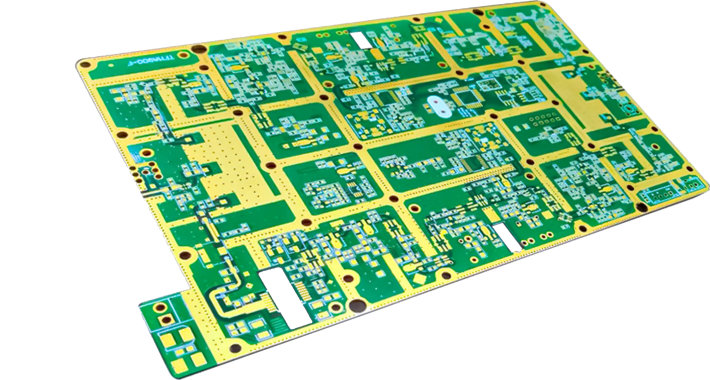
A high frequency PCB is designed to support circuits that operate at elevated frequencies where signal behavior becomes more sensitive to material properties, board construction, and layout.
These boards are commonly used in applications such as:
- RF communication systems
- Wireless devices
- Radar equipment
- Telecommunications
- Automotive electronics
- High-speed networking
- Industrial control systems
- Advanced electronic equipment
At higher frequencies, even small variations in high frequency PCB manufacturer construction can influence electrical performance. This makes manufacturing precision particularly important.
Why Choosing the Right Manufacturer Matters
Not every PCB manufacturer has the same experience with high-frequency circuit boards. A capable high frequency PCB manufacturer should understand the specialized requirements associated with high-speed and RF applications.
Important manufacturing capabilities may include:
- Controlled impedance fabrication
- Specialized high-frequency materials
- Precise layer alignment
- Accurate trace dimensions
- Reliable via manufacturing
- Consistent copper thickness
- Electrical testing
- Detailed quality inspection
Selecting a manufacturer with suitable capabilities can help reduce manufacturing problems and improve the consistency of the finished board.
Materials Used for High Frequency PCBs
Material selection is a major consideration in high-frequency PCB production. Standard PCB materials may work well for many applications, but specialized designs can require laminates with controlled dielectric properties and low signal loss.
The appropriate material depends on factors such as:
- Operating frequency
- Required signal performance
- Thermal conditions
- Dielectric characteristics
- Mechanical requirements
- Application environment
A knowledgeable manufacturer can help determine whether the selected material is suitable for the intended application.
Understanding Fast Turn PCB Services
A Fast Turn PCB service is designed to manufacture printed circuit boards within a shorter production timeframe. These services are particularly useful for prototypes, engineering samples, urgent replacements, and time-sensitive product development.
Fast production can help engineers receive physical boards sooner and begin testing without waiting through a conventional manufacturing cycle.
Benefits of Fast Turn PCB Production
When high-frequency projects require quick development, fast-turn manufacturing can provide several practical advantages.
Faster Prototyping
Engineers can obtain prototype boards sooner and begin evaluating electrical performance.
Quicker Design Improvements
If testing reveals an issue, a revised PCB can be manufactured without an unnecessarily long waiting period.
Reduced Development Delays
Shorter production times can help keep engineering projects on schedule.
Faster Product Validation
Teams can move more quickly from PCB design to assembly and functional testing.
Support for Urgent Projects
Fast-turn services are useful when boards are required for demonstrations, field testing, or strict development deadlines.
High Frequency Performance and Fast Production
Combining Fast Turn PCB expertise with fast manufacturing requires a careful balance between speed and precision. Accelerating production should not mean ignoring important technical requirements.
The manufacturer still needs to maintain control over:
- Impedance
- Trace geometry
- Layer stack-up
- Material characteristics
- Signal paths
- Grounding
- Via structures
- Surface finish
A strong manufacturing process can provide faster production while maintaining the quality required by high-frequency applications.
How to Evaluate a High Frequency PCB Manufacturer
Before selecting a supplier, businesses should evaluate the manufacturer’s technical capabilities and production processes.
Consider asking the following questions:
- Does the manufacturer have experience with high-frequency PCB designs?
- What high-frequency laminate materials are available?
- Can the manufacturer support controlled impedance?
- What production tolerances can be maintained?
- Are electrical testing and inspection available?
- What are the standard and expedited production times?
- Can the manufacturer support prototype and low-volume orders?
The answers can help determine whether a manufacturer is suitable for the project.
Preparing Files for Fast PCB Manufacturing
Accurate documentation can make the production process considerably smoother. Incomplete or incorrect files may lead to engineering questions and production delays.
Before submitting a project, make sure the manufacturer receives:
- Complete Gerber files
- Drill files
- Layer information
- PCB stack-up requirements
- Board dimensions
- Impedance specifications
- Manufacturing notes
- Quantity requirements
Providing complete information from the beginning can make it easier for the manufacturer to meet a fast production schedule.
Quality Control for High Frequency PCBs
Quality control is essential because manufacturing variations can affect the electrical performance of high-frequency boards. A reliable manufacturer should have inspection procedures throughout fabrication.
Depending on the project, quality checks may include dimensional inspection, visual inspection, electrical testing, impedance verification, and other appropriate tests.
These measures can help identify manufacturing issues before boards move to assembly or final product testing.
Applications of High Frequency and Fast Turn PCBs
High-frequency and fast-turn manufacturing can support a wide range of modern electronic applications.
Common examples include:
- Wireless communication devices
- RF equipment
- Automotive radar systems
- Networking hardware
- Industrial electronics
- IoT equipment
- Aerospace electronics
- Test and measurement systems
Each application may require different materials, tolerances, layer configurations, and testing procedures.
Conclusion
Choosing an experienced high frequency PCB manufacturer is essential for projects where signal integrity, material performance, and manufacturing precision are important. Adding Fast Turn PCB capabilities can further help businesses reduce development times and receive prototypes or production boards sooner. By evaluating technical expertise, material options, quality-control procedures, and turnaround capabilities, companies can select a manufacturing partner capable of delivering reliable high-frequency PCBs while supporting demanding production schedules.
Add Business Connect magazine to your Google News feed