
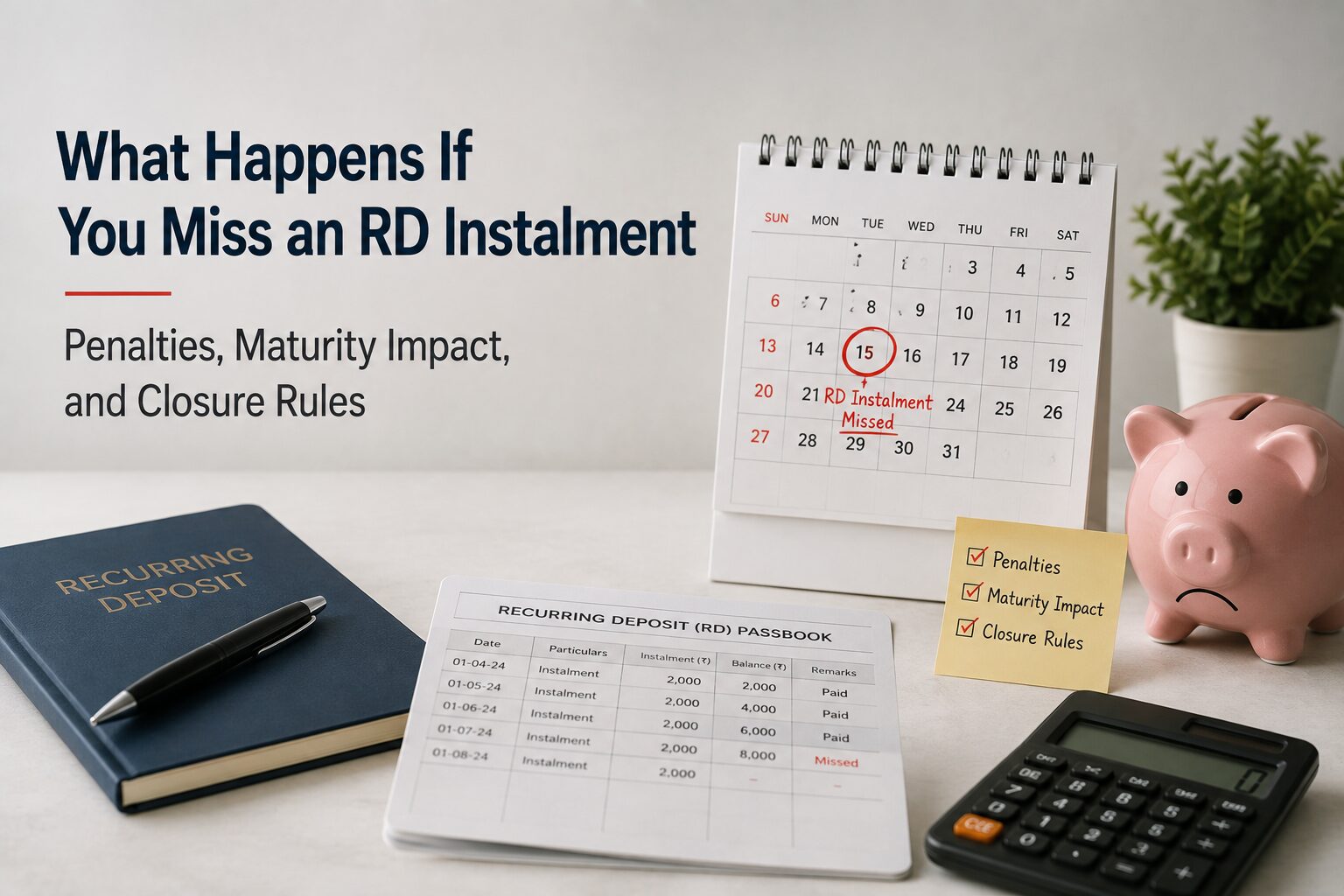
Regular deposits through a recurring deposit account can be a good way to save regularly at a fixed RD interest rate. But if you miss a payment, the account can be hit with penalty charges, earn less interest overall, and, in some cases, drift towards closure if the delay is too long.
Understanding A Missed RD Instalment
When you open a recurring deposit account, you agree to deposit a fixed amount at regular intervals for a chosen tenure. If one instalment is delayed or skipped, the account does not usually close immediately, but the bank may treat it as a default and apply the relevant terms linked to delayed payment.
This matters because a recurring deposit is built around consistency. The more regular the deposit pattern, the more effectively the account supports planned savings goals.
Penalties That May Apply
Banks generally levy a penalty when an RD instalment is not deposited on time. The exact charge depends on the bank’s policy, but the broader outcome is the same: the delay adds a cost that reduces the benefit of disciplined saving.
Some banks also allow a grace period within which the missed payment can be regularised by paying the overdue amount along with the applicable penalty. This gives depositors a chance to continue the recurring deposit account on its original track, provided the missed instalment is addressed in time.
How Maturity Value Can Be Affected
A missed instalment can influence the maturity value in more than one way. First, interest is calculated only on the amounts actually deposited, so a missed or delayed contribution earns less over the full tenure.
Second, repeated defaults can reduce the final corpus that the depositor may have originally expected from the recurring deposit account. This is especially relevant for people using an RD to save for a planned expense or a near-term financial milestone.
Closure Rules You Should Know
If missed instalments continue beyond the bank’s permitted period, the account may be closed prematurely. In such cases, the bank may return the deposited amount with applicable interest, after adjusting penalties and any premature closure conditions under the product rules.
This means the final payout may be lower than expected. A recurring deposit works best when contributions continue smoothly, so prolonged gaps can weaken both returns and planning certainty.
RD And FD In Context
A recurring deposit account suits those who prefer saving in smaller, regular amounts, while an fd deposit is usually chosen by those who want to place a lump sum for a fixed tenure. Both options offer stability, but they serve different saving styles and cash flow patterns.
When comparing products, customers often review fd interest rates and even search terms such as fd rates at bank before deciding how to balance liquidity, discipline, and return expectations. In that broader savings journey, understanding how an RD interest rate works alongside missed-installment rules can help create a more informed deposit strategy.
Conclusion
The best way to ensure you don’t miss an instalment is to set up an automatic debit from your linked savings account. Banking alerts, app reminders, and selecting an instalment amount that fits within the monthly cash flow can further help with consistency.
If you miss an instalment, it’s usually better to deal with it quickly, rather than delay it further. Taking prompt action can help you reduce penalties, avoid loss of interest, and keep the recurring deposit account continuing on its original terms.