
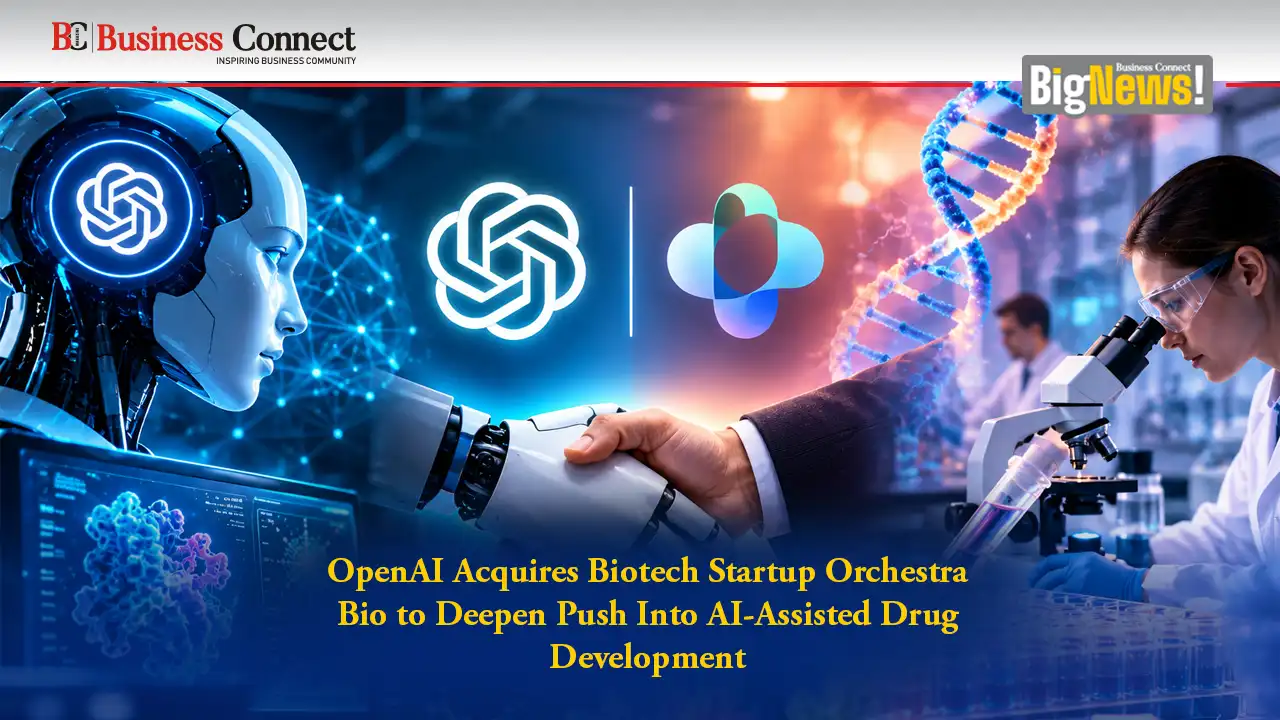
Founder Ashoka Rajendra joins OpenAI’s Life Sciences team as Orchestra’s technology is folded into the Rosalind suite
OpenAI has acquired Orchestra Bio, a startup that builds AI tools for managing drug development programmes, as the ChatGPT maker moves further into life sciences. The deal was shared exclusively with Axios, and financial terms were not disclosed. Orchestra’s founder, Ashoka Rajendra, has joined OpenAI’s Life Sciences team following the deal.
What Orchestra Bio Does
Orchestra Bio builds AI tools that help pharmaceutical and biotech companies track drug development programmes, monitor studies and flag potential delays. Its agents are designed to take work off teams’ plates by tracking trials, flagging affected timelines when something goes wrong, such as a failed production batch, and surfacing options for what to do next.
The company was founded around October 2022 by Rajendra. Orchestra had reportedly raised $20 million before the deal.
Integration With Rosalind
OpenAI plans to integrate Orchestra’s team and technology into Rosalind, its suite of AI tools for life sciences research. OpenAI introduced its specialised GPT-Rosalind model in April to help researchers with complex problems in biology, chemistry and drug discovery. A related tool, Rosalind Workbench, connects those capabilities with scientific data and tools.
The aim is to link scientific discovery with experiment planning and drug development workflows. Both companies aim to deploy agents that connect scientific findings with the decisions and next steps required to advance potential treatments. In effect, OpenAI is extending Rosalind from research tools into the operational side of running a drug programme.
Building on Pharma Partnerships
The acquisition builds on OpenAI’s existing work with pharmaceutical companies, including Novo Nordisk and Moderna. It comes as researchers face a process that typically takes 10 to 15 years to bring a new medicine to market, with much of that time spent coordinating studies, suppliers and timelines.
Why It Matters
The deal shows how AI labs are looking beyond their core strengths in coding and cybersecurity. Axios noted that rivals OpenAI and Anthropic are both pushing into science. Analysts say the key things to watch are how quickly OpenAI integrates Orchestra into Rosalind and whether the promised specialised agents become products that biopharma teams actually adopt.
Add Business Connect magazine to your Google News feed